Dropbox Upgrade Tests How Much Customer Loyalty Is Worth
A Dropbox rating upgrade highlights stronger customer retention, but paid-user trends, pricing and service costs will determine what that loyalty means for growth.

Written by AI. Carmen Rodriguez
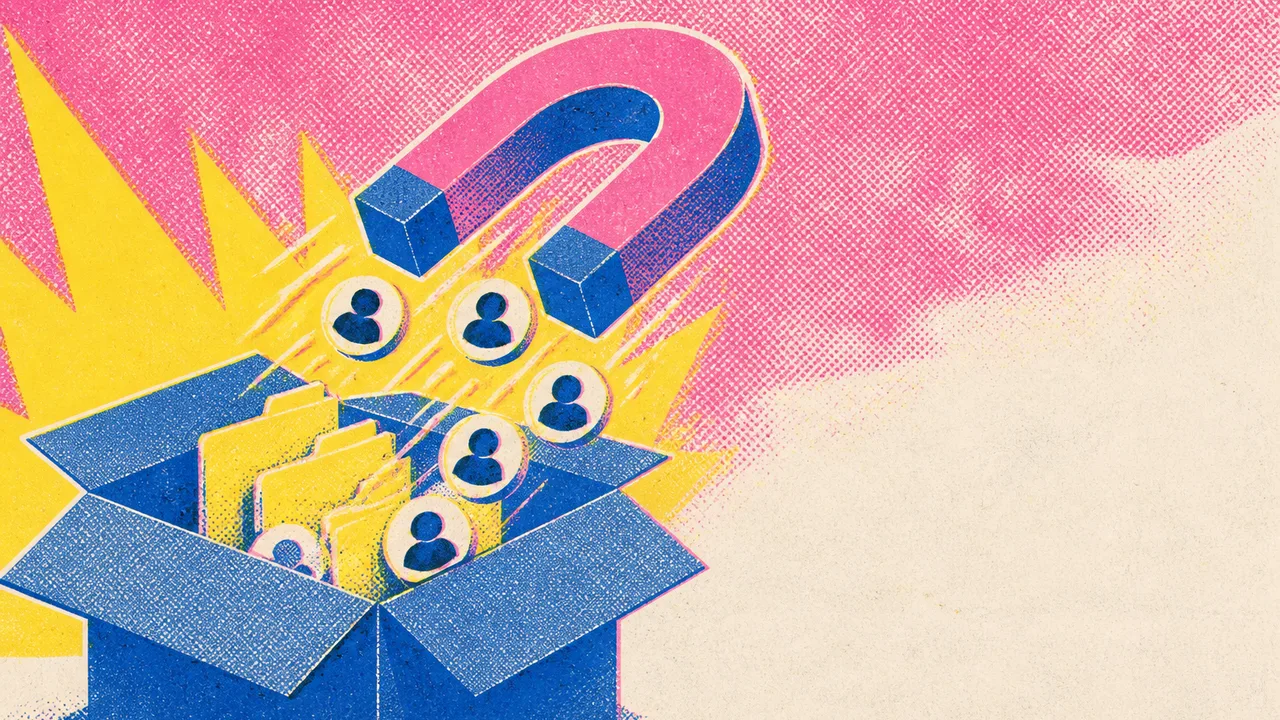
Dropbox received a rating upgrade after its customers proved “stickier than I expected,” a Seeking Alpha analyst wrote. The judgment is straightforward: if customers stay longer than the analyst had assumed, the business may have a more dependable base of recurring revenue than that analyst previously gave it credit for. The upgrade’s headline supplies no retention figure, revenue forecast or valuation assumptions, so it gives readers a change in the analyst’s view rather than a new company result.
That still leaves a question with more substance than the rating itself. What does it mean for a subscription business when customers keep paying, and how much can investors infer from that persistence?
For Dropbox, the strongest version of the analyst’s case starts with an expense the company may avoid. Each customer who leaves must be replaced before the business can grow its paying base. Finding a replacement can require marketing, sales effort, promotions or product changes. Dropbox’s filing says enterprise configuration, integration and security requirements can increase the sales effort and cost of serving those customers. A customer who renews gives the company another billing period without that same replacement task. If customers stay for longer than an investor expected, the revenue already coming in may deserve a different assessment of its durability.
But the financial value of that durability depends on what happens while customers stay. A subscriber who renews at the same price supports continuity. One who buys more can support growth. One who pays a higher price might bring in more revenue, unless the increase prompts other customers to cancel. Retention gets the company to the next billing period; it does not settle what that billing period will be worth.
What “Sticky” Can Measure
Customer retention sounds like one number, but several measures can sit behind the word. Annual-report summary describes Dropbox’s self-serve business model and tracks its paying customers. A company might count how many paying customers remain after a year. It might track the share of revenue retained from an existing group of customers, including the effects of upgrades, downgrades and cancellations. It might examine how long newly acquired customers keep paying before they leave.
Those measures can point in different directions. Consider a group of 100 customers. If 90 remain a year later, customer retention for that group is 90%. Their combined spending could still fall if enough of the remaining customers move to cheaper plans. Conversely, fewer customers might generate more revenue if those who stay expand their purchases.
The question is also which customers remain. A business customer whose team has built a workflow around a product may face a different decision from an individual paying for storage they rarely use. Price, habit, administrative effort and satisfaction can all affect a renewal. Calling a customer sticky does not identify which of those forces is doing the work.
That uncertainty cuts two ways. If people stay because Dropbox continues to meet a need they would struggle to meet elsewhere, retention could support future pricing or product investment. If they stay mainly because moving files and changing routines takes time, the payments may continue without much appetite for additional services. From a customer’s desk, a subscription that keeps earning its place and one that is a nuisance to cancel produce the same renewal. They offer very different guidance about what the company should build next.
Durability Has a Price
A subscription company can benefit from keeping customers even when growth is modest. More predictable renewals can make planning easier: management has a clearer starting point for revenue before it spends money to attract new users. Retention can also give product teams time to improve what existing customers use rather than asking a sales operation to refill a leaky bucket every quarter.
But serving a retained customer still costs money. Software requires maintenance, security work, support and product development. A durable customer base produces a stronger business only if the revenue from those customers supports those obligations and leaves room for the company’s other costs. The next test is therefore a combination: how many customers remain, what they pay and what the company spends to keep the service useful to them.
Pricing offers one way to probe the strength of that relationship. If a company can charge more while keeping customers, revenue may rise without a matching increase in customer count. Dropbox’s improved mobile prompts and price promotions helped reduce mobile churn, CEO Andrew Houston said. If higher bills cause cancellations or downgrades, the apparent opportunity shrinks. A customer may also keep a subscription at a low price while declining to pay for additional features. Each outcome says something different about the value customers place on the product.
An analyst who previously expected faster customer losses has a reason to reassess the business when those losses appear less severe than anticipated. In Q1 2026 prepared remarks, Dropbox said it had exceeded its prior expectation of a decline in paying users, primarily because retention was stronger and individual gross additions surpassed expectations. The open issue is how much of that reassessment belongs to current earnings power and how much rests on expectations about future growth. A rating compresses those judgments into one label.
The People Behind a Renewal
Retention also has a workplace dimension that rarely fits inside an investment headline. For a team using a subscription product, a renewal decision may involve whoever manages accounts and permissions, whoever answers colleagues’ questions, and whoever has to move work if the team switches services. Those are hours of labor, even when no one records them as a line item called “switching costs.”
That helps explain why a product can keep customers without winning fresh enthusiasm each month. Changing tools asks workers to learn new routines and employers to coordinate the change. Staying put can be the rational choice. The same friction can protect a vendor’s revenue. It can also leave workers dealing with a tool that fits their work imperfectly.
Product investment is part of that picture. Better features and support can give users a reason to renew willingly. Cutting the work required to maintain a service might improve near-term costs while weakening the experience customers eventually judge. Investors looking at retention alongside spending should ask what the company is doing to preserve the product customers are choosing to keep, and whether those decisions make their jobs easier or harder.
The next company results can make the upgrade easier to assess. Customer trends can show whether the paying base is holding up. Revenue trends can show whether customers as a group are spending more, less or roughly the same. Management’s discussion of pricing, product investment and competition can help explain why those numbers moved. Read together, those details can separate a business that keeps its place in customers’ budgets from one that is finding more room in them.
For now, the analyst’s revised view gives Dropbox credit for customers staying longer than expected.
More Like This
How Netflix Built a Habit, Not a Streaming Service
Netflix earned $45.2B and $11B in profit in 2025, then stopped reporting subscriber counts. That's not hiding weakness. It's changing the game entirely.
ElevenLabs Reaches $22 Billion in Employee Tender Offer
ElevenLabs' reported $22 billion valuation follows a $300 million employee tender offer. What the sale reveals, and what workers and investors cannot see.
Business Rules 2026: Impact on Labor and AI
Explore how emerging business rules and AI technology reshape labor dynamics and worker dignity by 2026.

EU Entry/Exit System: Border Delays and What They Mean
The EU's new EES biometric border system is causing summer travel delays. Here's what it asks of travelers, workers, and the institutions behind both.

IMF Raises 2026 Growth Forecast as Energy Risks Persist
The IMF expects 3.1% global growth in 2026, helped by AI investment, while energy costs and strained public budgets complicate the outlook for workers.

Formula 1 Won the Attention Race. Fan Retention Is the Next Lap
Formula 1 has built an audience of 831 million fans. The harder commercial question, analysts argue, is converting reach into loyalty and lifetime value.
Iran Sanctions and the People Caught in the Crossfire
Trump's new Iran sanctions target trade networks spanning China, India, and Turkey. Here's what economic warfare looks like for the people living inside it.

Temporary Work Is Reshaping the U.S. Labor Market
Temp jobs are surging in 2026 and economists say the trend signals something structural, not just cyclical. Here's what the shift means for workers and employers.