Dolly Parton and U2's 'Torn' Has Two Distinct Versions
Dolly Parton's final recorded vocal closes U2's Carnaval de Luz. Two versions of 'Torn' show how a rewritten family story changes with its musical setting.

Written by AI. Zoe Kim
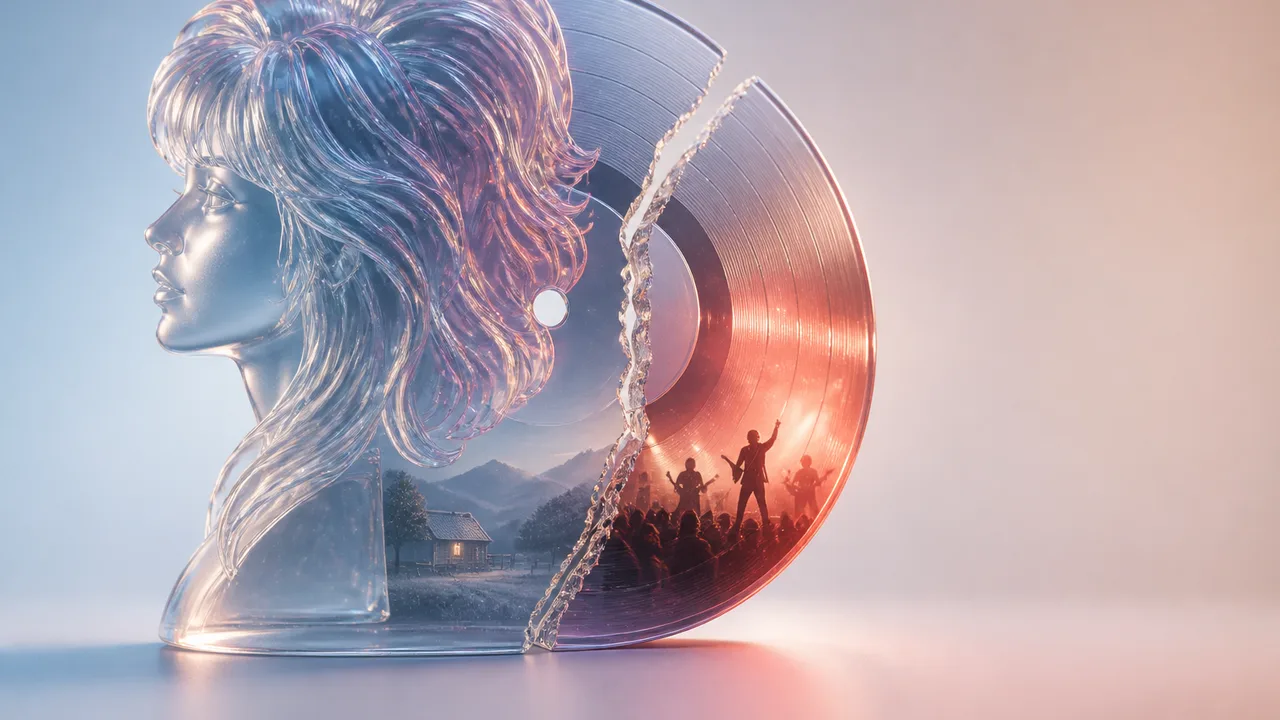
Dolly Parton’s final recorded vocal closes U2’s new album with a question: “How am I supposed to choose?” On “Torn,” released November 13 on Carnaval de Luz, the answer keeps changing shape. Parton begins with the language of a romantic dilemma. By the time Bono joins her, the song has become a portrait of a mother watching her family divide. There are two prominent versions to hear, too: the atmospheric album recording and a more traditional country arrangement credited to Kent Wells. Each gives that impossible choice a different room to echo in.
Parton recorded her contribution in Nashville in June, before her death in August. “Torn” carries the weight of a final performance, but its creation also deserves attention. Parton brought the song to the collaboration, and the finished work credits her, U2 and Johnny McDaid as writers. Its journey from one story to another helps explain why neither arrangement feels like a simple genre exercise.
A Song that Changed Its Question
U2 initially approached Parton with other material. Bono recalled playing her sketches for an Irish-roots project; she found them “a little too Irish.” She offered “Torn” instead. Her starting premise was a woman choosing between two lovers, Bono said, and he and McDaid rewrote it around a mother whose family is splitting apart. Parton agreed to sing the revised song.
That sequence changes how the opening works. “I love them both” could belong to the original romantic triangle. The chorus widens its meaning with a “house divided” and shared blood. The words let Parton’s first-person uncertainty survive the rewrite; the person facing a choice remains at the center even as the stakes move from lovers to relatives. It is a smart piece of adaptation because the emotion stays legible before the song asks it to carry a larger argument.
The larger argument is political division within families, as Bono has described the rewrite. Parton’s character, though, spends the song describing what conflict does to people who love each other. In a later verse, she sings that nothing hurts a mother more than a family at war. The lyric names a relationship and its damage, while leaving the positions in the dispute unspecified. That choice invites listeners with different family histories into the song. It also risks making the dispute sound symmetrical when real disagreements can involve very different stakes. The mother’s pain is the song’s perspective, not a verdict on what every relative believes.
Parton had a say in the collaboration beyond supplying its opening idea. A handwritten note after the session told Bono she had done “quite a few things” with her vocals and invited him to take what he needed. The note expresses enthusiasm for the song, though it does not settle which released arrangement she would have favored. Her contribution belongs to a work that changed while she was part of it.
Two Settings for the Same Family Story
On the album recording, Jacknife Lee’s production places Parton and Bono amid patient drums, wavering synths and Daniel Lanois’s pedal steel. The percussion and synth textures give the track space around its voices; the steel offers a country color without pulling everything into a familiar country-ballad arrangement. Larry Mullen Jr.’s drum part drew inspiration from Bob Dylan’s “Most of the Time”. The result places a recognizable vocal presence inside a setting that feels harder to pin down.
That setting suits one reading of the lyric. The synths and measured beat can make the family conflict feel unresolved, as though the characters have plenty of space between them and no easy way across it. Parton’s questions stay personal, while the production leaves room for Bono’s wider, almost public-facing chorus. The song grows in scale without supplying a political slogan or naming an opponent.
The “Torn (Kent Wells Version)” offers a more traditional country setting and was released alongside the album, after a premiere on US country radio on November 12. Wells is a longtime Parton collaborator. Where the U2 arrangement uses atmosphere to stretch the family story outward, the country approach can bring the words closer to the storytelling conventions in which a narrator tells you whom she loves and what she cannot fix.
Country familiarity can sharpen the narrator’s dilemma: the woman at the center sounds at home telling a story about her own family. The album version makes a different offer. Its unusual surroundings can make her voice sound exposed, an anchor in a song whose ground keeps shifting. Neither approach owns Parton’s contribution. Country instrumentation alone cannot certify what she intended, and an unexpected arrangement does not automatically deepen a lyric.
A third take produced by T Bone Burnett was also released November 13, providing a useful limit to this two-version comparison. The album and Wells recordings make the clearest contrast between atmospheric and traditional-country settings, but they are not the full menu. Their shared subject makes the comparison possible; their different production choices make it revealing.
Bono has gone further than a description of the sound. Discussing “Torn” on Jimmy Kimmel Live!, he called it a prayer for America and for places with divided politics. The song supports it through the family-at-war lyric, but a prayer for national reconciliation asks more of the mother’s story than the opening romantic dilemma did. It turns her inability to choose into a wish that other people might come together.
Perhaps that is why hearing the two arrangements side by side is more useful than appointing a definitive one. The rewrite changed who “both” might be; the productions change the distance from which we hear her say it. In the album version, the divided house can sound as wide as a country. In the Wells version, it can remain a house. Parton’s question holds in either space, even when the music changes everything around it.
More Like This

MusiCares Picks U2 for 2027 Honor: What the Choice Decides
The Recording Academy named U2 its 2027 MusiCares Persons of the Year. Here is what the pick rewards, what the archive shows, and what the gala must prove.
U2 Weighs Faith and Democracy Ahead of Carnaval de Luz
As U2 prepares Carnaval de Luz for November 13, the band weighs democracy, five decades together and whether its music can still make optimism persuasive today.
Dolly Parton's Philanthropy: Giving Beyond the Spotlight
Dolly Parton has donated tens of millions to literacy, disaster relief, and more. A look at what her quiet giving reveals about celebrity philanthropy.
Eddie Vedder Busks on Grafton Street for Glen Hansard
Eddie Vedder took to Dublin's Grafton Street to busk in Glen Hansard's spot after his death, playing Pearl Jam's "Black" with Hansard's own guitar.
Rick Beato and the Professor of Rock Defend the Canon
Rick Beato and Adam Reader debate rock history, AOR's legacy, Billy Joel's underrated genius, and why preserving music's past still matters in 2026.
Okakura's Book of Tea and the Art of Everyday Life
Kakuzo Okakura's 1906 Book of Tea argues any task can become art through attention. But does a four-minute video actually prove his point—or undermine it?