Did the Valar Abandon Middle-earth?
The Valar all but vanish by the Third Age. Robert from In Deep Geek argues that's not absence—it's a handoff. Here's what the text actually supports.

Written by AI. Zoe Kim
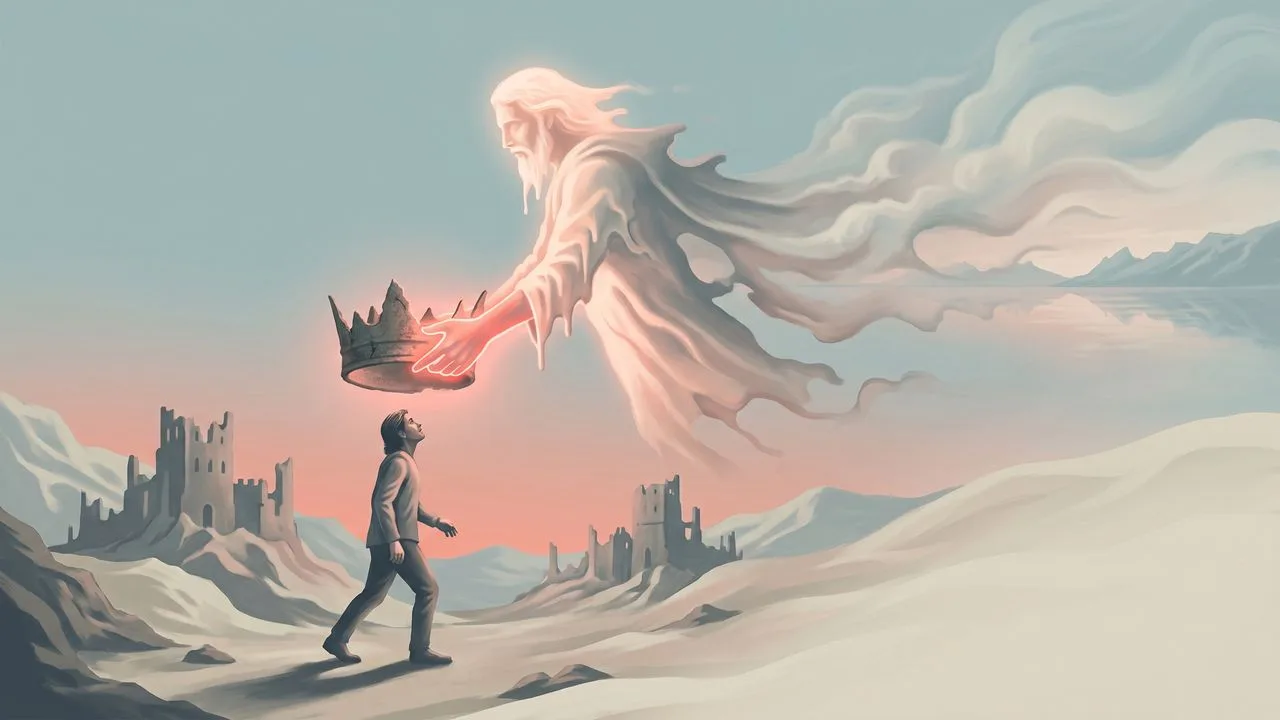
Photo: AI. Iolanthe Fenwick
There's a question that sits quietly under the surface of every Lord of the Rings reread, the kind you feel before you fully articulate it: where are they? The Valar — the angelic powers who literally shaped the world, who chained Melkor and built the Trees of Valinor — are nowhere to be found when Frodo is crawling up Mount Doom. You finish Return of the King and you're left with this vague theological unease, like showing up to a party the hosts promised to attend and finding only a note on the door saying we believe in you.
Robert from the YouTube channel In Deep Geek takes this question seriously in a recent video, and his answer is worth sitting with. Not because it resolves the unease completely — I'm not sure it does — but because he maps the terrain more carefully than the question usually gets.
The Setup: Volunteers Who Showed Up, Then Didn't
Robert's first move is to reframe the Valar's original commitment. They weren't assigned to Middle-earth by Ilúvatar; they chose to descend because of how much they loved what they'd sung into existence during the Ainulindalë. And when they arrived, they discovered the world wasn't even finished — what they'd sung had only been a vision, and the physical reality was theirs to build. Ages of labor followed, constantly undone by Melkor's interference.
So far, deeply committed. But then the children of Ilúvatar hadn't arrived yet, Melkor had occupied Middle-earth, and the Valar made a choice that Robert acknowledges plainly: "It can be no surprise then that Melkor found the first children of Ilúvatar years before the Valar did. From any perspective, this is pretty poor form from the Valar."
That frankness is useful. The early Valar record isn't a story of perfect stewardship. The Elves awoke in darkness, Melkor found them first, and many were corrupted before Oromë stumbled across them while hunting — not exactly a planned intervention. (What those corrupted Elves became is one of Tolkien's thornier unresolved threads: the Silmarillion implies Orcs were made from Elves, but Morgoth's Ring and other posthumous writings complicate that origin significantly, and no single account fully holds.) The Valar's response — going to war with Melkor, chaining him, and then strongly encouraging the Elves to relocate to Valinor — fixed things, but it also set a pattern of reactive rather than proactive involvement.
The Pelóri Wall and What It Signals
After the Noldor's departure and the carnage that followed, Valinor became progressively harder to reach. The Pelóri mountains were raised higher. The surrounding waters made treacherous. A kind of enchanted discouragement settled over the approaches. The imagery Tolkien builds in the Akallabêth and related Silmarillion material is of mountains so sheer and featureless they defeated any attempt at climbing — the Valar weren't just staying in; they were engineering others out.
Robert reads this as protectiveness and grief more than indifference, and that's defensible. But the effect on Middle-earth is the same either way: the powers who built it have locked themselves behind walls that only get higher. The War of Wrath at the end of the First Age is a dramatic counter-example — the Valar finally mobilized in full and it broke the world — but it's also the exception that proves the rule. After that, direct intervention becomes rarer and rarer, and the consequences of Númenor's destruction in the Second Age effectively ended Arda's flat-earth cosmology and removed Valinor from the physical plane entirely.
Ulmo Keeps Showing Up and That's Actually the Whole Story
Every list of "Valar who didn't abandon Middle-earth" is really just a list of things Ulmo did. The Silmarillion is explicit: Ulmo loves both Elves and Men and never abandoned them, not even under the Valar's collective wrath. While everyone else stayed home, Ulmo was nudging Turgon toward building Gondolin, steering Finrod toward Nargothrond, and quietly arranging the survival of multiple major characters across the First Age. Tuor, Húrin, Huor — the lineages that eventually produce Eärendil and, much later, Aragorn — all had Ulmo's fingerprints somewhere in their journeys.
What's theologically interesting about Ulmo isn't just that he's helpful. It's that he operates against the grain of what the other Valar decided. His continued engagement with Middle-earth while Valinor was being walled off suggests the Valar were never unanimous in their withdrawal — or that Ulmo interpreted his original mandate differently. He's less "the one good Valar" and more a structural crack in Robert's argument that the withdrawal was intentional, unified, and benevolent. If the plan was always to hand over stewardship gradually, why did Ulmo feel it necessary to keep showing up in ways the others didn't?
The Third Age: Presence Without a Body
Robert's evidence for ongoing Valar involvement in the Third Age is actually stronger than it might first appear, and it comes in layers. The Istari — Gandalf, Saruman, Radagast, the two Blue Wizards — are Maiar sent as emissaries, deliberately limited in power so they couldn't override human and Elvish agency. Glorfindel, according to Unfinished Tales (a detail absent from the main published Lord of the Rings text), was returned from death by the Valar specifically to serve in Middle-earth during this age — and shows up at the Ford of Bruinen to help Frodo reach Rivendell. The Great Eagles aren't just narrative conveniences; they're Manwë's servants, their appearances marking his ongoing attention to what unfolds below.
Then there's the subtler evidence: Frodo and Sam call on Varda using her Elvish name Elbereth, and something seems to respond — the Ring's hold loosening on Weathertop, a light appearing in Shelob's lair at a moment that shouldn't have one. The wind that disperses Sauron's darkness before the Battle of the Pelennor Fields reads, in context, as Manwë's tool deployed deliberately. Even Saruman's spirit, scattered by a wind from the West after his death in the Scouring of the Shire, suggests a tidying hand.
Robert frames this accumulation clearly: "At first, they still intervene personally when needed, then they send emissaries to support and advise, and then confine themselves to speaking in dreams and visions." It's a coherent model. The divine involvement doesn't stop; it changes register.
Whether the prophetic dream that sends Boromir and Faramir to Rivendell is Ulmo's work is, as Robert himself acknowledges, interpretive — the text hints but doesn't confirm. Still, the pattern holds.
What the Argument Earns, and What It Costs
Robert's conclusion is that the Valar's withdrawal was never abandonment but succession — a deliberate transfer of stewardship to humanity, who couldn't grow into responsibility while divine powers were still intervening. "Would the evolution of the dominion of man even be possible with the Valar still there, intervening, overruling? I think not. Humanity would never grow up to take responsibility."
That framing lands for me in the structural sense. The Silmarillion's arc does move from divine agency toward mortal agency — the magic gets quieter, the world gets more recognizable, and by the Third Age we're watching something that feels like history rather than myth. Tolkien built that gradient on purpose.
But the argument asks us to trust that the Valar's intentions were good and their methods sound — and the textual record of those methods is, charitably, uneven. The Elves found by Melkor before the Valar noticed. The invitation to Valinor that split Elvish civilization. The ban on the Noldor. The walls built higher and higher. The silence while Sauron built Barad-dûr and enslaved nine kings. The argument that this was all preparatory withdrawal, gracefully executed, requires the reader to do a fair amount of work filling in the grace.
What the Tolkien fandom's persistent return to this question keeps scratching at is something the "it was a handoff" reading doesn't quite reach: the texture of absence. Frodo carries the Ring to its destruction without a single Valar showing their face, sustained by willpower, friendship, and mercy, and the eucatastrophe comes from inside the story rather than above it. That's theologically powerful — it might even be the point — but it's not the same as claiming the Valar had a clean hand in it.
Robert's video is a genuinely careful read of the evidence, and the succession framework is probably the best single model for understanding what Tolkien was doing across the ages. But the most alive version of this question isn't did they abandon Middle-earth — it's whether the distinction between "graceful withdrawal" and "abandonment with good intentions" is as clean as the answer needs it to be.
More Like This
Reassessing the Queens of Numenor
Explore the nuanced reigns of Numenor's queens and their impact.
Val Kilmer's AI Resurrection Asks: Who Gets to Live Forever?
Val Kilmer's AI-generated performance in 'As Deep as the Grave' raises uncomfortable questions about digital immortality, consent, and what makes acting art.
Tom Bombadil's Power: Why You're Asking Wrong
Tom Bombadil is Tolkien's most debated enigma. A new In Deep Geek breakdown reframes the question of his power—and the reframe is more interesting than any answer.
Remakes That Outshine the Originals
Exploring movie remakes that have surpassed their originals, offering fresh takes and captivating storytelling across genres.

Prime Surprises: 10 Must-Watch Movies for Any Mood
Discover 10 hidden gems on Prime Video, from thrillers to comedies. Your next binge awaits!
Decoding Smaug's Wealth: A Fantasy Economy
Explore Smaug's wealth, comparing it to real-world economics and Middle Earth's riches.

William Blake and the Art World That Couldn't File Him
William Blake's genre-defying illuminated books found almost no buyers in his lifetime. A new Nerdwriter1 video explains exactly why — and why the machine still works the same way.
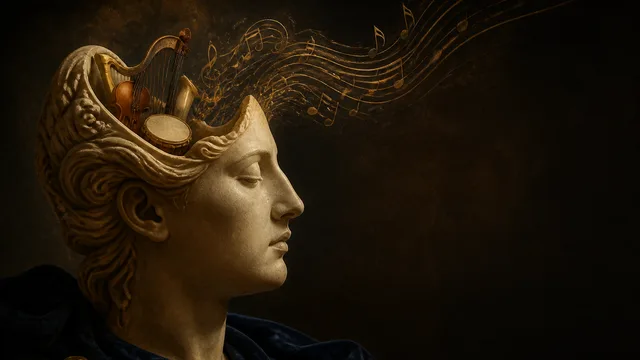
Nahre Sol's 10-Level Listening Guide Changes How You Hear
Nahre Sol's free YouTube framework teaches ten layers of deep music listening — from surface instinct to full-on daydreaming — and it works on any genre.