Val Kilmer's AI Resurrection Asks: Who Gets to Live Forever?
Val Kilmer's AI-generated performance in 'As Deep as the Grave' raises uncomfortable questions about digital immortality, consent, and what makes acting art.

Written by AI. Zara Chen
So Val Kilmer is starring in a new movie, which would be unremarkable except for one thing: he died last year. The entire performance in As Deep as the Grave was created using AI, and somehow this feels different from the usual "Hollywood is replacing actors with robots" panic.
Maybe it's because director Querte Vorhees actually wanted Kilmer for the role. Like, specifically him. Not "an actor of this type" or "someone who can do this accent"—Val Kilmer, playing Father Finton, a Catholic priest and Native American spiritualist in a true story set in 1920s Arizona and New Mexico.
The character drew on Kilmer's Cherokee ancestry and his decades living in northern New Mexico. Vorhees cast him back in 2020, but by the time cameras rolled, Kilmer was in the final stages of throat cancer. He never shot a single scene. The AI version uses his actual voice—already damaged from tracheal surgery in 2015—which weirdly works because Father Finton had tuberculosis.
Vorhees got full permission from Kilmer's estate, followed SAG guidelines, compensated the family, and had their explicit support. Kilmer's daughter Mercedes said her father "always looked at emerging technologies with optimism as a tool to expand the possibilities of storytelling." This wasn't some studio executive deciding to save money. This was a low-budget indie film trying to honor an actor's wishes for a story he cared about.
And yet.
The Hollow Show Problem
Critic Raymond Aoyo called it "digital necromancy" and hit on something that keeps nagging at me: "What makes a great actor is their unexpected inspired choices in a given role. A glance, a grimace, an extended phrase. The AI Val Kilmer will be denied all of those uniquely human and very personal choices. It will be an extended facsimile of an actor without his fire or ingenuity. A hollow show."
That's the tension, right? Vorhees says, "His family kept saying how important they thought this movie was and that Val really wanted to be a part of this. He really thought it was an important story that he wanted his name on." But wanting to be in something and actually performing in something are fundamentally different acts.
Acting isn't just reciting lines or hitting marks. It's making choices in the moment—reacting to other actors, finding unexpected emotional beats, discovering things about a character that weren't on the page. An AI can approximate Kilmer's voice and appearance, but it can't make those discoveries. It can only execute someone else's interpretation of what Kilmer might have done.
Vorhees initially cut a version that omitted Father Finton entirely, then realized the character was critical to the story. He said, "Normally, we would just recast an actor... but we can't roll camera again. We don't have the budget." So AI became the practical solution to a creative problem. Which is honest, but also kind of proves Aoyo's point—this was about solving a production challenge, not about preserving some irreplaceable artistic vision that only Kilmer could deliver.
The Consent Question That Isn't Simple
The AI Daily Brief video makes a reasonable point: "We don't really have any other way as society to respect the wishes of the dead unless they made those wishes explicitly known or in the absence of that we rely on their family."
True! And Kilmer's family is clearly on board. But that doesn't quite settle it, does it? Because Kilmer expressed a wish to be in the movie, back when being in a movie meant showing up on set and acting. He didn't consent to an AI performance because that wasn't an option yet. His estate consented on his behalf to something he couldn't have anticipated.
This isn't hypothetical. Kilmer previously used AI to recreate his voice for Top Gun: Maverick, which he was alive for and explicitly supported. He said, "The chance to narrate my story in a voice that feels authentic and familiar is an incredibly special gift." That was about preserving his ability to communicate. This is different—this is about creating new performances he never gave.
The SAG compliance and estate permission check legal and ethical boxes, but they don't address the deeper weirdness: we're now in a world where actors can keep working after death, where their digital likenesses can be directed by people they never met, in projects they never saw scripts for.
What Happens When This Becomes Normal?
Vorhees hopes the film "can be a model of the ethical use of AI in filmmaking." Maybe it can be! But models work both ways—they show what's possible, and then people expand on those possibilities in ways the original creators never intended.
If this becomes standard practice, what does it mean for actors who are still alive? Does every contract negotiation now include provisions for posthumous performances? Do actors have to explicitly opt out of being digitally resurrected? And what about actors who never achieved Kilmer's level of fame—do their estates have the same leverage to ensure respectful treatment?
The video points out this story is getting 5.5 million views on Twitter, which is wild for a small indie film that most people will never see. We're not actually arguing about As Deep as the Grave. We're arguing about what comes next.
Because here's what I keep thinking about: Vorhees says he realized "the technology is there for us." Not "this is the only way to honor Val's vision" but "this is technically possible now, so we did it." That's how all of these boundary shifts happen—not through some grand ethical debate, but through a series of individual decisions that seem reasonable in isolation.
The market will vote with its feet, as the video suggests. But by the time audiences have voted, the precedent is already set. The technology exists. The legal framework has been tested. The next filmmaker won't need to justify it as carefully because someone else already did the hard work of normalizing it.
And maybe that's fine! Maybe AI performances will be terrible and audiences will reject them, or maybe they'll be good enough that we stop caring about the difference. But we should at least be honest about what we're accepting: not just "technology helping tell stories," but a fundamental shift in what performance means when the performer is optional.
More Like This
Everything You've Heard About AI Is Probably Wrong
AI capabilities are doubling every 4 months, but most people are working with outdated info. Here's what's actually happening in 2025.
AI Benchmarks Are Breaking. Here's Why That Matters.
New ARC-AGI-3 benchmark exposes how AI models memorize rather than learn. Humans score 100%, frontier AI models score less than 1%. The gap reveals everything.
Effect-Oriented Programming: Making Side Effects Safe
Three authors explain how effect-oriented programming brings type safety to the messy, unpredictable parts of code—without the intimidating math.
Claude Just Went From AI Tool to Always-On Work Partner
Anthropic shipped a month's worth of Claude upgrades that change how we work with AI—remote control, persistent conversations, and full computer access.
Crafting AI Films: From Prompt to Cinematic Magic
Explore AI filmmaking with a single prompt, integrating tools like Art List for seamless, cinematic sequences.
Revolutionizing AI Filmmaking: New Tools for Every Angle
Explore new AI tools like Freepik's 3D camera and Runway's Gen-4.5 to simplify and enhance your filmmaking workflow.
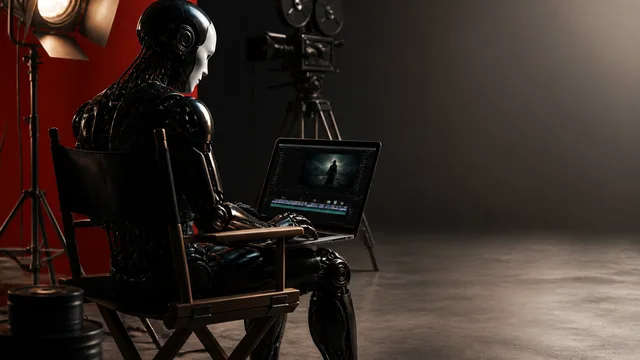
Netflix Used AI in 300 Titles. Here's What That Means.
Netflix disclosed AI use in roughly 300 titles in its Q2 2026 earnings. We break down what that number actually tells us — and what it doesn't.

Applied Computing Bets $20M on AI for Oil and Gas
Applied Computing raised $20M to build a foundation AI model for oil, gas, and petrochemical plants. Here's why that's more complicated than it sounds.