Dario Amodei Says AI Backlash Is a Crisis of Trust
Anthropic CEO Dario Amodei says AI's public backlash is a decades-long trust crisis—not a messaging problem. Here's what that diagnosis gets right, and what it sidesteps.

Written by AI. Zara Chen
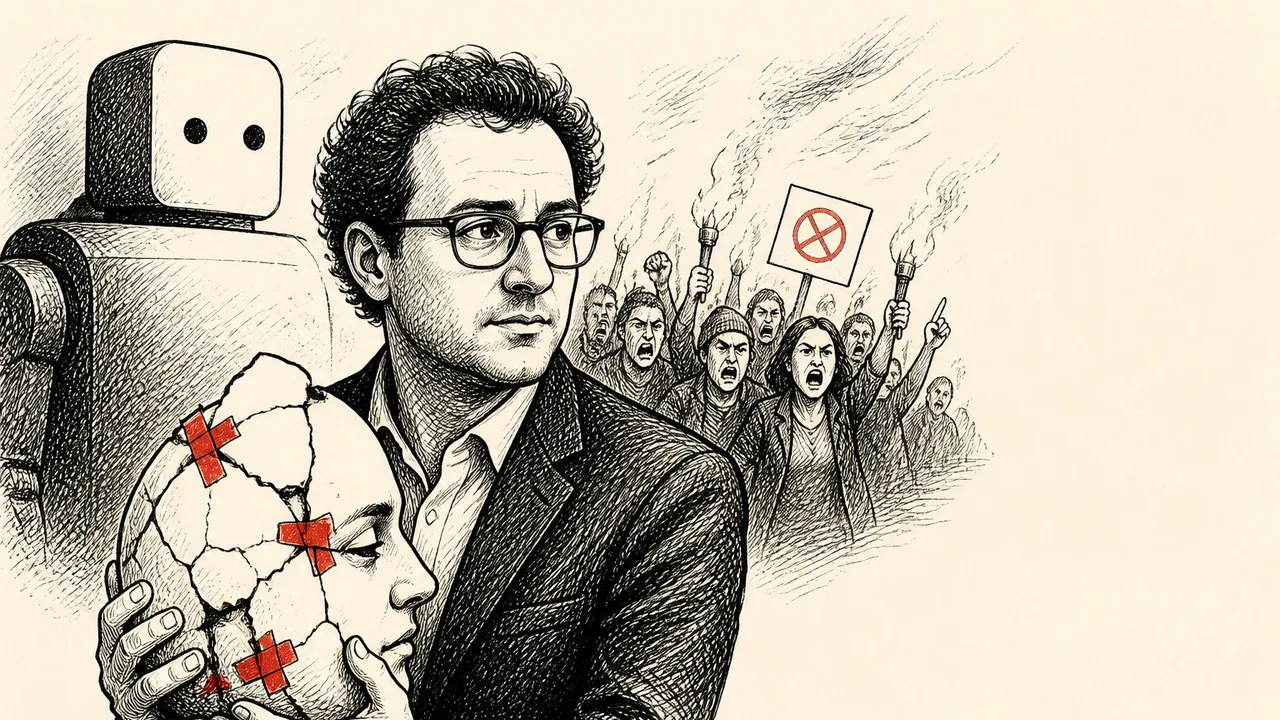
There's a particular kind of Silicon Valley move where you get ahead of criticism by naming it yourself—loudly, on your own terms, before anyone else can frame the story for you. Dario Amodei just did exactly that. And it's worth paying close attention to both the thing he said and the thing he was, by saying it, trying not to say.
On August 15, 2026, Anthropic's CEO posted a series of messages on X diagnosing the AI industry's growing public backlash as something more fundamental than bad PR. According to finance.biggo.com, Amodei argued the problem is "fundamentally a crisis of trust." Per stockpil.com, he pushed back specifically against the claim that his own warnings about AI dangers have helped fuel public anxiety—contending instead that the distrust runs far deeper than any single person's messaging, and has been accumulating for decades.
The diagnosis is sharp. The self-exoneration is a little more convenient.
"Cooking Up Some New Way to Screw Them Over"
What makes Amodei's framing interesting—and genuinely harder to dismiss than a standard CEO media statement—is that he's not blaming regulators, not blaming alarmist journalists, not blaming a public that simply doesn't understand the technology well enough. He's pointing at something structural.
TechCrunch quotes him directly: "I think that ordinary people don't trust companies, governments, or the tech industry and always suspect that we are cooking up some new way to screw them over."
That's a real thing. It's also not a new thing. The decades-long erosion of institutional trust—across government, media, finance, tech—is well documented. What Amodei is correctly identifying is that AI didn't arrive into a vacuum of goodwill; it arrived into a landscape already saturated with justified skepticism about what powerful institutions do with powerful tools. The Facebook Papers, the Cambridge Analytica saga, the Uber-ing of every industry with promises of efficiency that often meant "efficiency for shareholders, precarity for workers"—these are the waters AI is swimming in.
So when Amodei says the backlash isn't really about AI per se, he's onto something real. Public distrust of AI is at least partly a transfer of existing distrust from tech companies and institutions to their newest, most powerful product. That's not a messaging problem. You can't rebrand your way out of it.
But Who Exactly Is Being Defended Here?
Here's the tension that deserves some air: Amodei made these posts partly to push back on critics who argued that Anthropic's own doom-inflected AI risk rhetoric—the stuff about existential danger, catastrophic misuse, the genuine-sounding alarm bells—has itself stoked public fear and contributed to the backlash.
That's a pointed critique. Anthropic occupies a genuinely unusual position: it is simultaneously a commercial AI company racing to build increasingly powerful systems and an organization that has made "AI safety" central to its public identity. The critics asking whether those two things create contradictory messaging aren't being uncharitable. They're raising a real structural question.
Amodei's response, according to qz.com, is that the problem runs far deeper than any individual's messaging—implying his own warnings aren't meaningfully causal here. Maybe. But "this problem is bigger than me" is also a tidy way to sidestep accountability for your own role within it. The two things can be simultaneously true: the trust crisis is systemic and how AI executives talk about their technology shapes public perception in nontrivial ways.
The Cancer Gambit
The most striking piece of Amodei's argument is where he lands on solutions. According to Business Insider, he argued that the way for AI to win over the public is to actually cure cancer. And per Fortune, he put it bluntly: "The thing that will work is actually curing cancer." He also acknowledged: "I think by far the most accurate criticism of AI companies including Anthropic is that we haven't yet delivered on our big promises to benefit the world."
That's a striking admission, and credit where it's due—it's more honest than most CEOs get in public forums. The AI industry has made sweeping promises about transforming healthcare, accelerating scientific discovery, solving climate change, fixing education. The public heard those promises. The public is still waiting.
But the "cure cancer to rebuild trust" framing has its own problems, and they're worth naming. For one: curing cancer is not a deliverable on any near-term timeline, which means this argument functions less as a plan than as a deferral. Trust us until we've done something undeniably good enough that you have no choice but to trust us. That's not really an accountability structure—it's a request for patience.
For another: the framing implicitly suggests that if AI does eventually produce major medical breakthroughs, the trust problem resolves itself. But that's not obviously true. Massive, demonstrable benefits and legitimate concerns about surveillance, labor displacement, data exploitation, and algorithmic bias can coexist. People can appreciate that a technology does impressive things and still worry about who controls it, who profits from it, and what it does to their lives without their consent. These aren't irrational reactions that a cancer cure would erase.
What the Diagnosis Leaves Out
The structural trust-crisis framing is doing a specific kind of work here: it shifts the problem from "what AI companies have done or are doing" to "a broad cultural pathology that AI companies are victims of." And that's where it starts to feel like it's letting the industry off the hook.
Because some of the distrust directed at AI isn't ambient cultural skepticism that got misdirected. Some of it is specific. Workers watching AI tools be deployed to eliminate their jobs while executives collect record valuations aren't misreading the situation through a lens of generalized institutional anxiety—they're accurately reading what's happening. Communities whose faces got fed into training datasets without consent weren't being paranoid. Artists whose styles got scraped without credit or compensation weren't projecting decades of grievance onto an innocent technology.
Amodei's diagnosis of the feeling of distrust is accurate. His implied diagnosis of the cause—that it's mostly inherited from older, broader institutional failures rather than earned by AI companies' own choices—is where the argument gets slippery.
The trust crisis is real. It is structural. It has been building for decades. And AI companies, including Anthropic, have also done specific things that rational actors would reasonably distrust. Both of those are true.
Regulation and What Comes Next
One notable thread in Amodei's posts, flagged by finance.biggo.com, is his rejection of "binary framing" on regulation—suggesting the question isn't whether to regulate AI but how to do it without either strangling beneficial innovation or waving through genuine harms. That's a reasonable place to land, and it's worth noting that the AI regulatory landscape in the U.S. in 2026 remains contested and uneven, with Congress having produced limited comprehensive legislation even as state-level rules and executive actions have multiplied.
It's also worth noting, as TechCrunch observes, that trust is a word that follows OpenAI CEO Sam Altman around too—suggesting this isn't an Anthropic-specific problem but an industry-wide one. The leading AI labs are all, to varying degrees, asking the public to extend credit toward promises that haven't landed yet, in a domain where the downside risks are genuinely hard to quantify.
What would actually rebuilding trust look like? Amodei's answer—deliver real benefits, especially in healthcare—is part of it. But transparency about training data, meaningful redress mechanisms for harms, governance structures that aren't purely self-regulatory, and actual regulatory engagement rather than lobbying against oversight would probably need to be in that picture too. The sources here don't give us Amodei's detailed policy vision, and it would be unfair to invent one.
What we do have is a CEO correctly naming a real problem while framing it in a way that happens to be fairly comfortable for the company he runs. That's not cynicism—it's just pattern recognition.
The trust crisis in AI is real, it's structural, and it was inherited. It was also added to. The question Amodei's post doesn't quite answer is: what is Anthropic specifically willing to do differently?
More Like This
This Creator Got Shadowbanned on YouTube in 25 Days—On Purpose
A vidIQ creator deliberately shadowbanned their channel with AI-generated content to expose how YouTube's algorithm actually works. The results are wild.
Anthropic Found a Secret Tracker in Claude Code
A hidden tracker in Claude Code was secretly monitoring Chinese users until a security researcher exposed it. Here's what happened and why it matters.
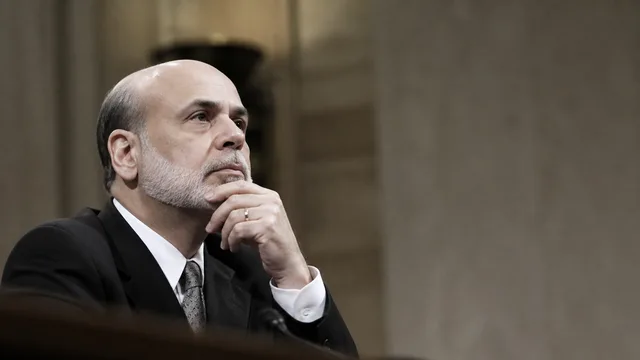
Ben Bernanke Joins Anthropic's AI Oversight Trust
Former Fed Chair Ben Bernanke joins Anthropic's Long-Term Benefit Trust. Here's what his economic expertise actually means for AI governance—and what it doesn't.
![Man in Laravel cap looking thoughtful beside phone displaying "Debounce for [301]" hashtag on pink background](https://static.buzzrag.com/articles/laravel-13-6-drops-debounceable-jobs-and-json-health-checks/thumb-5e646253.webp)
Laravel 13.6 Drops Debounceable Jobs and JSON Health Checks
Laravel 13.6 introduces debounceable jobs, JSON health check responses, and Cloudflare email support. Here's what developers need to know.

When AI Starts Building AI: The Recursive Loop Debate
Ryan Greenblatt argues AI could compress five years of research into one. The harder question is what happens after—and who that AI actually works for.
Anthropic's Self-Improving AI Paper Has a Regulator Problem
Anthropic's new paper on recursive self-improvement reveals an oversight gap that existing AI regulation—EU AI Act, executive orders—was never designed to address.

Claude Tag Wants to Run Your Workday
Anthropic's Claude Tag embeds AI directly into team Slack channels. Here's what it actually does, what it can't do yet, and what it means for how teams work.

Claude Fable 5 Prompting Habits That Actually Matter
Nate Herk distilled Anthropic engineer insights into six Claude Fable 5 prompting habits. Here's what holds up, what's wild, and what it means for how you work.