Claude Tag Wants to Run Your Workday
Anthropic's Claude Tag embeds AI directly into team Slack channels. Here's what it actually does, what it can't do yet, and what it means for how teams work.

Written by AI. Bob Reynolds
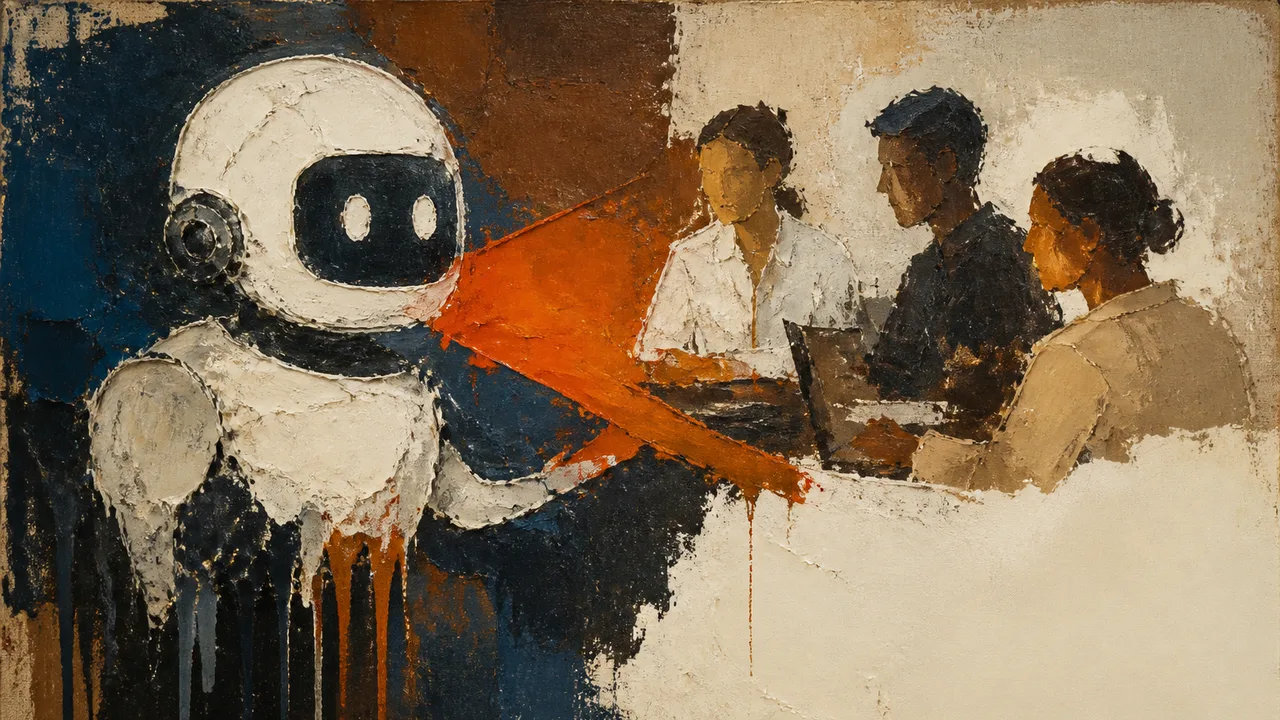
Photo: AI. Saskia Aaltonen
The opening exchange in Anthropic's new promotional video for Claude Tag is either the most revealing thing a company has ever accidentally said about its product, or exactly the right thing to say on purpose. Someone asks Boris Cherny, Head of Claude Code, what he'd do if there were no Claude in his Slack channel. His answer: "I don't know. I can't remember a world without Claude in the channel."
That's not a hedge I'm going to paper over with "it depends where you sit." That's dependency — and whether you read it as endorsement or cautionary tale says a lot about where you think AI in the workplace is actually headed. My read: it's both, and the distinction matters enormously depending on whether you're the person who chose to become dependent or the person whose manager made that choice for them.
What Claude Tag Actually Is
Until now, AI tools like Claude worked the way most software does: you open it, you ask it something, it answers. You're in control of the interaction because you initiate it.
Claude Tag inverts that. You add it to a shared team channel in Slack — the digital equivalent of a shared office conversation space — and Claude begins monitoring, participating, and acting on its own judgment about when it's needed. It doesn't wait to be summoned. It watches what's happening and jumps in.
The practical implications are significant. A software team can instruct Claude Tag to watch a channel where colleagues flag bugs — small problems in the code where something doesn't work as expected — and Claude will automatically draft proposed fixes, which engineers can review and approve. A product manager can ask it to track ten different projects simultaneously and deliver a status summary each morning. A new employee can ask it a question about company benefits at midnight and get an answer, because Claude Tag is connected to the company's internal documents and doesn't sleep.
Cat Wu, Head of Product for Claude Code, describes the core shift this way: "In the past, you had to open Claude and you had to ask it something. With Claude Tag, Claude jumps in. It's proactive. It knows when to jump in. It'll do the work even if it takes days or weeks and it'll follow up."
That's a meaningful change. Most software tools are reactive — they do what you tell them when you tell them. Claude Tag is designed to be ambient, persistent, and self-directing within the boundaries you set for it.
The Research That Made It Possible
The capability claim here is substantial, and Anthropic has done the work to back part of it up. According to research published by the Anthropic Institute on recursive self-improvement, the company's models can now sustain coherent, goal-directed work for extended periods — Cherny cites 16 hours at a stretch in the video, and notes they've reached the point where they can't precisely measure the upper limit. That's not a marketing number pulled from nowhere; it reflects genuine progress in what researchers call "long-horizon" performance — the ability to stay on task and make reasonable decisions over time, not just answer a single question well.
The memory piece is where Cherny and Wu are most candid about the difficulty. "Memory took a long time to crack," Cherny says. "I think we tried to get it right for Claude Code for years and it feels like we finally got it right." What this means in practice: Claude Tag can hold channel-specific instructions persistently. If you tell it to monitor only a certain category of issues, it will. If someone else expands that scope later, it adjusts. It accumulates context the way a new employee eventually learns the unwritten rules of a team — except it doesn't forget them when a new project starts.
The honest version of that analogy is also worth noting: a new employee who learns the unwritten rules might also internalize the bad ones.
The Genuinely Interesting Part: It's Multiplayer
The feature that strikes me as most novel — and most underexplored in the hype around AI tools — is what Cherny and Wu call the "multiplayer" dimension.
Almost every AI tool in widespread use today is a private conversation. You ask, it answers, you copy the result and paste it somewhere your colleagues can see it. The collaboration is one step removed. Claude Tag changes that by operating in shared channels where the entire team can see what it's doing, correct it, redirect it, and learn from how their colleagues are prompting it.
Wu makes the case plainly: "Claude Tag is learning how to better work with us by hearing the guidance that we're giving it. And at the end of the day, the customer gets a better result because it's not just my opinion of how we should solve it. It's our whole team able to jump in to nudge this to the best possible state."
There's something genuinely interesting about AI agents working together in shared spaces rather than isolated sessions — the knowledge of how to use the tool spreads organically, instead of being siloed with whoever figured it out first. Cherny notes this happened inside Anthropic itself: a few people started using Claude Tag in their channels, others observed, and it spread without top-down mandates.
Cherny also makes a point worth sitting with: "So many people are afraid because they have to open a terminal, even the desktop app, because you have to deal with Git and code checkouts and stuff. And with Tag, they can just do it." He's describing the removal of technical barriers that have historically kept non-engineers from contributing to software projects. That's a real gain. The question is what replaces those barriers — and whether the new ones are more or less legible to the people running into them.
The Tensions Worth Watching
This is where I stop relaying the pitch and start asking the questions the video doesn't.
First: autonomy and accountability are not the same problem. Claude Tag is designed to work for extended periods, across multiple channels, on behalf of multiple users, without constant human oversight. That's the product. Anthropic has done serious alignment research to make its models behave reliably within instructions. But "behaves reliably within instructions" is only as good as the instructions. When Claude Tag acts on a month-long experiment and nobody reviewed the intermediate steps, who owns the decisions it made along the way? The agents running overnight on scheduled tasks look efficient right up until the moment something goes wrong at 3 a.m. and nobody's watching.
Second: the "democratization" framing deserves scrutiny. The argument is that Claude Tag lets more people contribute to technical work by removing the expertise barrier. That's true as far as it goes. But removing the barrier to contribution isn't the same as distributing the judgment about what to build. The people setting the high-level objectives for Claude Tag are still the people with organizational power. What changes is the execution layer — and the people whose execution labor is being replaced are rarely the ones setting the strategy.
Third: persistent memory in a shared channel is a new kind of institutional artifact. When Claude Tag learns your team's preferences, those preferences become embedded in the tool in ways that may outlast the people who set them. That's either valuable institutional memory or calcified organizational habit, and distinguishing between the two requires exactly the kind of human judgment that ambient AI is designed to reduce the need for.
None of these tensions mean Claude Tag isn't useful. They mean it's a significant change to how decisions get made inside organizations, not just a productivity upgrade for the people who were already doing the work.
The video ends with both Cherny and Wu describing a future where Claude Tag expands beyond Slack to every platform where teams collaborate — the goal, in Wu's words, being that "every knowledge worker is within arm's length of Claude no matter where they're getting their work done."
That's either the most useful thing that happens to office work in a generation, or the point at which we collectively forgot what it meant to be in the loop. Probably, as with every platform shift before this one, it's both — and the difference will depend on choices that organizations are only just starting to think about.
More Like This
Anthropic's Claude Code Update: AI Agents Get Planning Tools
Anthropic released Claude Code v2.1.92 with Ultra Plan for transparent AI project planning and Managed Agents for deployment without infrastructure.
Anthropic's Three Tools That Work While You Sleep
Anthropic's scheduled tasks, Dispatch, and Computer Use create the first practical always-on AI agent infrastructure. Here's what actually matters.
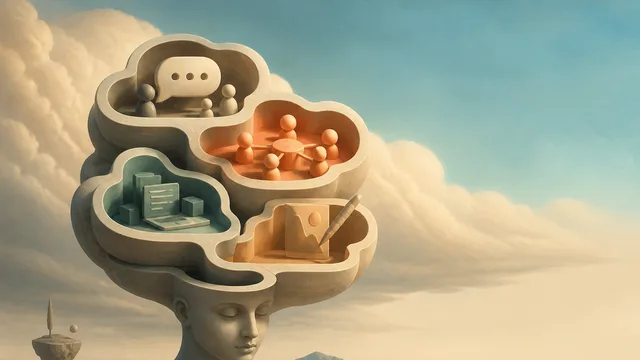
Mapping the Claude Ecosystem: Four Products, One Platform
Claude has grown from a chatbot into a layered ecosystem of products and automations. Here's what each piece actually does—and what questions it raises.
Claude Tag Gives AI Its Own Identity in Slack
Anthropic's Claude Tag introduces a new access model where the AI acts under its own identity in Slack—not yours. Here's what that means for security teams.
Anthropic Launches Claude Fable 5 at Tokyo Keynote
Anthropic unveiled Claude Fable 5 and Mythos 5 at its Tokyo keynote, with new managed agents, dynamic workflows, and a novel approach to AI safety guardrails.
Anthropic Bet on Teaching AI Why, Not What. It's Working.
Anthropic's 80-page Claude Constitution reveals a fundamental shift in AI design—teaching principles instead of rules. The enterprise market is responding.
Framer 3.0 Puts AI Agents on the Design Canvas
Framer 3.0 embeds AI agents directly on the design canvas. A hands-on demo shows what that actually means for web designers and startup founders.
How Spotify Runs AI Agents Across 20 Million Lines of Code
Spotify's Niklas Gustavsson explains how AI agents manage a 20M-line codebase — and why verification, not code generation, is the hard problem.