CTE Estimate for Former NFL Players Corrects Donor Bias
A new model estimates CTE pathology in 74.5% of deceased former NFL players. Its donor-bias adjustment changes the number, but not its limits for living players.

Written by AI. Priya Sharma
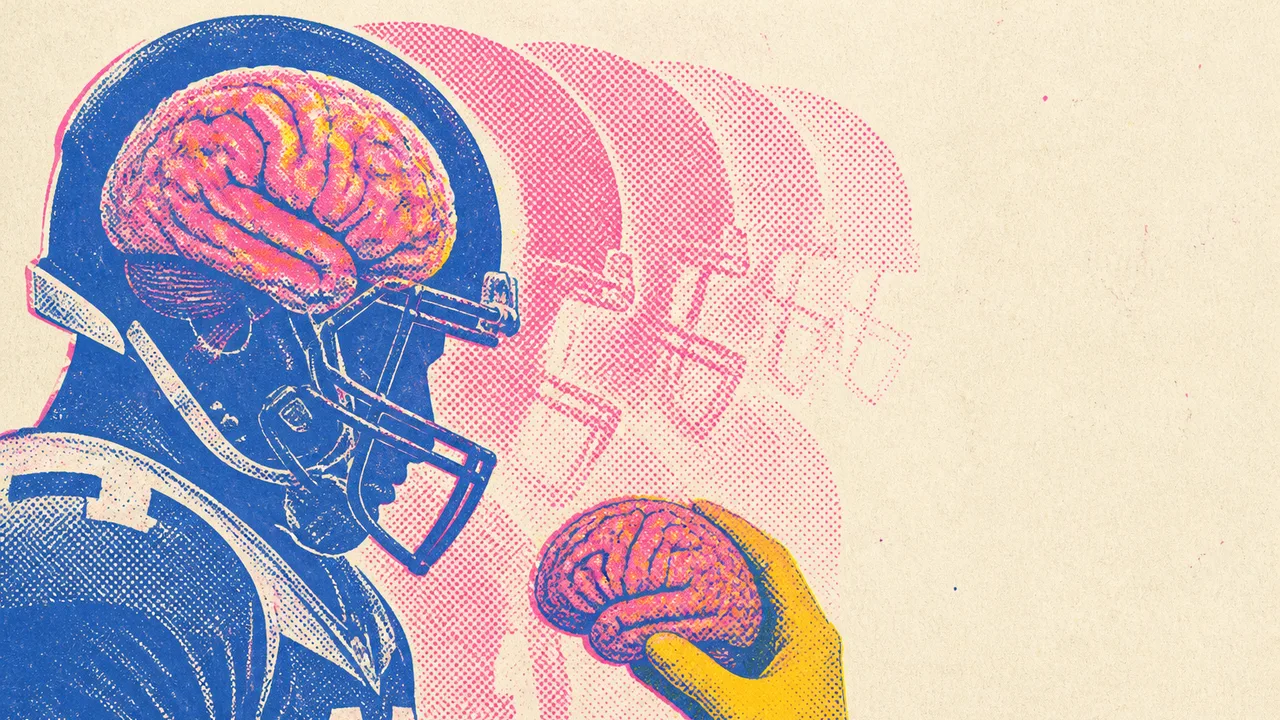
Boston University-led researchers estimate that 74.5% of former NFL players who died between 2008 and 2023 had the brain pathology of chronic traumatic encephalopathy, or CTE. The figure, published October 28 in JAMA Network Open, comes from an attempt to answer a problem that has shadowed CTE research for years: families who suspect something was wrong may be more likely to donate a player’s brain for examination.
The researchers had tissue from 387 deceased former players. They found CTE pathology in 362 of those brains, about 94%. They then used information about a larger group of 2,362 deceased former players, including those whose brains had not been examined, to estimate how much the donation process might have inflated that observed rate. The result was 74.5%, a modeled estimate for the deceased group rather than a diagnosis in every player.
The finding in donated brains is a direct observation. The lower estimate addresses the question a brain bank alone cannot answer: what might the rate have been among the players who never entered it? The model gives that question a more informed answer, provided the information used to account for donation captures the important differences between donors and other players.
Why a Donated Brain is a Difficult Denominator
CTE is diagnosed by examining brain tissue after death. That requirement makes the population of donated brains indispensable to research, but it also gives families a role in determining who enters a study. A family concerned about a former player’s memory or behavior has a reason to seek answers through donation. A family without those concerns may have less reason to do so. If those groups also differ in their likelihood of CTE pathology, the donor rate will misrepresent the wider group.
The team used death-certificate records and other information about former players to examine differences associated with donation, including cognitive symptoms, age at death, playing position and years in the league. It estimated that families of players with cognitive symptoms were about five times more likely to donate a brain than families of players without those symptoms. The researchers used that estimated difference in donation likelihood to adjust the rate observed in the brain bank.
That is the route from roughly 94% among examined brains to 74.5% among the larger deceased group. The adjustment does not show what is in the unexamined brains. It uses an observed relationship between symptoms and donation to infer what might be found if the wider group’s brains could be examined. Because cognitive symptoms are an imperfect guide to CTE pathology, and death records may omit symptoms or record dementia with other causes, the answer remains dependent on the model’s assumptions.
The comparison also shows why the donor percentage and the adjusted percentage should travel with their denominators attached. The former describes people whose families donated their brains; the latter estimates pathology across a defined group of deceased former NFL players. Neither measures how many living players have CTE. A finding of pathology also does not tell us whether a person experienced symptoms: early changes may never have caused them.
From a Wide Range to a Narrower Estimate
The uncertainty over donation did not begin in October. In 2017, an analysis of donated brains yielded an estimate of 99% among former NFL players in that donor sample. Such a result describes a group assembled through donation, where concern about symptoms may influence whose tissue researchers receive. It helped make CTE impossible to ignore, while leaving the prevalence question for former players more broadly unresolved.
An August 2026 study from the same research group moved toward that broader question. Researchers identified 878 former NFL players who died from 2016 through 2021 and examined 235 donated brains. At least 25% of the identified players had CTE. Researcher Daniel Daneshvar described a possible range extending as high as 98%, reflecting how little could be known about the players whose brains were not examined.
The October study covers a different death period, 2008 through 2023, and uses information about donors and other deceased players to estimate the effect of donation bias. Its 74.5% estimate falls within August’s broad range, but the two results are not a before-and-after measure of disease. The cohorts differ and their methods answer the uncertainty differently. What changed is the researchers’ ability to put a number on one reason the examined brains may be unrepresentative.
The estimate concerns former players who died during the study period. It cannot assign a probability of CTE to someone playing today. Nor does it turn a postmortem finding into a forecast of dementia for an individual former player.
What the Estimate Leaves Open
Repetitive head impacts are associated with CTE, and the prevalence estimate adds a population-level perspective to the pathology found in donated brains. It does not, by itself, isolate how much of that pathology resulted from NFL play rather than other exposures across a lifetime. Russell Lonser, a researcher who was not involved in the study, said the result was “an estimate from a model and should be read that way”, in an interview with Scientific American. He said a comparison group of similar men who had not played contact sports would help clarify football’s contribution.
The researchers found results in the donated brains and had a reason for adjusting that result. Following players with and without symptoms over time, then examining brains after death and comparing them with an appropriate group without head-impact exposure, could connect observed pathology more closely to symptoms and exposure. Such a study would take far longer than reading a brain-bank percentage. It would also answer questions that a brain-bank percentage, however carefully adjusted, cannot carry alone.
For now, 74.5% is best understood as an estimate of any CTE pathology among the former NFL players who died in a particular 16-year period. Its improvement over a donor-only figure is a more explicit account of who reaches the brain bank. Its remaining uncertainty sits with the players who did not.
More Like This

CTE Found in at Least 1 in 4 Former NFL Players
A new study of 235 donated brains finds CTE in at least 25% of former NFL players—and researchers say that number is almost certainly an undercount.

Shor's Algorithm and the Future of Encryption
Shor's algorithm can crack RSA encryption—in theory. Here's what it actually does, how close we are, and why the answer is more nuanced than headlines suggest.

Quantum Field Theory, AI, and the Gravity Problem
Physicist Ross Jenkinson explains how quantum computing and AI could unlock the biggest unsolved problem in theoretical physics: reconciling quantum theory with gravity.