Canva Cuts 1,271 Jobs in a 22% Workforce Restructuring
Canva is cutting 1,271 jobs, or 22% of its workforce. Its CEO calls the reset a 'refound'; the effects on teams, users and future hiring remain unclear.

Written by AI. Marcus Chen-Ramirez

Canva is cutting 1,271 jobs, a reduction affecting about 22% of its workforce. Its CEO has called the restructuring a company “refound.” For employees, that phrase arrives alongside a number: roughly one job in five. For the people who use Canva, the question is what kind of company will be left to build and support the product.
The 22% figure puts the decision beyond the scale of a routine adjustment to staffing. A company can close an initiative or trim a hiring plan without asking most of its organization to work differently. Removing this many roles makes that difficult. Managers will have to decide which work ends, which work moves and who takes responsibility for what remains.
Canva has not identified the affected teams or established a causal role for AI in the cuts. Those limits leave room to examine what a “refound” would have to accomplish, without turning a fashionable explanation into a finding.
A Refound Has to Change the Work
“Refound” is an unusually ambitious word for a restructuring. It suggests the company intends to reconsider how it operates, rather than simply run its existing plan with fewer people. The strongest case for doing so is straightforward: an organization built for one stage of growth may accumulate layers of approval, overlapping projects and work that no longer serves its priorities. Removing some of that complexity could give remaining teams clearer decisions and more time for products customers use.
That case depends on choices the slogan cannot make. If a team previously handled three projects and loses a fifth of its staff, keeping all three projects alive is a workload decision, whatever the organization chart says. A reset has to name the work it will stop. It also has to decide where specialists are essential. A product team may need fewer handoffs; it still needs someone to investigate a bug, explain a confusing feature or respond when an organization cannot access its designs.
The percentage also hides uneven effects. A 22% company-wide cut could leave some functions largely intact while changing others beyond recognition. Users would experience those versions of the restructuring differently. Losing people on an abandoned project may have little immediate effect on a current customer. Losing people who maintain a heavily used feature or resolve support requests could show up quickly. Without a team-level breakdown, the headline number measures the size of the change, not its operational shape.
Employees face a related uncertainty. An eliminated role is a direct loss for the person holding it. For colleagues who remain, the next question is whether responsibilities, deadlines and decision-making authority change together. A smaller team with fewer projects may be able to work more coherently. A smaller team with the same commitments inherits a backlog. Neither outcome follows automatically from the word “refound.”
The AI Question Needs a Job Description
AI has become a convenient all-purpose explanation for changes in technology work. Design software is an especially tempting place to make that leap: generating an image, drafting text or suggesting a layout can compress a task that once took several steps. Canva also competes in a market where customers expect tools to get faster and easier to use. It is reasonable to ask whether advances in AI influence how a design platform plans its future.
A claim that AI caused these layoffs, however, would need to connect particular tools to particular jobs. Did software take over duties previously performed by employees? Did the company cut teams because it expects AI features to change demand for their work? Is it shifting spending toward different roles? Those are different mechanisms, with different consequences for workers and customers. A broad reference to technological change would not tell employees why their positions ended.
Consider a customer-support request. An AI assistant might draft an answer to a common question, saving a human agent time. The same product could generate more requests if customers struggle with new features, account settings or unexpected results. Counting the minutes saved on a draft would tell only part of the staffing story. Someone must measure whether the answer solved the problem and whether harder cases now consume more of the team's day.
The same caution applies to software development. A tool that generates code can accelerate a first draft; a product still needs testing, maintenance and decisions about what users should be able to do. Faster production can reduce some tasks and create others. The useful question for Canva is how any technology it adopts changes the work required to deliver a dependable service. That answer will be more informative than attaching “AI” to a large number of job cuts.
Who Carries the Cost of a Smaller Company?
The immediate cost falls on the 1,271 people whose jobs are being cut. Other costs, if they arise, may be distributed less visibly. Remaining employees could absorb work that no longer has an owner. Customers could wait longer for help or find that improvements they expected take longer to arrive. Alternatively, dropping lower-priority work could free teams to improve the parts of Canva that people use most. Each possibility depends on implementation, not the size of the announcement.
There is also a reason companies attempt painful restructurings rather than keep every project running indefinitely. Staff time is finite. Supporting an old workflow, building a new feature and fixing an urgent defect all draw on people who cannot do everything at once. A company that makes those trade-offs explicit can sometimes serve users better than one that preserves every initiative on paper while stretching its teams thin.
The harder test is whether Canva makes the trade-offs legible to the people living with them. Employees need to know who makes decisions once teams change. Customers need working products and a route to help when something breaks. Those needs can be easy to lose in a discussion dominated by percentages and executive language. A design platform ultimately gets judged when someone opens a project and tries to finish it.
What to Watch After the Announcement
The next signals will be concrete: which functions lose roles, which projects stop, how responsibilities move and whether Canva hires for new positions after the cuts. Renewed hiring would not undo the loss of 1,271 jobs, but the types of roles could reveal the priorities behind the reset. A company hiring for different skills while retiring other work is making a different organizational bet from one simply trying to operate at a smaller size.
Product changes will offer another test, though they take longer to appear. Customers can watch whether features they rely on keep working, whether support remains accessible and whether new releases solve problems rather than add steps. Employees who remain will see sooner whether the company has reduced its ambitions along with its headcount.
Canva has put a name to its intended future. The people left to build it, and the people who depend on what they build, will find out what “refound” requires in the work that follows.
More Like This

Google's Open Knowledge Format for AI Agents
Google's Open Knowledge Format promises to fix how AI agents navigate knowledge bases. Here's what it actually does, what it doesn't, and why the structure matters more than the tool.
Claude Marketing Skills Ranked by GitHub Stars (2026)
Which Claude Code marketing skill repos actually earn their stars? We map the top packages—from CRO to paid media—and ask what GitHub popularity really measures.
Karpathy's Obsidian Setup Challenges RAG Orthodoxy
Andrej Karpathy's markdown-based knowledge system questions whether most developers actually need traditional RAG systems at all.
Tech Career Decisions: What to Know Before 2026
Marina Wyss breaks down seven tech roles—from software engineering to applied science—through a decision tree based on personality, not just skills.

AI Anxiety and Early Capitalism: Who Controls the Tools?
An essay compares AI anxiety with early capitalism. The useful question for workers and buyers is who controls AI tools, skills, and the gains from using them.
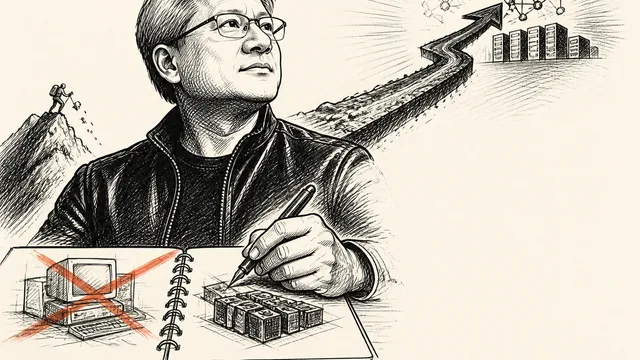
Jensen Huang Built NVIDIA by Admitting He Was Wrong
Jensen Huang told Y Combinator's Startup School how NVIDIA survived its founding mistake — and what that story means for anyone building a business today.

AI Agent Hallucinations: Causes, Risks, and Fixes
AI agents don't just hallucinate—they act on it. Here's what causes agentic AI errors, why they cascade, and what system design can actually do about them.

How to Structure Content So AI Search Cites Your Brand
Brian Dean's four-part framework for getting cited by ChatGPT, Gemini, and Claude—without chasing tactics that expire in three weeks.