Block's Buzz Puts Agents at the Center of Your Team
Block's Buzz is an open-source, agent-native chat app built on Nostr. Here's what it actually does, where it falls short, and who should try it now.

Written by AI. Dev Kapoor
Photo: AI. Mika Sørensen
Every few months, something drops in the developer community that makes people type "Slack killer" into the discourse machine. Usually the thing is fine. Usually Slack is still there on Monday.
Buzz might be different — not because it's definitively better than Slack yet, but because the architectural choices underneath it point somewhere that Slack structurally cannot follow.
Block's Buzz is an open-source chat platform built on Nostr, an open protocol, with AI agents treated as first-class team members rather than bolt-on integrations. In a recent walkthrough with Greg Isenberg, developer Vinny — who works on the Wasp full-stack framework — demoed the current state of the software with enough candor to make the session worth paying attention to.
The Harness Idea Is the Real Innovation
Most of the "Slack killer" framing misses what's actually interesting about Buzz. The visual similarity to Slack is almost incidental. What Vinny kept returning to was openness — and one specific expression of it: swappable agent harnesses.
Every agent in Buzz sits on top of a runtime harness — Claude Code, Codex, Goose, Open Code, take your pick. You can swap that harness at any time. The novel part is that swapping doesn't cost you anything: all your chat history, project context, and built artifacts travel with the agent to the new model underneath.
If you've spent the last year ping-ponging between AI coding tools — getting comfortable with one, watching a newer model land, reluctantly starting over — you immediately understand why this matters. The context you've accumulated is the real asset. Right now, that asset evaporates every time you switch tools. Buzz is betting that preserving it is worth building an entire platform around.
"You can change the harness under your agent," Vinny explained during the demo, "and all the context that's in your chats — everything you've been chatting about, the apps you're building — that context comes with you to that new harness, to that new model."
The same logic applies to agent skills. If you've built a Claude Code setup with globally installed skills and configuration files, those carry straight into Buzz. Nothing needs to be rebuilt. The platform wraps what you already have rather than replacing it.
What It Can Actually Build Today
Vinny's live demos were the most grounding part of the session. He asked Buzz's agents to spin up a CRM app using the Wasp framework and deploy it to Railway — and got back links, screenshots, and a live app before he'd finished reviewing what the agent had done. Not a mockup. A deployed, functioning CRM.
The more interesting demo was a tweet analytics leaderboard his team had been running. He built a full-stack dashboard that tracked tweet performance, then wired it to a public-facing API. A daily workflow pulls stats from that API into a Buzz channel, where the agent Fizz analyzes them and surfaces patterns. The whole loop — app, API, daily digest, agent analysis — runs inside Buzz without him manually copying data between tools.
"This is like the 'boring stuff' that every business has," Isenberg noted during the walkthrough, "that if you can figure out how to have some unfair advantage here, it's what separates a good business from a bad business."
That framing is accurate. The demo isn't showing off flashy AI capabilities — it's showing a mundane business workflow (track what's working, review it regularly, act on it) with the friction almost entirely removed.
The Data Ownership Argument
There's a political dimension to Buzz that the "Slack killer" framing tends to skip over. Vinny spent real time on it, and it's worth taking seriously.
Slack holds your organizational memory. Every decision, every async debate, every thread where someone finally figured out why the auth was broken — that's all sitting in Slack's infrastructure, effectively locked in. Migration is painful at best, impossible at worst. You stay not because you love the product but because the switching cost is your entire institutional context.
The same dynamic is emerging with AI models. As Vinny put it: "You're building your businesses on top of these tools. You should have flexibility and freedom and control of these tools." The model landscape is unstable — pricing can shift, capabilities get restricted, models get pulled. Building your workflows on a single proprietary platform compounds that instability.
Buzz's answer is the relay architecture. Your chats, your projects, your agent history — they live on a relay server that you control or host yourself. The Nostr protocol underneath is open, which means you're not accumulating context inside a vendor's database. You're accumulating it somewhere you can actually reach.
The Bitcoin Lightning integration Vinny mentioned — still theoretical, not yet live — extends this logic toward compute payments. Because Nostr is tightly coupled with Lightning, the architecture already anticipates a world where agents pay for compute, or teammates tip each other for contributions, without routing those transactions through a platform that takes a cut and owns the record.
Shared Compute and the Access Question
One feature that doesn't get enough attention in the coverage: shared compute. Buzz lets a team run a local model on one machine and share it across multiple devices. One beefy laptop or desktop running an open-source model; several teammates drawing on it from their own computers.
This is genuinely new. It's a direct response to the access problem in AI tools — good models cost real money at the frontier, and small teams or bootstrapped founders often can't justify the per-seat cost of multiple unlimited plans. Shared compute doesn't solve the problem completely, but it changes the calculus for scrappy teams who want to experiment with local models without each person bearing the full infrastructure burden.
It's also the clearest expression of what Vinny means when he talks about openness. Shared compute only works if you control the model and the infrastructure underneath it. You can't share a Claude subscription across machines. You can share a locally-run model that you actually control.
Where It Falls Short
Vinny was honest about the gaps, which is more than most demos offer. Recurring workflows — automated tasks that trigger on a schedule — weren't working reliably at the time of the recording. The platform is slower than working directly in Claude Code or Codex, because it's routing through the relay layer. And the complexity that makes Buzz powerful — agents, harnesses, relays, worktrees — creates a setup overhead that solo developers iterating on small projects might find worthwhile, but that teams doing complex production engineering probably won't want to absorb yet.
The honest summary from Vinny: "This is early preview software. Some things don't work that great."
That's the right frame. Buzz is a bet on an architecture, not a finished product. The Git hosting on your relay — which lets agents push code to repositories you control rather than GitHub — signals that Block's ambitions reach well past Slack. But that vision is substantially ahead of what's currently stable.
Who Should Actually Use This
The audience Vinny kept returning to: solopreneurs, small startup teams, technically-curious founders who want to understand how agent-native workflows actually feel before everyone else does. The ideal user has probably already set up Claude Code, already has some sense of how coding agents behave, and is frustrated that switching models means starting the context clock over.
For that person, Buzz is worth the friction of early software. Not as a Slack replacement today, but as a working prototype of what team software might look like when the agent-to-human ratio on your team starts tilting toward agents.
"The people that live in the future," Isenberg said near the end of the session, "are the people that can look around the corner."
It's a bit much as a closing line, but the underlying point holds. Open protocols, portable context, swappable model harnesses, shared compute, on-relay Git hosting — none of these are gimmicks. They're architectural decisions that compound over time. The question isn't whether Buzz is better than Slack right now. The question is whether the compounding runs in Buzz's direction, and how long it takes to get there.
Dev Kapoor is Buzzrag's open source and developer communities correspondent.
More Like This
NotebookLM + Claude: Teaching AI Agents Domain Expertise
A developer demonstrates using NotebookLM to generate Claude Code skills—custom knowledge modules that teach AI agents specific domains in minutes.
Claude Code + Paperclip: Running Companies With AI Agents
Julian Goldie shows how Claude Code and Paperclip create AI agent companies with org charts, roles, and budgets—no human employees required.
ADK vs RAG: When Your AI Should Act vs. Remember
Katie McDonald from IBM Technology explains the fundamental choice in AI architecture: build systems that perform tasks or retrieve knowledge—or both.
Open-Source AI Agents Get Context Memory Via Airweave
Airweave turns workplace apps into searchable knowledge layers for AI agents, addressing the context problem that causes hallucinations and failures.

Claude Tag Wants to Run Your Workday
Anthropic's Claude Tag embeds AI directly into team Slack channels. Here's what it actually does, what it can't do yet, and what it means for how teams work.
AI Agents Are Accelerating—But Nobody Agrees What That Means
New benchmarks show AI coding agents tripling capabilities in months. Researchers urge caution. Investors price in economic collapse. Welcome to 2026.
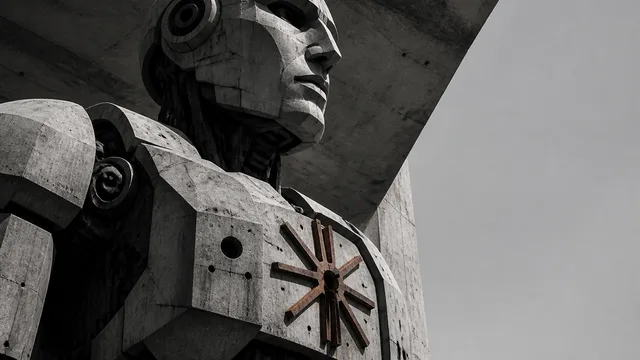
Anthropic Launches Claude Fable 5 at Tokyo Keynote
Anthropic unveiled Claude Fable 5 and Mythos 5 at its Tokyo keynote, with new managed agents, dynamic workflows, and a novel approach to AI safety guardrails.

Samsung S26 Ultra Cinematic Video: Settings and Workflow
A deep dive into shooting cinematic video on the Samsung S26 Ultra—covering APV codec standards, DaVinci Resolve access, and a corruption bug worth tracking.