Berson Takes Over CBS and TNT Sports With Rights in Play
David Berson will lead CBS and TNT Sports under one owner. Their March Madness partnership and WBD's NBA settlement show what may change for viewers and leagues.

Written by AI. Jai Trivedi
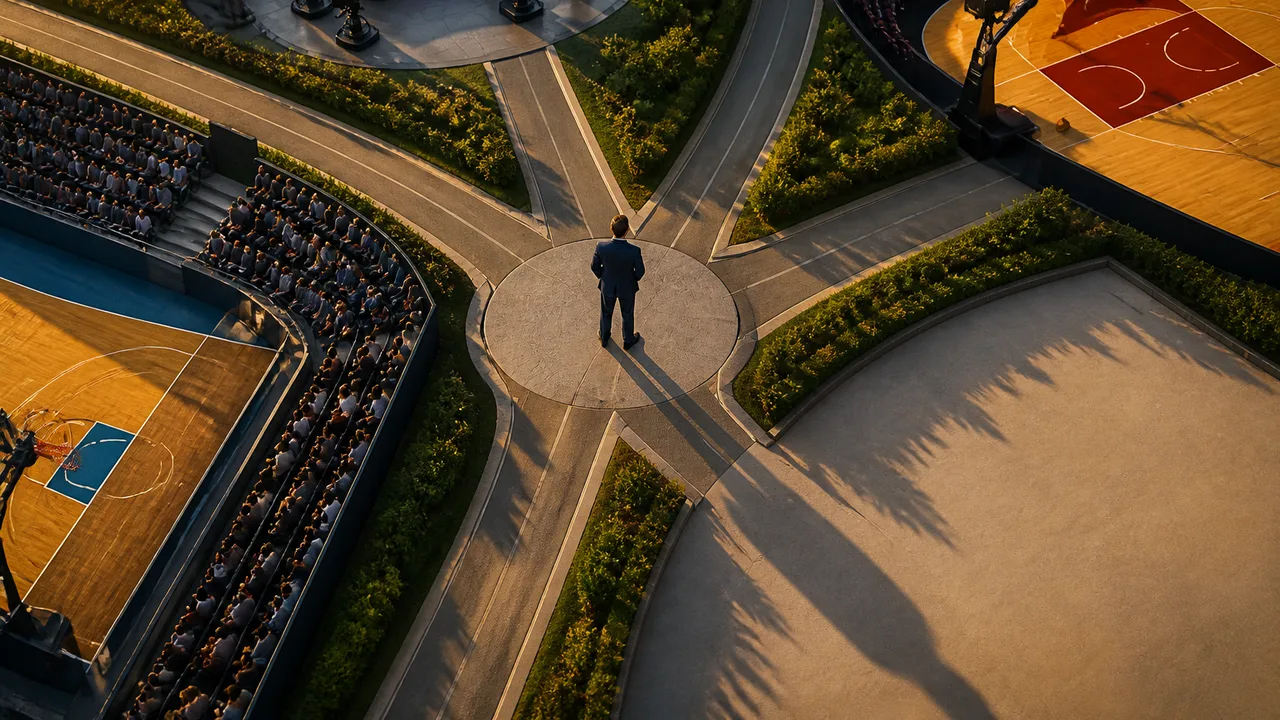
David Berson is getting one sports group with the NFL on one side, the NHL on the other and March Madness running through the middle.
The CBS Sports president and CEO will lead a new global operation spanning CBS Sports, TNT Sports and WBD Sports as Paramount Skydance’s takeover of Warner Bros. Discovery approaches its expected October 6 close. TNT Sports chief Luis Silberwasser told staff Monday that he was leaving.
For viewers, a bigger sports organization sounds like a simpler menu: one company, more games, perhaps fewer questions about which app to open. For the business, the immediate change is clearer. One executive will oversee brands that previously answered to separate owners. Whether a particular game changes channels or streaming homes depends on decisions and rights arrangements for that property, not the size of Berson’s organizational chart.
One Boss, Several Kinds of Inventory
The prospective group brings CBS’s NFL, college football and PGA Tour properties together with TNT’s Major League Baseball, NHL, U.S. Soccer, Roland Garros and Unrivaled rights. The men’s NCAA Tournament, already shared by CBS and Turner, comes under the same sports leadership.
That spread gives management a programming question with consequences for each outlet. A game on a broadcast network reaches an audience differently from one on a cable channel or a streaming service. Each placement also offers a different way to promote the company’s other sports. The temptation is to imagine the whole portfolio as a playlist Berson can reorder. A rights portfolio is closer to a collection of playlists with different collaborators and terms.
Central leadership could make coordination easier. If two sports properties compete for attention on the same night, one group can plan their schedules and promotion together rather than have CBS and TNT treat one another as outsiders. It could also decide where to put production resources and which brands to use when selling a combined sports offering. Those are plausible advantages of the structure, not announced distribution changes or a guarantee of higher revenue.
Leagues have an interest in the answer, too. They sell rights to put their games in front of audiences and receive the exposure specified in their deals. A move that helps a media company build one platform might change the reach a rights holder expected from another. The terms of individual agreements will determine how much room Berson has to make such moves; the new reporting line alone does not settle that question.
March Madness Was the Rehearsal
CBS and Turner have already spent years making separate companies look coordinated to basketball fans. In 2010, the NCAA announced a 14-year agreement beginning with the 2011 men’s tournament. Every game would air live across CBS, TBS, TNT and truTV. The plan allocated early rounds across those networks and split regional semifinals between the partners. CBS kept the regional finals and Final Four through 2015; from 2016, CBS and Turner would split the regional finals and alternate the Final Four and title game between CBS and TBS.
The online work had its own assignment. March Madness on Demand was set to launch from NCAA.com and CBSSports.com, while Turner would operate and develop the video player. The tournament could appear on multiple screens because the partners had arranged for it to do so. That arrangement also shows how much planning sat behind a fan’s ability to find a game.
The partnership kept evolving. The NCAA’s 2016 extension through 2032 said CBS and Turner could carry tournament games across platforms in their respective portfolios, including platforms created during the agreement. Turner would continue managing March Madness Live and NCAA.com, while the companies continued collaborating on corporate marketing.
That history gives the merger a useful starting point. CBS and Turner learned to coordinate programming, production, sales and digital access around an event that sends fans hunting across four television networks. Common ownership can now put decisions about that partnership in one sports group. It does not follow that a plan written for the NCAA Tournament automatically applies to the NFL, NHL or any other league in the new portfolio. March Madness came with its own allocation of games and digital responsibilities.
There is a strong business case for putting experienced partners under one leader: the companies have already worked through a complicated, multiplatform event together. The precedent also has a limit. They built that system with the NCAA as rights holder, for one tournament, under agreements that explicitly described where coverage could go. The new group inherits more sports than that system was designed to handle.
The NBA Shows Where the Boundaries Can Split
TNT’s recent NBA history offers a different test. Warner Bros. Discovery pursued a U.S. live-game package after the league chose Disney, NBCUniversal and Amazon for its next rights cycle. WBD sued over what it said were matching rights, then settled with the NBA in 2024. The result ended TNT’s run as a U.S. carrier of live NBA games after the 2024-25 season.
The basketball relationship did not disappear altogether. Under the settlement and a separate arrangement with ESPN, TNT Sports continued producing Inside the NBA for ESPN. WBD also secured access to NBA highlights for Bleacher Report and House of Highlights, among other content arrangements. That mix is useful to anyone trying to understand what the combined sports group will own: live games, studio production and digital clips can follow different commercial paths, even when they carry the same league logo.
The NBA settlement arose from a dispute over a new rights cycle. It cannot tell us whether an existing NHL or NCAA deal permits a particular CBS, TNT or streaming placement. It does show why counting league names on a corporate slide is a poor substitute for asking which games, shows and clips the company can actually distribute, and where.
For audiences, the first practical test will be a schedule, not an executive announcement. Does common leadership make an existing cross-network property easier to find? Does a proposed new home for another sport fit that sport’s rights deal and the audience its league wants? Berson now has a wider view of the board. The next programming decisions will show how many of its pieces he can move.
More Like This
Mark Cuban on Why NBA Ownership Isn't Fun Anymore
Mark Cuban explains how private equity reshaped NBA ownership, why he sold the Mavericks, and what NIL, Vegas expansion, and prop bets mean for pro sports.
MLBPA's 2026 CBA Push: Rosters, Pay, and Data Power
The MLBPA's latest CBA proposal isn't just about roster sizes — it's about who controls player data, movement, and earning power in MLB's next era.

Telemundo's World Cup Ratings Win Beyond Spanish Speakers
Non-Spanish speakers are tuning into Telemundo's World Cup coverage in surprising numbers. Here's what the ratings reveal about how Americans want to watch soccer.