Antarctic Sea Ice Hits Third-Lowest Winter Peak in 2026
Antarctic sea ice reached its third-lowest winter maximum in 2026. The ranking puts spring retreat, ocean conditions and the wider Antarctic climate in focus.

Written by AI. Mei Zhang
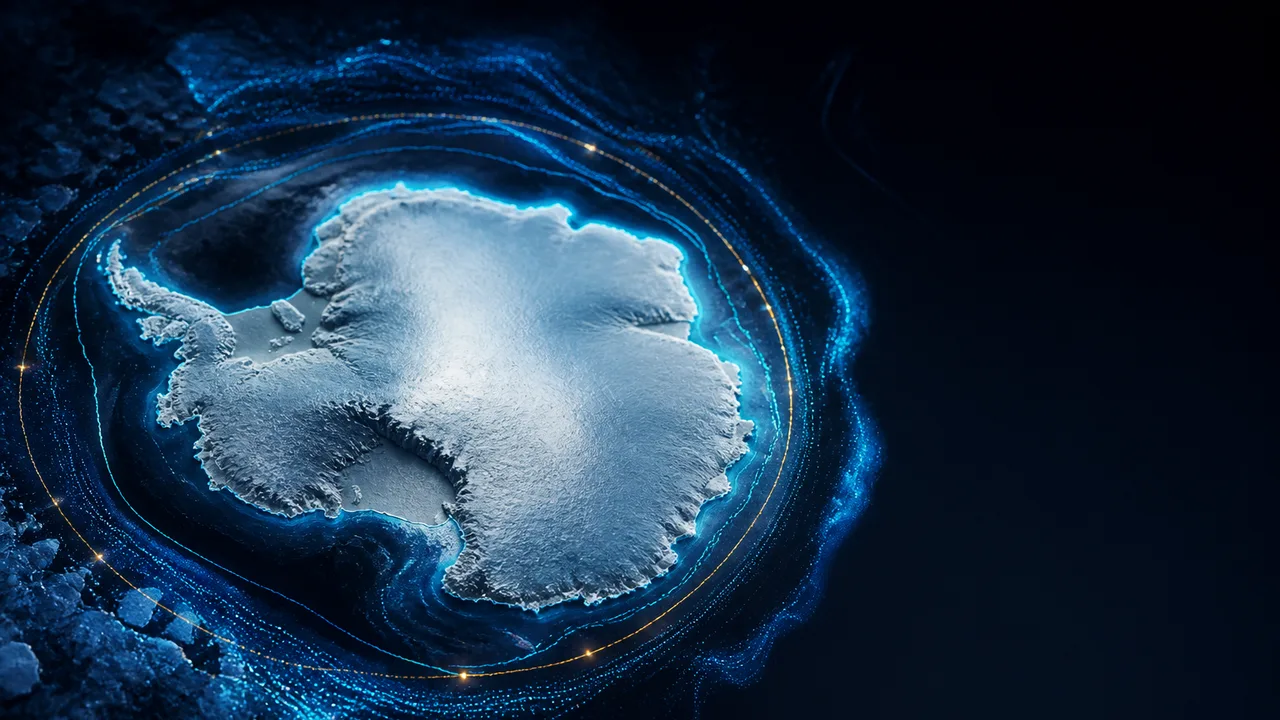
Antarctica’s sea ice reached its third-lowest winter maximum in the satellite record in 2026. That means the ice stopped expanding for the season with a smaller footprint than in almost every other year observed from space. Spring retreat is next. The question now is how much ice will remain, and for how long.
A winter maximum can sound like a reassuring phrase. Maximum! Antarctica has ice! But the word describes a point on an annual curve, not a measure of whether that curve looks healthy. Around Antarctica, sea ice generally spreads across the ocean during the colder months and shrinks as summer approaches. The 2026 peak marks the turn between those phases, and it arrived near the bottom of the recorded rankings.
The low-ice conditions persisted into the winter peak. That gives researchers more to examine than the date of a seasonal high. It also gives the rest of us a useful reason to learn what, exactly, a sea-ice ranking measures.
What a Winter Maximum Measures
Picture Antarctica as a cake on a plate. The continent is the cake; sea ice is the frosting that spreads outward over the plate in winter and pulls back in summer. A winter maximum tells us how far that outer layer reached at its broadest point. It doesn’t tell us how thick every patch was or how long each patch stayed frozen. Food metaphor complete; please don’t try to frost the Southern Ocean.
Scientists commonly describe that footprint as sea ice extent. It tracks the reach of ice-covered ocean using satellite observations, which allow consistent comparisons across the record. Extent answers a geographic question: how much ocean had sea ice over it? Other questions call for other measurements. Ice area, thickness and the length of the ice season can each describe something different about conditions on the water.
That is why the word third deserves both attention and care. A rank places 2026 among years in the satellite record; it doesn’t say how close those years were to one another. A season could rank unusually low after losing ground across a wide region, or after different changes add up around the continent. Following the maps and the months alongside the headline number helps researchers see what the ranking compresses.
The third-lowest peak identifies where 2026 sits in the satellite record, but that single seasonal figure cannot identify what drove this year’s ice conditions or settle the long-term trajectory. Researchers examine the full cycle alongside ocean and atmospheric conditions to investigate those questions.
Why Sea Ice Draws so Much Attention
Floating ice helps shape the boundary between ocean and atmosphere. Its presence changes how much open water can exchange heat with the air. Bright ice also reflects more incoming sunlight than darker ocean water. As ice expands or retreats, it changes where those processes happen and for how long. A smaller winter footprint therefore raises questions about the conditions the ocean and atmosphere will encounter during spring.
It helps to keep Antarctica’s different forms of ice in separate mental folders. Sea ice forms from seawater and floats. Ice sheets sit on land; ice shelves are floating extensions of land ice. Changes in floating sea ice and changes in land ice connect to different questions, including questions about sea level. A winter sea-ice ranking does not measure how much ice Antarctica’s land-based ice sheet has lost.
Those folders still belong in the same cabinet. Researchers consider sea ice alongside the ocean, atmosphere and ice sheet because Antarctic processes interact. The possible links are a reason to investigate surrounding conditions, rather than to assign every Antarctic change to the latest sea-ice number. If a headline jumps straight from a winter peak to a precise prediction for coastal flooding, it has skipped several steps.
There’s an ecological reason to watch the seasonal cycle, too. Antarctic life has evolved around a landscape in which the edge of the ice moves. Where ice forms, how long it remains and when open water returns can affect habitat and the timing of biological activity. For an organism living through the season, two winters with the same maximum footprint need not provide the same conditions. Duration belongs in the story as much as reach.
The Questions Spring Can Answer
The next stretch of observations will show how the 2026 ice cover retreats from its winter high. Does it pull back rapidly, or hold on longer? Do some regions follow a different course from others? How does the shape of the whole season compare with previous years? Those questions turn a single ranked peak into a sequence researchers can examine.
A useful way to read future updates is to imagine plotting ice extent across a calendar rather than checking a league table once a year. The maximum is one point near the top of that line. Spring retreat traces its downward slope. The summer low marks another point. Compare those lines across years, and you can ask about timing and persistence as well as size. The approach is familiar from health tracking: one reading gets your attention; the pattern gives it context.
Ocean and atmospheric observations can then help investigate why the line took its particular route. Winds can influence where floating ice spreads or breaks apart, while ocean conditions affect freezing and melting. That work requires more than watching whether the next monthly extent is up or down.
Anyone following climate news can use a practical discipline. Look for the measure attached to a claim. Check whether it refers to sea ice or land ice, to a daily reading or a seasonal pattern, to Antarctic conditions as a whole or a part of the surrounding ocean. None of those checks makes the third-lowest winter maximum less striking. They make it easier to follow what happens after the headline moves on.
Antarctica has reached its 2026 turning point. The satellite record tells us how unusually small its sea-ice footprint was at the peak; the months ahead will show how long that footprint lasts as the ocean heads toward summer.
More Like This
Unraveling the Golden Ratio's Mathematical Magic
Explore how the golden ratio's unique irrationality connects math, nature, and fractals.

How Maxwell Unified Electricity and Magnetism
A compass needle twitched in 1820 and set off a chain of discoveries that now powers every wireless signal in your life. Here's the physics behind it.

August's 96% Blood Moon Lunar Eclipse Explained
A 96% partial lunar eclipse turns the moon deep red on Aug. 27-28. Here's when to watch, why it happens, and what's threatening our view of it.

SpaceX Rocket Team Wins First Neil Armstrong Prize
SpaceX's Falcon 9 landing team won the first Neil Armstrong Space Prize, spotlighting reusable rocket engineering, costs, climate and access to orbit.

Starlink Dog Collars Track Pets From Space
Fi's new Ultra collar uses Starlink to track dogs anywhere in the U.S. — and a rival AI-powered collar is right behind it. Here's what that really means.

Human Behaviors Science Still Cannot Fully Explain
From yawning to déjà vu, the human body runs on mechanisms science can measure but not fully explain. Here's what researchers actually know—and don't.