Amazon's Alexa Tablets Trade Fire Prices for Google Play
Amazon's Alexa tablets bring Google Play and aluminum bodies, but start at $229.99. See how that trade-off changes the choice for Fire and Kids tablet buyers.

Written by AI. Tyler Nakamura
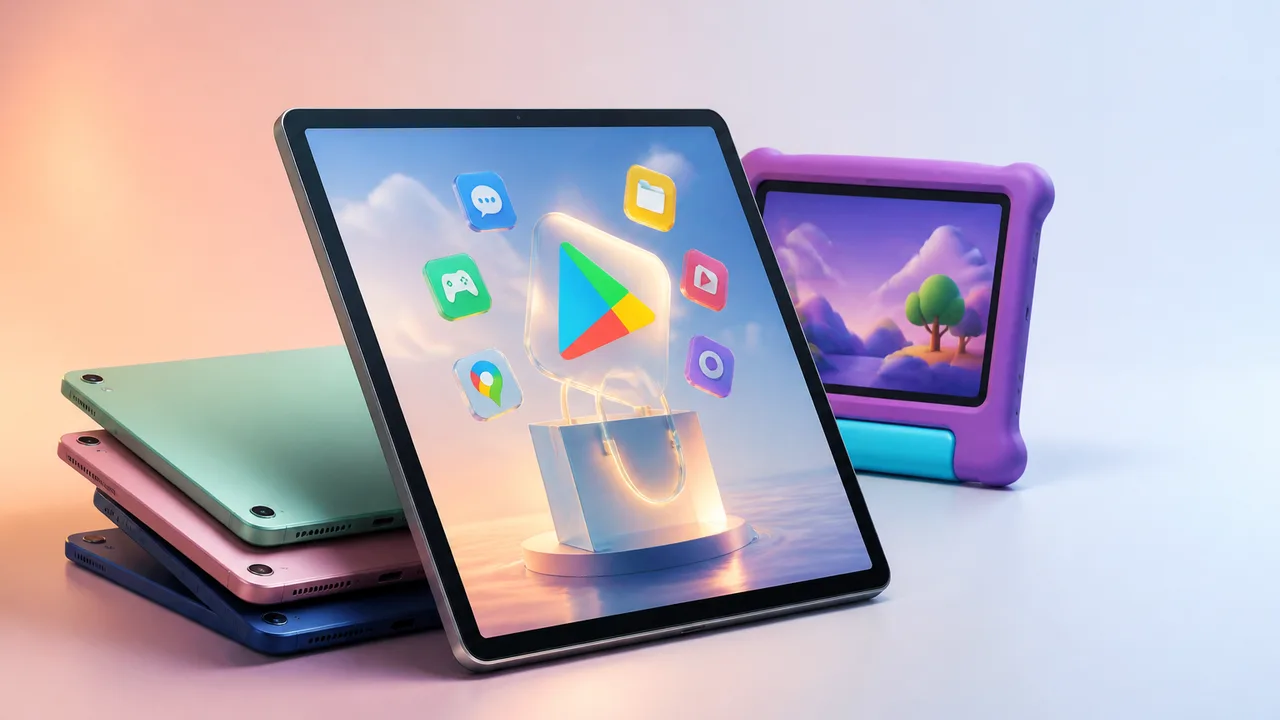
Amazon is replacing its Fire tablets with an Alexa tablet lineup that starts at $229.99, up from the Fire range’s former $59.99 entry price. That puts a different question in front of anyone who used to buy a Fire because it was cheap: would Google Play, a metal body and updated hardware make up for the bigger bill?
The new range has three models: the Alexa Tablet 8, Tablet 11 and Tablet 12 Pro, with prices reaching $549.99. The regular tablets are due October 19. The name puts Amazon’s assistant on the box, but the more consequential change for day-to-day use may be the app store. These are Google-certified Android tablets with the Play Store. That opens a door Fire owners previously had to work around.
Fire’s Bargain Came with an App-Store Boundary
For roughly 15 years, Fire tablets ran Fire OS, an Android-based system without Google’s mobile services or the Play Store. They ran Android apps through Amazon’s own store instead. The new tablets run Google-certified Android. If your checklist includes Google apps or a third-party app you couldn’t get on a Fire, that change is more useful than a shinier back panel. The practical buying test is still your own shortlist of apps, especially anything your household relies on every week.
The hardware shift is easy to see, too. The new tablets have aluminum bodies, and the range includes an 8-inch model, an 11-inch model and a 12-inch Pro. The new lineup includes the Play Store and aluminum unibody design. Those changes make sense together: Amazon is asking for more money while removing one of the compromises attached to its low-cost tablets. It’s a coherent pitch for a buyer who wanted a Fire-sized device but kept running into an app-store dead end.
It’s a tougher pitch if your Fire was mostly a screen for books, video and a few apps you already had. Play Store access can be valuable without being valuable to you. An aluminum body might feel nicer in a bag or on the sofa; it won’t turn an unused app catalog into a reason to spend more. The old $59.99 figure describes the entry point of the former Fire range, not the price of every Fire tablet. Likewise, the new $229.99 entry price doesn’t tell you which Alexa model would suit your workload. Compare the device you would actually have bought with the new one, rather than treating the two cheapest prices as a complete value verdict.
Amazon has also put Alexa+ into the tablet interface. The home-screen Dynamic Tab resumes content, alongside an Alexa+ chat interface and smart-home controls. Those features may appeal to a household that already uses Alexa; they don’t answer whether the assistant will save enough taps in routine use to justify the higher starting price. Apps and price are easier to check against your habits before checkout. The Alexa features will have to earn their place after it.
There’s an early performance caution for the least expensive new model. Gizmodo’s brief demo of the Alexa Tablet 8 showed lag while swiping around the home screen, though the unit may have been running pre-release software and its RAM configuration was unknown. That’s a reason to wait for tests of shipping devices if responsiveness is a deciding factor, rather than assuming the metal casing guarantees a quick tablet. The listed upgrades and the experience of using the finished product are two different buying questions.
The Kids Comparison Makes the Price Shift Concrete
Families get the same choice with a larger number on the receipt. The new Kids Tablet 8 and Kids Tablet 11 are scheduled for October 14 at $230 and $330, respectively. Earlier Fire Kids tablets regularly started at $100. The new versions bring aluminum designs, cases, kid-focused software and a year of Kids+, with Play Store apps potentially accessible as well, Engadget details. That’s a useful comparison of entry prices, not a claim that the old and new Kids models offer identical hardware or bundled value.
The cases offer a choice between a soft bumper with a handle for younger children and a slimmer hard case with a kickstand for older ones. That’s a more immediate feature for a child carrying a tablet around the house than an aluminum finish hidden underneath. If the appeal of a Fire Kids tablet was a relatively inexpensive way to hand over a protected screen, the new starting price changes the calculation. If a child needs an app that was missing from Fire OS, Play Store access could change it back. Parents should check the apps they need alongside the kid-focused controls, rather than assuming Play Store access alone settles what a child can use.
For the tightest budget, an older Fire is still a sensible option if you find one at a price you like and its existing apps meet your needs. The appeal is its familiar job, not a promise that it will gain the new tablets’ Google services. Existing owners have even less reason to replace a working tablet solely because the product name has changed. Amazon intends to keep issuing security updates for Fire tablets, but it has not specified how long.
The split is unusually clear for a tablet refresh. Amazon has raised the cost of entry and widened the app doorway at the same time. A buyer who previously had to pass on Fire because an essential app was missing now has a reason to consider an Alexa Tablet. Someone whose apps already worked has to decide whether the hardware and Alexa features warrant paying more. For the household that mainly wanted the least expensive usable screen, the old Fire price remains the comparison Amazon’s new tablets have to live with.
More Like This

UN AI Summit: Big Room, Bigger Questions on Governance
193 countries met in Geneva to tackle AI governance. The warnings were credible. The robots were cool. The binding rules? Still not there.

Google Pays $250K for 16-Year-Old Linux KVM Flaw
A 16-year-old Linux KVM flaw called Januscape earned a $250K bounty after enabling guest VM escapes on Intel and AMD systems. Here's what it means for cloud security.