Alaska’s Orange Rivers Test Nature’s Resilience
Alaska’s rusting rivers carry metals for 60 miles, yet some waters buffer acidity. Research reveals resilience and a widening Arctic climate risk.

Written by AI. Olivia Meng
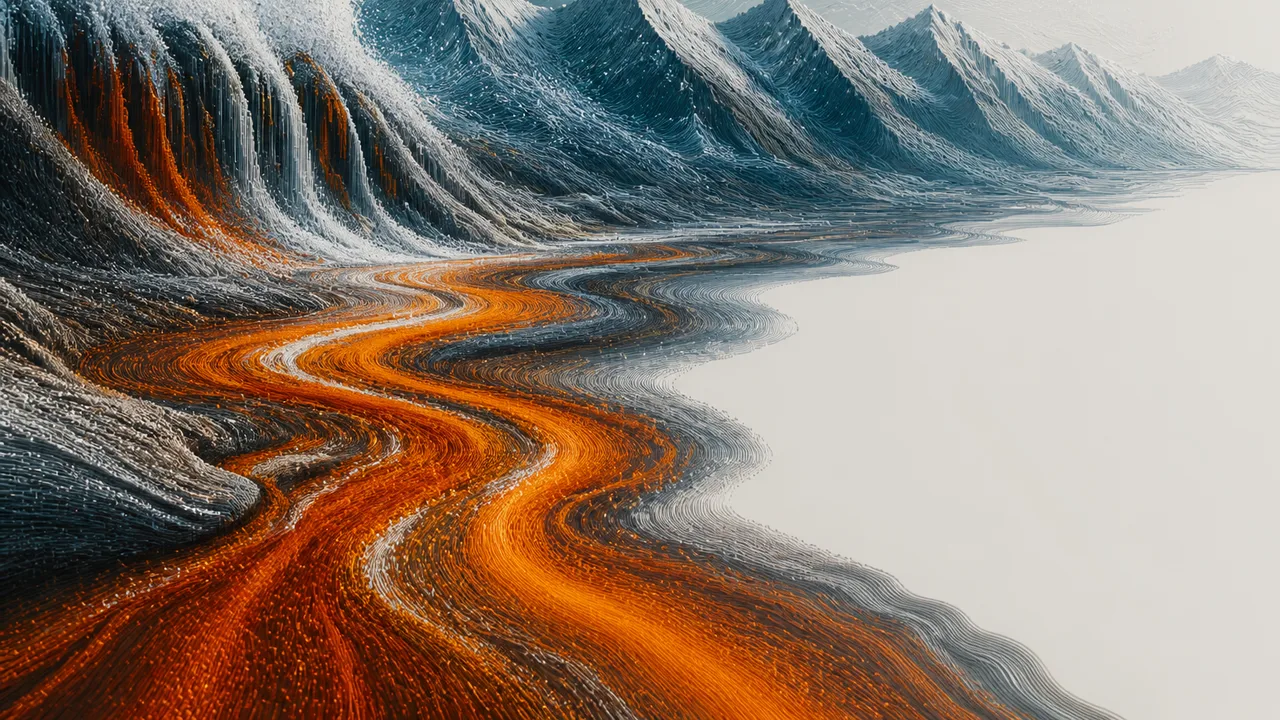
Scientists first noticed bright orange water spreading through a river in Alaska’s Brooks Range in 2018. Eight years later, researchers have found a climate-driven chemical disturbance that can rival drainage from metal mines, travel at least 60 miles and unfold differently across different parts of the same river system.
The headline finding is severe: Water entering some Brooks Range rivers from tributaries and hillside seeps was more acidic and metallic than water draining from metal mines. In the Salmon River, metal concentrations were about 70 times higher as far as 60 miles downstream from where contaminated water entered, according to an account of the new six-watershed study published by UC Davis.
Yet the main river channel did not become more acidic. It buffered the incoming acidity even as metal concentrations rose downstream. Long-term records also show that sulfate and zinc surged in 2019 and then declined during a recovery phase.
Taken together, those results turn the Brooks Range into an unintended test of watershed resilience. The rivers can absorb part of the chemical shock, but they do not stop the metals from moving. A stable pH therefore cannot serve as a clean bill of health. The system is buffering one dimension of contamination while transporting another.
A Climate Impact Assembled Underground
The mechanism begins with permafrost that once kept minerals sealed away from flowing water and oxygen. As frozen ground thaws, water penetrates deeper soil and encounters those minerals. The resulting reactions release iron, sulfuric acid and other metals into nearby streams. Iron supplies the orange color, an unusually photogenic warning label for a process that had escaped Arctic climate assessments.
Researchers use the term acid rock drainage for this chemistry. It is usually associated with active or abandoned mines, where newly exposed rock reacts with air and water. In the Brooks Range, warming exposes the rock and minerals instead. The chemistry belongs to the same category, while the trigger and setting differ: thaw rather than mining, and protected watersheds rather than excavated ground.
That comparison also needs limits. The available findings do not show that every orange Arctic stream has the same chemistry as every mine site, or that contamination will develop identically across watersheds. The study covered six affected watersheds in northwest Alaska, with field sampling conducted from 2022 through 2024. Geology, water volume and the capacity of each river to buffer acidity can all shape what happens downstream.
Still, the comparison is useful because it strips away the comforting assumption that pristine landscapes are chemically insulated from industrial-scale hazards. Reporting on the study describes acid rock drainage as a phenomenon usually found near mines. Here, the machinery doing the excavation is a changing climate, working through thawed ground across a broad landscape.
The 2019 Trigger Left a Chemical Memory
The chronology sharpens that concern. Orange plumes were observed in 2018, but long-term water-quality records trace the regional chemical shift to 2019, Alaska’s hottest summer on record. A snowy winter followed. First author Taylor Evinger said snow can insulate soil and prevent it from refreezing, allowing water to move deeper and interact with mineral-bearing ground. The researchers think several watersheds were activated around the same time.
This sequence suggests a monitoring problem larger than a gradual march of individual streams turning orange. A hot summer can deepen thaw, while the following snowpack can help preserve that thaw below the surface. If that proposed mechanism holds across other permafrost regions, monitoring only annual average temperature or waiting for visible discoloration could miss the combination of seasons that primes multiple watersheds together.
The six-watershed study cannot establish that hundreds of rivers will activate simultaneously. It does show synchronized change across the watersheds examined, while previous work has documented more than 200 affected rivers and streams. That combination supports a narrower inference: regional weather sequences may produce clustered outbreaks, so useful surveillance would need to follow soil refreezing, snow conditions and water chemistry across connected basins rather than treat each orange stream as an isolated curiosity.
The scientific history has moved quickly. Researchers first noticed the conspicuous plumes in 2018. Records identified the 2019 chemical spike. A 2024 paper connected rusting rivers with thawing permafrost, and subsequent observations extended the phenomenon into Boreal and Arctic Canada and other permafrost regions. Senior author Brett Poulin said the process had not been forecast or included in assessments of how a warmer Arctic would change.
That short timeline helps explain why major questions remain open. Researchers have gone from recognizing the color to identifying a plausible mechanism and measuring long-distance transport in less than a decade. Ecological consequences usually require longer records, especially where fish populations already respond to numerous environmental pressures.
Recovery Has Limits
The decline in sulfate and zinc after 2019 offers evidence of recovery, and the stable mainstem pH offers evidence of buffering. Neither finding demonstrates a return to previous conditions. The researchers described the recovery periods as minor compared with the recent shifts, and metals continued to increase downstream even where acidity did not.
Resilience, in this case, is a capacity with separate compartments. A river can neutralize acidity, dilute some inputs or show declining concentrations after a spike. It can also carry contamination dozens of miles. Calling the watershed either resilient or overwhelmed would compress several measurements into one verdict. The more useful question is which functions persist, for how long and under how many repeated pulses.
The 2019 record supplies only one documented regional trigger sequence in this study. Researchers do not yet have a quantified threshold showing how much thaw, snow insulation or repeated contamination would exhaust the buffering capacity. Recovery after one spike cannot reveal how the same watershed would respond to several closely spaced events.
What is Known About Fish and People
The chemistry is better established than the biological toll. UC Davis says researchers currently know of no adverse impacts to people or wildlife from acid rock drainage in these remote streams. Evinger also said the team was not seeing massive fish die-offs and was unaware of drinking-water problems harming villages.
Yale Environment 360 reported fears that rusting may have contributed to the collapse of a regional Chinook salmon fishery. The account did not identify the evidence or attribution behind that concern, while the researchers’ public summary says wildlife effects remain under investigation. On the information available, a causal connection between rusting rivers and a fishery collapse remains unestablished.
That uncertainty should define the next questions rather than soften the chemical findings. Metals are traveling far downstream, but the available accounts do not explain the mechanism behind the reported increase in toxicity during transport. Nor do they establish exposure levels for fish, wildlife or people across the more than 200 affected waterways.
The orange color has made this climate impact visible unusually early. Visibility offers no guarantee of an easy remedy, but it does provide a map of where to measure. The immediate scientific task is to learn whether the Brooks Range’s buffering capacity can outlast the next hot summer, the next insulating winter and the chemical memory they may leave underground.
More Like This

Geothermal Energy's Promise and Its Real Barriers
Geothermal delivers 24/7 clean power with near-zero emissions. But drilling costs, financing gaps, and policy inertia stand between the technology and global scale.

How Air Pressure Works, From Barometers to Champagne
Neil deGrasse Tyson explains the physics of air pressure — and why understanding it matters beyond parlor tricks and party science.