AI Wearables Put Always-Available Assistants to the Test
AI wearables from Muse to Friend put assistants within reach. Their test is useful help, reliable hardware and privacy controls that work for people nearby, too.

Written by AI. Yuki Okonkwo
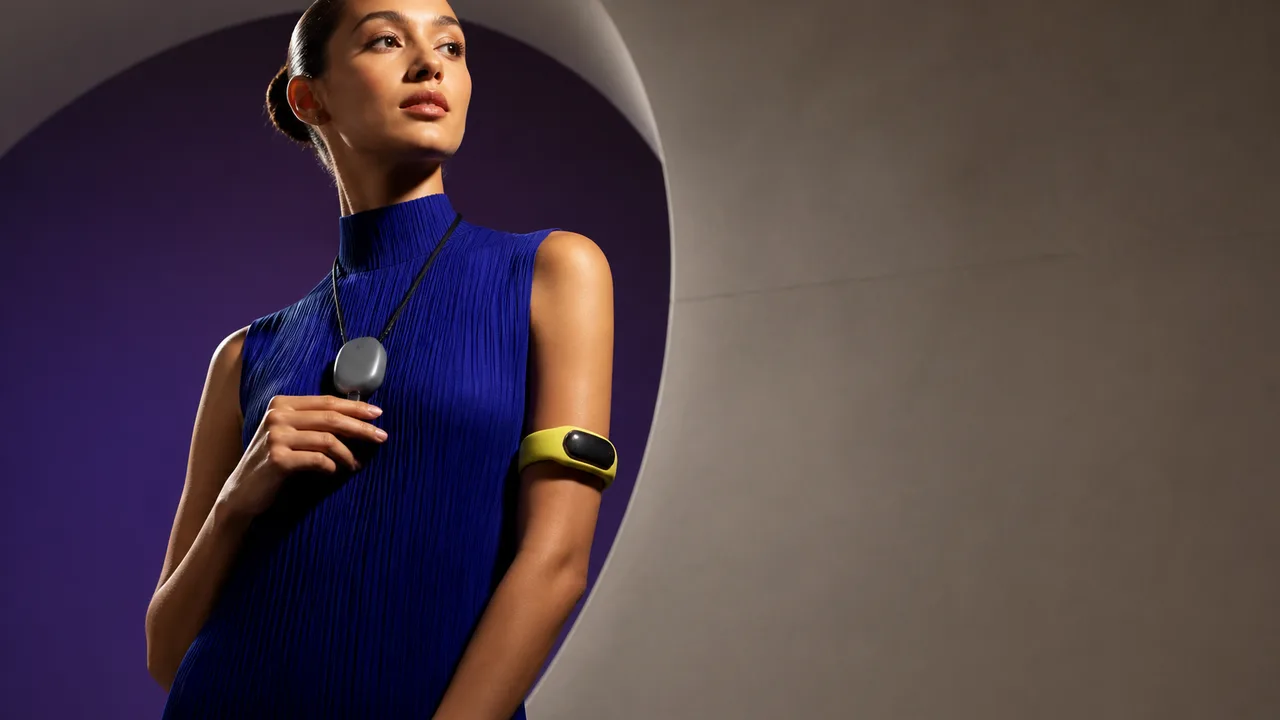
Amazon's new AI devices can listen to conversations and suggest purchases if users opt in. That proposition fits inside a growing pitch for AI wearables: give an assistant access to more of your day, and perhaps it can help before you remember to ask.
Muse, Bee and Friend have also been grouped into a new wave of wearable assistants, spanning companion-style devices and shopping help. Their specifications, pricing, launch status and independent test results remain unclear, so treating them as interchangeable products would be a mistake. What connects them is the proposed change in how an assistant gets context. A phone waits in your pocket until you reach for it. A wearable can sit closer to the conversation.
That sounds convenient right up until the conversation belongs to somebody else.
What Does the Extra Hardware Buy You?
The strongest case for a wearable is friction. If you have to unlock a phone, open an app and explain what just happened, the moment you wanted help with may already be gone. A device worn on the body could make a quick request easier while you're carrying groceries or moving between meetings. With appropriate permission, it could also use recent context to help recall something the owner would otherwise have to reconstruct from memory.
Those are potential advantages, not proof that any named device delivers them. They suggest a useful test: can the wearable complete a task that a phone assistant handles awkwardly, and can it do so often enough to justify another device to charge? Saving a few seconds on a request you make once a month won't carry much weight. Helping reliably with a frequent task might.
The phone sets a surprisingly high bar. It already has a microphone, a screen for checking an answer, an internet connection and a battery its owner is accustomed to charging. A wearable can improve access to an assistant, but it may still depend on a phone or network for processing. If so, the new hardware needs to earn its place through convenience or context. Otherwise, the owner has acquired a smaller gadget with another battery warning. Incredible scenes for anyone whose existing devices already take turns asking for a charger.
A screen also does unglamorous work. It lets people inspect a draft before sending it, check whether an assistant heard a name correctly and dismiss a bad suggestion. A wearable that offers answers through audio may need a way to handle those corrections without making the user conduct a lengthy public conversation with their accessories. For a shopping prompt, seeing what the assistant inferred could be especially useful before anyone acts on it.
Listening Has More than One Setting
“Always available” can describe several designs. One device might wait for a button press. Another might listen locally for a wake phrase, then send a request elsewhere. A third might use longer stretches of audio to assemble context. Those arrangements create different demands on the battery and different privacy questions. The tiny distinction between ready to listen and retaining what it hears becomes quite large when the microphone is attached to a person all day.
Processing location matters, too. On-device processing (running software on the wearable itself) could reduce how much raw audio needs to leave it. Remote processing can give an assistant access to more computing power, but then connectivity and the handling of transmitted information become part of the experience. A product could use a mixture of both. Consumers need to know which data goes where, how long it stays there and which controls actually stop collection.
Accuracy has an everyday setting, not just a demo setting. A microphone has to deal with traffic, overlapping voices, music and names it has never heard. If a wearable misidentifies who said what, its memory aid could become a confident account of the wrong conversation. If it misses a request because of noise, its convenient placement buys very little. Fast responses and good battery life can also pull against constant sensing and processing; designers have to choose where to spend power.
Meta's Muse Charm keychain has been described as watching and listening, extending these questions to visual capture. A keychain that can take in its surroundings raises a different practical issue from a microphone alone: people nearby may have even less idea what falls within its view. The reported device also puts ambient AI hardware under a familiar pressure test. Its physical form might be novel; battery life, response speed and daily usefulness still decide whether carrying it pays off.
Opting in Cannot Speak for the Room
Amazon's opt-in approach gives the owner a decision about conversational listening. The owner, however, isn't the only person who may be heard. A friend at dinner, a colleague at work or a customer across a counter may have no idea an assistant is collecting context. Consent gets difficult when a device follows one person through spaces shared with many others.
Controls could make that situation easier to navigate. A visible recording indicator, a physical mute switch, a clear way to delete stored material and settings that separate temporary processing from long-term memory would each answer a different question. An indicator helps a bystander understand what is happening. A mute switch gives the owner a quick way to stop it. Deletion controls address what happens afterward. No single setting performs all three jobs.
Designers also face a usability trap: the more work it takes to pause collection, the more likely an owner is to leave a device in its default state. A control buried in an app won't help much when a private conversation starts unexpectedly. The reverse problem exists, too. If someone must continually toggle listening and check whether it worked, the wearable loses the effortless quality it was meant to offer. A trustworthy design would make its state easy to recognize for both the person wearing it and the people beside them.
A Helpful Nudge or Another Sales Channel?
Amazon's purchase-suggestion feature puts a business question beside the hardware question. A prompt to buy something might be timely and welcome if a user asked for help finding it. The same prompt could feel intrusive if it appears because the assistant inferred an interest from a passing conversation. The practical questions are straightforward: what triggered the suggestion, can the owner correct that inference, and is a recommendation serving a stated request?
Companion-style wearables face a different version of the same trust problem. An assistant that remembers context could be helpful when its memory is accurate and easy to manage. It could also turn a fleeting remark into a persistent assumption about someone's preferences or relationships. Owners need a way to see and correct what a device retains, especially when that memory shapes future replies.
None of these questions requires assuming that continuous context is useless. It could make assistance quicker and more relevant. Nor does an opt-in button settle every concern when nearby people didn't press it. The useful comparison is between what the wearable helps someone accomplish and what its owner and everyone around them must do to accommodate it.
A convincing AI wearable would make that exchange legible in ordinary life: a clear benefit at the moment it's needed, dependable performance when the room gets noisy, and controls a person can use before the next conversation starts. If the assistant earns a place on your jacket or keys, the people standing next to you should be able to understand what came along.
More Like This

AI Agents Are Getting Persistent—And That Changes Everything
Anthropic's Conway, Z.ai's GLM-5V-Turbo, and Alibaba's Qwen 3.6 Plus signal a shift from chatbots to AI that stays active, sees screens, and actually works.
VEED's AI Video Platform Reviewed: One Tool or Five?
VEED promises to replace your entire AI video stack with one platform. We break down what it actually does, what it doesn't, and who it's really built for.

GPT-6 Astra Leaks, Opus 5.1 Signals, and HY4
GPT-6 Astra demo leaks show one-shot game generation. Anthropic quietly tests Opus 5.1 while angering users with a rate limit cut disguised as a raise.

Google's Gemini Glasses: What the I/O Demo Actually Showed
Google unveiled Gemini-powered AI glasses at I/O 2026 with live translation and habit memory. Here's what the demo showed — and what it leaves open.

Google's Lyria 3 Brings AI Music to Gemini—But Misses the Point
Google launches Lyria 3 for AI-generated music in Gemini, while Anthropic's OAuth mess reveals deeper tensions about who controls AI development.

Meta's Luna Glasses Test a Camera-Free Middle Ground
Meta's reported Luna smart glasses remove the camera but keep six microphones and AI, testing whether slimmer hardware can ease wearable privacy concerns.

Prompt Compression: Smarter LLM Input, Lower Costs
Prompt compression cuts LLM token costs without gutting context. Here's how the main techniques work, what they actually trade off, and where to start.

Running the Mythos Coding Model Locally with llama.cpp
The Mythos Enhanced Coding Model can now run locally via llama.cpp and Pi. Here's what that setup actually means for developers and the broader local AI shift.