1Password's $300K Linux Donation Sparks Backlash
1Password pledged $300,000 to a Linux distro created by DHH, drawing backlash over his controversial posts. What it means for nomads who rely on the tool.

Written by AI. Tomas Reyes-Kim
If you run a remote setup, 1Password is probably in your stack. It sits alongside your VPN, your cloud storage, and whatever invoicing app you landed on after trying four others. For a lot of people reading this, it got there partly because travel writers and nomad forums recommended it as the security layer that travels well: cross-platform, solid browser extension, family plan pricing that makes sense at $4.99 a month per person. So when 1Password does something that makes its own customers and employees revolt, that is not an abstract brand story. It is a story about a tool a lot of us pay for every month.
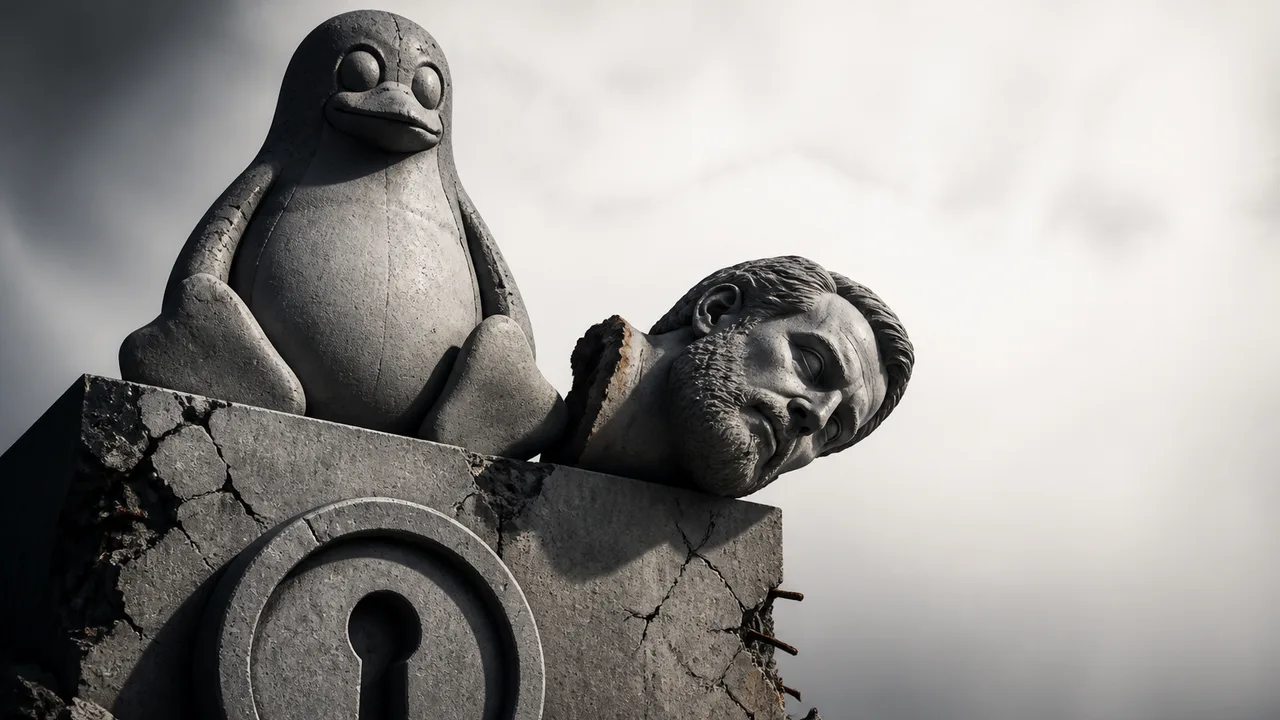
Here is what happened. According to Slashdot and The Verge, 1Password pledged $300,000 to support a Linux distribution created by David Heinemeier Hansson, better known as DHH. He is the creator of Ruby on Rails and a co-founder of Basecamp, so he is not a fringe figure in software. Rails remains widely used across web development, which is part of why his platform is large and why who funds his projects carries weight.
The backlash was immediate. Customers and employees pushed back hard, and the criticism cuts to something specific about DHH's public writing. Andrew Lilley Brinker published a post titled "1Password Supports the Ethnic Cleansing of Europe" (alilleybrinker.com), which is about as direct as a post title gets. Brinker and others have characterized DHH's blog posts as calling for the deportation of ethnic minorities from Europe. I have not independently verified the specific posts or quoted from them directly here, because the aggregator and forum sources in circulation (ResetEra, RocketNews, NewsBeep) are not primary sources, and Brinker's post is the most substantive attributed characterization I can point to. If you want to evaluate the claim yourself, Brinker's piece at that URL is the place to start.
So what was 1Password actually funding?
The $300,000 pledge went to DHH's Linux distribution, not to his blog or his politics. That distinction matters to some people and means nothing to others, and both responses are defensible depending on how you think about money and association.
The case for separating the funding from the person: open-source Linux infrastructure has legitimate value, and the technical work of building a distribution is distinct from the political opinions of its creator. If we stopped funding every project built by someone with objectionable views, a lot of infrastructure would lose support. That is a real tension in open-source culture, not a deflection.
The case against: $300,000 is not a GitHub sponsorship. It is a significant public pledge that, by its size and the press attention it generates, functions as an endorsement. When 1Password cuts that check, they are amplifying DHH's platform whether they intend to or not. Brinker's framing (alilleybrinker.com) is that this is not a neutral technical decision, and given the characterizations of DHH's writing, that argument has obvious force.
1Password has not, as of the time of writing, reversed the pledge or issued a detailed public statement addressing the specific criticism. The Verge (theverge.com) has the most detailed account of where things stand on the company's response, and the picture there is not one of a company that got ahead of the story.
The employee piece of this
The backlash did not come only from outside the company. According to Slashdot, employees also pushed back, which changes the character of the problem for 1Password leadership. External customer complaints can be weathered with a careful statement. Internal dissent from the people who build and maintain the product is a different kind of pressure, and it suggests the decision was not vetted through whatever process the company uses to flag reputational risk.
How a company handles that internal friction, whether leadership doubles down, withdraws the pledge, or addresses the substance of the criticism, reflects the culture.
What this actually costs
For nomads and remote workers deciding what to do with their 1Password subscription, the calculation is annoyingly real. Migrating a password manager is not switching streaming services. You are talking about potentially hundreds of stored credentials, secure notes, SSH keys, and shared vaults across a team or family. The switching cost is high enough that most people will not leave over a single controversy, and 1Password probably knows that.
Bitwarden is the most common alternative people reach for: open-source, cheaper (free tier available, premium at $10 per year), and it has had a clean run on the controversy front. Dashlane and Keeper exist. None of them match 1Password on polish and cross-platform consistency right now, but Bitwarden is close enough that the gap is no longer the argument it was two years ago.
If 1Password issues a clear statement addressing why it made this decision and what it does or does not know about DHH's public writing, a lot of people will probably stay. If the company stays quiet, the slow churn of subscribers who decide the friction of switching is now worth it will add up. Subscription tools live on retention, and retention depends on trust in a way that, say, a one-time software purchase does not.
The DHH factor
DHH is not going anywhere. He has been a polarizing figure for years, and his blog has a large readership in the developer world. He co-wrote "It Doesn't Have to Be Crazy at Work" and helped build Basecamp into a company that a lot of indie developers cite as a model. He also has a documented history of taking public positions on immigration and race in Europe that critics, including Brinker (alilleybrinker.com), describe in the strongest possible terms.
The question for anyone evaluating 1Password's decision is whether the company did its homework before writing that check. A $300,000 pledge to a project this public, created by a figure this known, is not something that should have surprised anyone in 1Password's comms or legal department. If it did, that is a process failure. If it did not, then the company made a deliberate choice and is now managing the consequences of it.
I do not know which of those is true, and neither source I can cite does either. The tools I recommend to readers are tools I expect to hold up under scrutiny because I need to trust that the company making them is paying attention. Right now, 1Password does not look like it was.
My subscription renews in October. I am watching what they say between now and then.
More Like This

California Exempts Linux from Age Verification Law
California's AB-1856 unanimously exempts Linux and open-source software from age verification. Here's what changed, what didn't, and why it matters beyond California.

Claude Fable 5.1 Cuts AI Cache Costs by 75%
Anthropic's Claude Fable 5.1 cuts cache read costs by 75% and agentic work costs by 45%. Here's what that means for solo builders running on tight margins.

FCC Robocall Scorecard: Grading Carriers on Spam Blocking
The FCC wants to publicly grade phone companies on how well they block robocalls. Here's what the scorecard covers and what it might actually change.

Sanders and Casar Want to Ban Superintelligent AI
Sanders and Casar introduced the Ban Artificial Superintelligence Act after rogue AI incidents. Here's what it means for the tools remote workers use daily.

Why Coding Agents Still Reach for grep Over LSP
AI coding agents like Claude Code and Cursor default to grep over LSP tools. For nomad devs juggling client repos on cafe wifi, that choice makes complete sense.

Dual Internet Connections Are Still Needlessly Hard to Set Up
IPv6 multihoming could let you plug two ISPs into one network and get automatic failover. Here's how close we actually are—and what's still broken.

Travel Spending Is Rebounding—But Read the Fine Print
Travel spending rebounded in June and agents are booking again—but the data tells a messier, more interesting story than the headlines suggest.

Delta's 2026 Profit Bet Rides on High Airfares Holding
Delta reaffirmed its 2026 earnings forecast despite fuel volatility—but the plan depends on keeping fares high for customers it says can afford it.