BuzzRAG Daily Digest — 2026-11-19
Curated by AI. Callum Pierce
A burst of rare desert flowers and new efforts to study fragile reefs bring climate and ecology into focus, while a memoir award and a dispute over satellite communications underscore the human stakes of power and access. Elsewhere, researchers look to Mars, the stars and a smartphone camera, as AI moves into shopping and the headlines.
Rare Rains Bring a Sea of Flowers to the Atacama
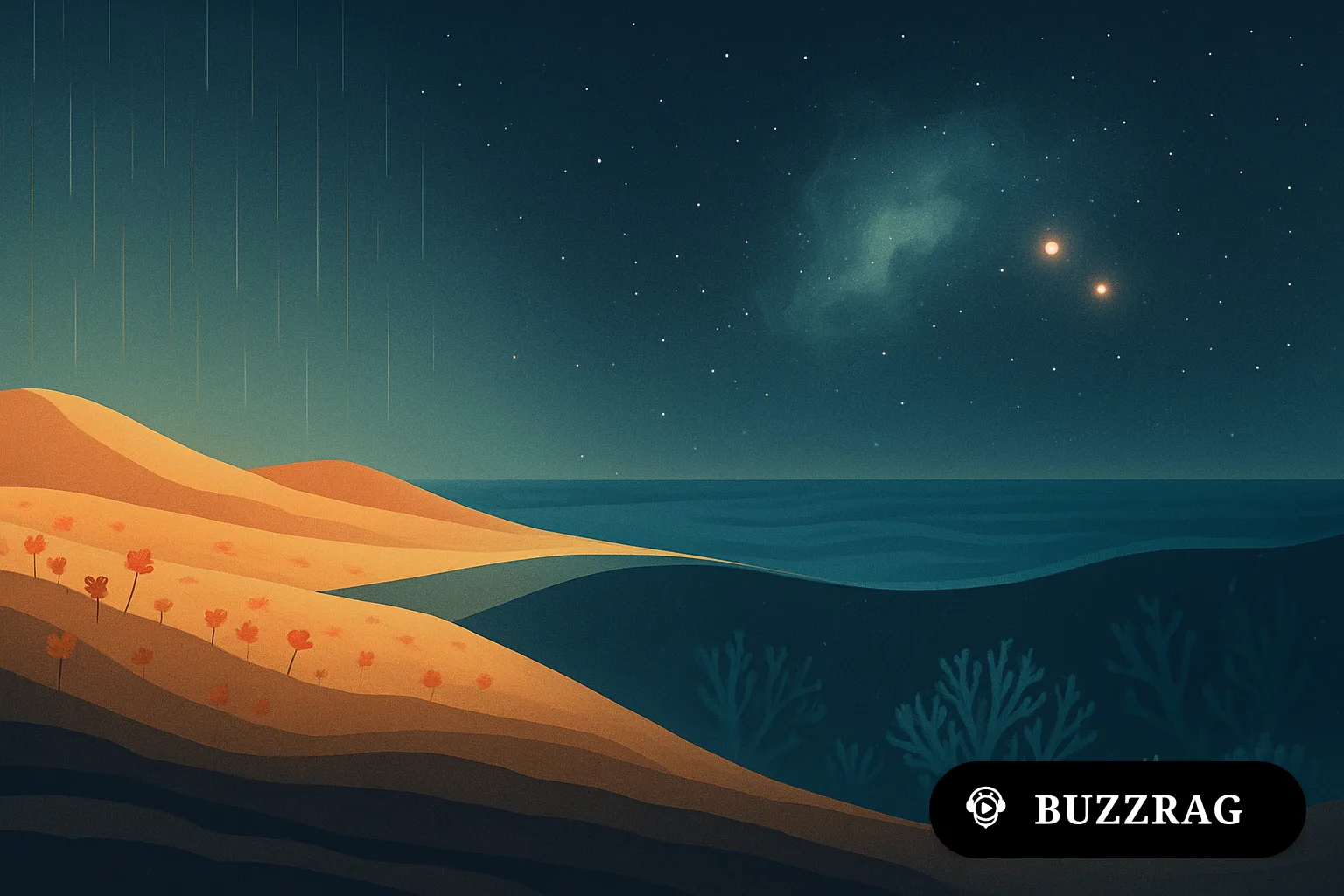
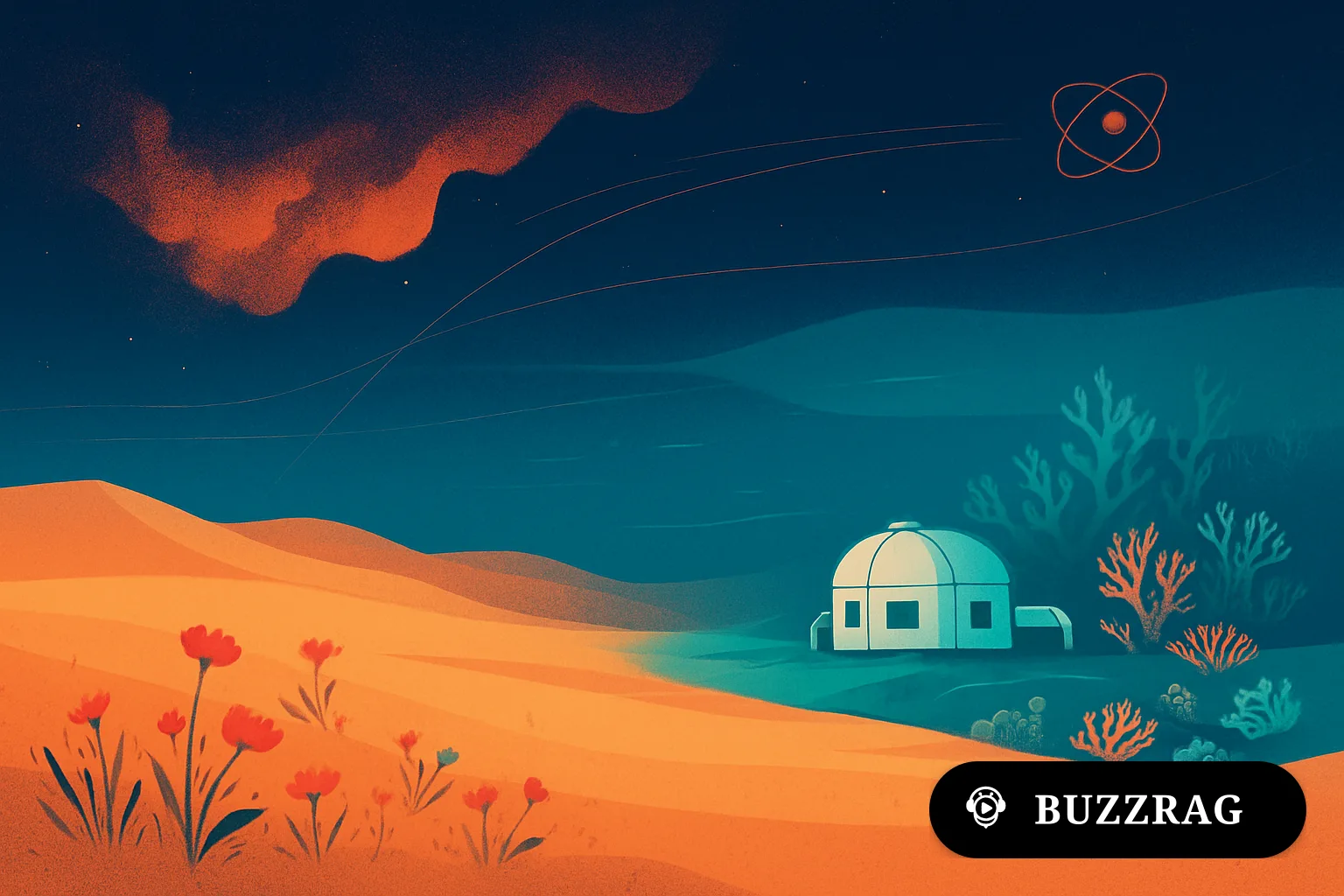
Winter rains associated with El Niño have triggered an extensive flowering across parts of northern Chile’s Atacama Desert. Dormant seeds, long able to wait out the region’s extreme dryness, have germinated after the precipitation, transforming a landscape more often defined by bare earth into a temporary carpet of blooms. Satellite observations suggest the event may be the broadest flowering recorded in the region during the satellite era.
The scale of the bloom reflects an unusual convergence of rainfall and a landscape’s capacity to hold life in reserve. But a striking season does not by itself establish a lasting change in the desert’s climate or ecosystem; the flowers are a brief response to conditions that may not recur soon. Satellite monitoring can help researchers compare the bloom with earlier events and map where vegetation has emerged. The next questions are how long the flowers persist, how widely the rains reached, and what the event reveals about the region’s sensitivity to shifts in precipitation.
Memoirist Wins National Book Award After Visa Denial
Abdelrahman ElGendy has won the National Book Award for nonfiction for “Huna,” a memoir about his time as a political prisoner in Egypt. He was not able to attend the ceremony in the United States: an essay he published recently described being denied a visa to enter the country. The award puts the book and its account of imprisonment before a wider readership even as its author is absent from the event celebrating it.
The contrast draws attention to the gap between literary recognition and the practical ability to take part in an international cultural moment. A memoir rooted in political detention also carries a personal record beyond the ceremony, giving readers a view of an experience that can otherwise be mediated by official accounts. The available reporting does not detail the visa decision, so its specific circumstances remain unclear. The award’s reception, and how ElGendy’s own account reaches readers despite the travel barrier, will shape the story beyond the night of the announcement.
Musk and Zelenskyy Clash Over Satellite Network Limits
Elon Musk has accused Ukrainian President Volodymyr Zelenskyy of not telling the truth after being asked about Zelenskyy’s claims concerning restrictions on the Starshield satellite network in Ukraine. Musk’s reported response was blunt, rejecting the Ukrainian leader’s account rather than offering a detailed explanation in the exchange described by the source. The disagreement puts the network’s role and the terms governing its use back in public view.
Satellite communications have become a consequential part of wartime infrastructure, making questions about access, limitations and decision-making more than a personal dispute between prominent figures. The supplied account does not specify which restrictions are at issue or provide supporting detail from either side, so the competing claims cannot be resolved from this report alone. What matters next is whether either party offers evidence or a fuller account of the technical and policy arrangements. Until then, the argument leaves open how much operational control rests with the provider and how reliably users can plan around the service.
A Sparse Listing Puts “Rundinas” in View
A listing featuring Maria Teresa Pirrigheddu and Vieri Mura under the title “Rundinas” is attracting attention, but the feed entry supplies almost no editorial detail. It consists largely of image markup and a title, without a description of the work, its format or the artists’ intentions. That leaves the central fact clear—the two names are being presented together around “Rundinas”—while the substance of the coverage remains uncertain from the information available here.
The gap is a reminder that a trending headline can travel farther than the context attached to it. Readers looking for a review or report need more than a title to understand what is being heard, seen or discussed, and it would be misleading to infer the work’s style or subject from the names alone. The original publication’s full entry is needed to establish whether this is a review, a release notice or another kind of feature. For now, the story is a signal of interest in the artists, with the details still to be filled in.
Underwater Researchers Seek New Ways to Protect Florida Reefs
A new subsea research station could give scientists a continuous vantage point on Florida’s coral reefs, which are facing intense thermal stress. The station is intended to let aquanauts monitor ecosystems and work on protection and restoration around the clock, rather than relying only on shorter visits from the surface. The approach places researchers directly in the marine environment they are studying as pressure on the reefs grows.
Longer observation can help reveal how reef conditions shift through the day and how corals respond to stress, information that is difficult to capture through intermittent surveys. It may also give researchers more opportunity to assess restoration efforts in place, although a station cannot remove the underlying heat threat. The supplied report does not spell out the station’s exact location, operating schedule or research protocols, so the scope of its work remains to be seen. Its value will depend on whether sustained access produces useful findings and whether those findings can inform practical reef protection.
Today’s Skywatch: The Horsehead and Flame Nebulas
The November 19 astronomy picture highlights the Horsehead and Flame nebulas, two striking features in a region of the sky where clouds of gas and dust provide a rich subject for observation. The daily astronomy feature pairs an image with an explanation from a professional astronomer, inviting viewers to look closely at structures that can appear almost sculpted against the surrounding star field. The title places both nebulae at the center of today’s view.
Nebulae are vast interstellar clouds, and images of them can make distant formations feel immediate while also prompting questions about how stars form and shape their surroundings. The source listing provided here does not include the image or its accompanying caption, so details such as the particular filters, telescope or visual treatment cannot be confirmed from the feed. The value of the daily feature is partly its combination of spectacle and explanation: a vivid image becomes an entry point into the processes behind it. The full caption will supply the context needed to read today’s view more precisely.
AI Shopping Agents Face a Reality Check Before the Holidays
Major technology and retail players are betting that AI agents can take on parts of holiday shopping, from finding products to helping complete purchases. A graphic report on the emerging “agentic commerce” market asks how far the idea has moved from industry ambition toward everyday use. The premise is that shoppers may increasingly delegate research and decisions to software rather than search and compare every option themselves.
The distance between a compelling demonstration and a dependable shopping tool is substantial. An agent must interpret a shopper’s needs, navigate product information and complete tasks in ways people can trust; retailers and platforms also have incentives to shape which choices it presents. The report’s framing suggests the market is still developing, not that agent-led shopping has already become routine. As the holiday season tests these systems in a high-volume setting, questions of accuracy, transparency and consumer control are likely to matter as much as convenience. Adoption will hinge on whether the tools perform reliably when real purchases are at stake.
A New Model Simulates Mars’s Long-Term Ice and Climate
A research team has introduced MAIC-2 v2.3, a Fortran program designed to simulate surface temperature, atmospheric water transport and surface glaciation on Mars. The model uses a computationally efficient, zonally averaged approach and is intended to examine changes over spans of 100,000 to 10 million years. The paper positions it as a way to explore long-term climate and ice behavior alongside more detailed general circulation models.
Those extended timescales matter because Martian ice and atmospheric water move through processes that unfold far beyond the duration of a mission or a human observation record. A simplified model can make broad, long-run experiments more manageable, while its averaging necessarily represents the planet at a different level of detail than high-resolution simulations. The abstract provided does not give validation results or specific findings from the new version, so its performance and conclusions should be assessed from the full paper. The next step for researchers is to understand how its assumptions compare with other models and what questions it can answer most effectively.
Thermal Smartphone Imaging May Flag Foot Ulcers at Risk
Researchers at RMIT have developed a smartphone-based thermal imaging setup that, according to the report, can help predict whether a diabetic foot ulcer will heal. The system is designed to use a single image taken at a patient’s first appointment, potentially giving clinicians an early signal about the wound’s likely course. That could be useful in a condition where timely assessment and follow-up are important to preventing complications.
A simple imaging tool might make thermal information easier to collect in clinical settings, but a promising prediction is not the same as a proven replacement for medical judgment. The supplied summary does not report the study’s sample size, accuracy, comparison group or whether the approach has been tested beyond research conditions. Those details will be essential for evaluating how reliably the method distinguishes wounds that heal from those that do not. Any clinical role would also depend on how the result fits into existing care and whether the system works across different patients and settings. For now, the research points to a potential screening aid, not a stand-alone diagnosis.
The day’s stories all turn on what can be observed early: a desert responding to rain, reefs under stress, a wound’s prospects or a distant planet’s climate. In the days ahead, the challenge will be separating vivid signals and headline numbers from evidence that can guide lasting decisions.