BuzzRAG Daily Digest — 2026-11-10

Curated by AI. Callum Pierce
Today’s headlines span ecosystems and orbital construction, while AI researchers tackle a core cybersecurity question and new figures put trade and chip demand in focus. Health regulators and investors are also weighing risks as technology reshapes markets and medicine.
Wetland restoration gains ground as a climate strategy
A global campaign to restore wetlands is drawing attention to landscapes often dismissed as muddy or unusable. The story highlights a swan sanctuary as an example of how protected marshes can serve wildlife while also contributing to climate efforts.
Wetlands store carbon in waterlogged soils and vegetation, and restoring damaged areas can help preserve that capacity. They also provide habitat and can absorb and slow floodwaters, giving restoration benefits beyond emissions alone. The climate case depends on the condition of each site and how restoration is carried out; wetlands are not a universal substitute for cutting fossil-fuel pollution. The campaign’s broader challenge is to make these ecosystems visible in land-use decisions, where drainage and development can erase their value. Attention will now turn to whether restoration efforts can scale while protecting the wildlife and local communities that depend on wetland landscapes.
AI-assisted analysis formally checks a widely used encryption protocol
Researchers at Google DeepMind say a new AI tool helped formally verify that the Signal Protocol works as intended. The protocol underpins secure messaging, so the work focuses on a consequential question: whether its design can be checked rigorously rather than trusted only through testing and expert review.
Formal verification uses mathematical methods to examine whether a system satisfies specified properties. That can uncover subtle flaws, though a proof applies to the model and assumptions examined; it does not automatically guarantee the safety of every implementation or device using the protocol. The researchers’ larger ambition, according to the report, is to extend this kind of checking across far more software. That is an expansive goal: real-world systems are complex, and defining what must be proven is itself difficult. If the approach proves useful beyond this case, it could help security teams scrutinize critical software more systematically, while leaving human reviewers responsible for validating assumptions and interpreting results.
SoftBank posts a $7 billion quarterly loss amid tech-market pressure
SoftBank Group reported a net loss of about $7 billion for its fiscal second quarter, with a technology selloff weighing on results. The figures cover the quarter in the company’s fiscal year ending March 31, 2027, and put the investment group’s exposure to volatile technology markets back in the spotlight.
For a company with substantial technology investments, market swings can flow quickly into reported results, even when the underlying businesses’ operations have not changed at the same pace. The headline loss is therefore a measure both of the quarter’s financial performance and of how sensitive portfolio valuations can be to investor sentiment. The information provided does not break down which holdings drove the decline, so the broader attribution remains the market selloff cited in the report. Investors will look for management’s account of portfolio performance and strategy, as well as signs of whether market conditions are stabilizing or continuing to pressure technology valuations.
TSMC’s October sales point to continued chip demand
Taiwan Semiconductor Manufacturing Co. reported its October sales figures Tuesday, with the monthly result described as a jump as the global chip boom continues. The update offers a timely indicator from a major contract chipmaker at a moment when demand for advanced computing hardware is drawing broad attention.
Monthly revenue can provide a quick read on activity, but it is not a complete picture of profitability, future orders or demand across every chip category. The supplied report does not include the size of the increase, so the scale of October’s rise cannot be assessed from the headline alone. Still, the release adds another data point for customers, investors and suppliers tracking whether strong demand is holding up. Upcoming results and company commentary should help clarify how much of the momentum reflects durable needs for computing capacity and how much depends on a narrower set of product cycles.
Satellite view captures autumn fog across Appalachian valleys
Low clouds traced branching valleys across the Appalachian Plateau and along the Cumberland River in a NASA Earth-observation feature. The fog gathered in low-lying terrain on autumn mornings, producing a landscape pattern visible from above before the clouds burned off later in the day.
The scene is a reminder that local weather can be shaped by terrain as much as by broad regional conditions. Overnight cooling and moist air can leave fog pooled in valleys while higher ground clears sooner, making the same morning look dramatically different across a short distance. Satellite imagery offers a way to see those patterns at landscape scale, complementing what observers on the ground experience. The feature is principally a snapshot rather than a climate trend: a single foggy morning cannot establish long-term change. Its value lies in showing how seasonal conditions, river corridors and topography combine to create a fleeting but distinctive view of the region.
Robot construction in orbit points toward a new space capability
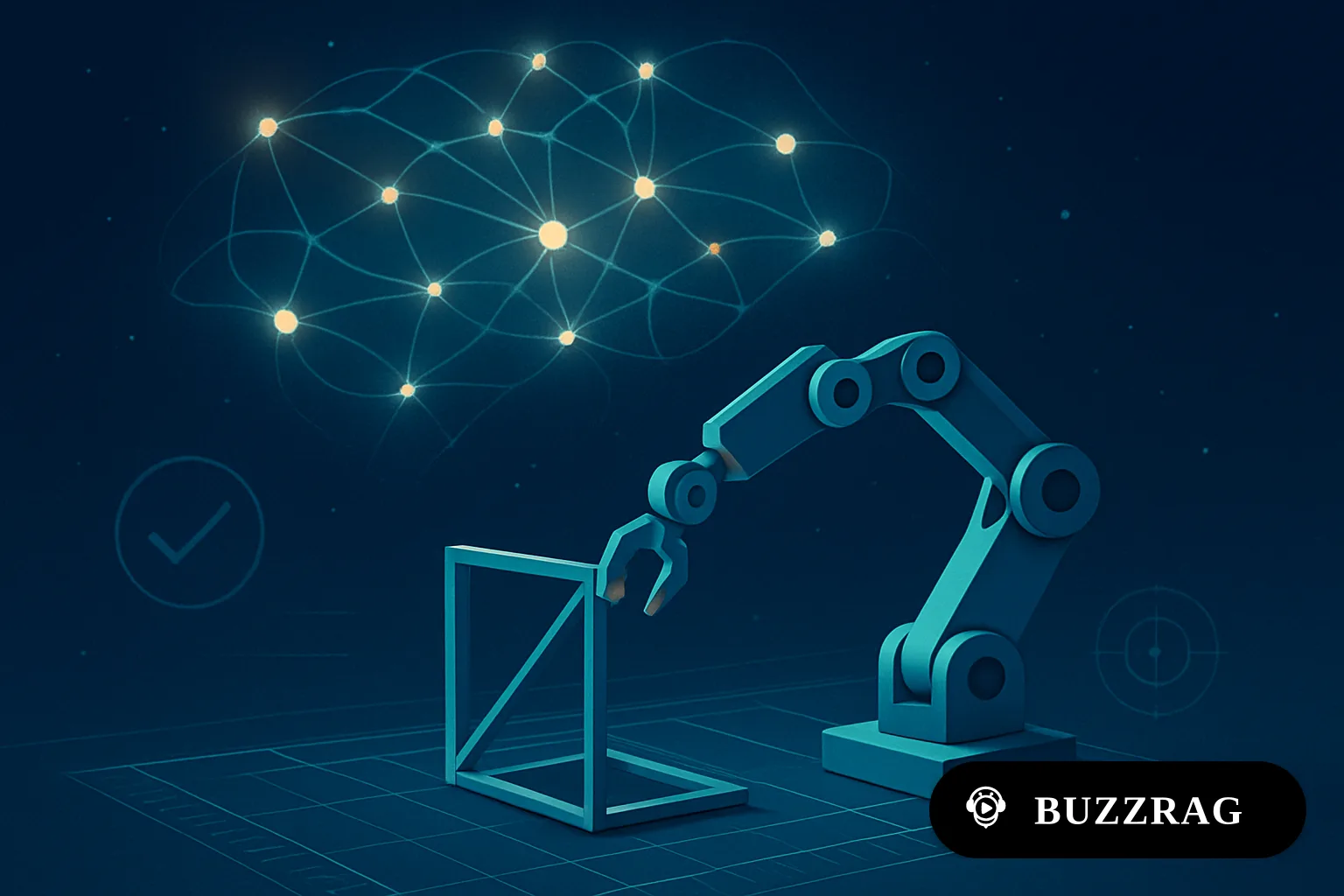
A robot has reportedly built a structure in space for the first time, marking a notable step in the development of autonomous construction beyond Earth. The report points to a shift from robots that inspect or manipulate objects toward machines capable of assembling structures in orbit.
Building in space could eventually reduce the need to launch large, fully assembled systems from the ground, but the practical hurdles are substantial. Robots must work reliably in a harsh environment, handle materials with precision and complete tasks without the support available in a terrestrial factory. The supplied details do not describe the structure’s size or the construction method, so the accomplishment’s precise scope remains unclear. Even so, demonstrations of robotic assembly can inform future plans for orbital infrastructure and missions where human construction would be difficult or costly. The next test is whether the capability can be repeated and expanded to more complex structures.
FDA orders warning about rare eye condition on GLP-1 drugs
The U.S. Food and Drug Administration said Monday that manufacturers of GLP-1 medicines must add a warning about nonarteritic anterior ischemic optic neuropathy, or NAION, a rare condition that can cause sudden vision loss. The condition affects the optic nerve, which carries visual signals from the eye to the brain, and is associated with reduced blood flow to that nerve.
A required label warning is intended to make patients and clinicians aware of a potential risk; it does not mean that the outcome is common or that every case is caused by treatment. The supplied report does not provide the agency’s estimate of risk or detail how it assessed the evidence, so patients should rely on the complete prescribing information and speak with a clinician about individual concerns. The change comes as GLP-1 drugs are widely used and closely monitored. How the warning is communicated, and whether further safety information emerges, will shape how clinicians discuss benefits and risks with people considering or already taking these medicines.
A polished remake prompts players to revisit a classic adventure
A remake of a landmark early 3D fantasy adventure is prompting players to question details they remember from the original. The new visual treatment has brought familiar scenes back into focus, but the updated presentation appears to make some aspects feel different from what longtime players recall.
That reaction sits at the intersection of visual restoration and memory. Players may have carried simplified or stylized impressions of older graphics for years, while a remake offers sharper detail that can alter how spaces, objects and characters are perceived. The conversation is less a test of who remembers correctly than a reminder that nostalgia is often built from personal interpretation as much as from the original work itself. How closely the remake preserves the earlier design, and which changes are deliberate, will influence whether players see the new version as a faithful refresh or a reinterpretation. The debate also shows how renewed visuals can revive interest in a familiar story without erasing its place in players’ memories.
China’s trade surges, but its October surplus narrows
China’s exports rose 35.2% year over year in October, beating the 33.5% increase expected in a Reuters poll, while imports also climbed past expectations, according to the report. Despite the strong export reading, the country’s trade surplus narrowed sharply, showing that import growth changed the overall balance.
Export growth slowed from September’s 36.3% annual increase, though it remained exceptionally strong against the forecast cited. The combination of rising exports and imports suggests a more complicated picture than the export figure alone: overseas sales remained robust, while purchases from abroad increased enough to compress the surplus. The figures do not identify which goods or trading partners drove the shifts, limiting what can be inferred about the sources of momentum. Economists and businesses will watch whether the pace persists in coming months and how the import rebound affects assessments of domestic demand. The next trade releases should help distinguish a temporary jump from a sustained change in the country’s trade pattern.
The next signals to watch are whether wetland restoration can move from campaign to durable protection, and whether formal verification can reach more of the software people rely on. Markets, regulators and trade data will offer their own tests of how resilient today’s technology and economic momentum really is.