BuzzRAG Daily Digest — 2026-10-10

Curated by AI. Callum Pierce
Today’s technology stories turn on trust and accountability: AI is challenging familiar models of professional work while raising questions about surveillance and machine consciousness. Alongside those debates, security reports, a view of the lunar farside and lighter wildlife coverage offer a broader mix.
AI puts the legal billable hour under pressure
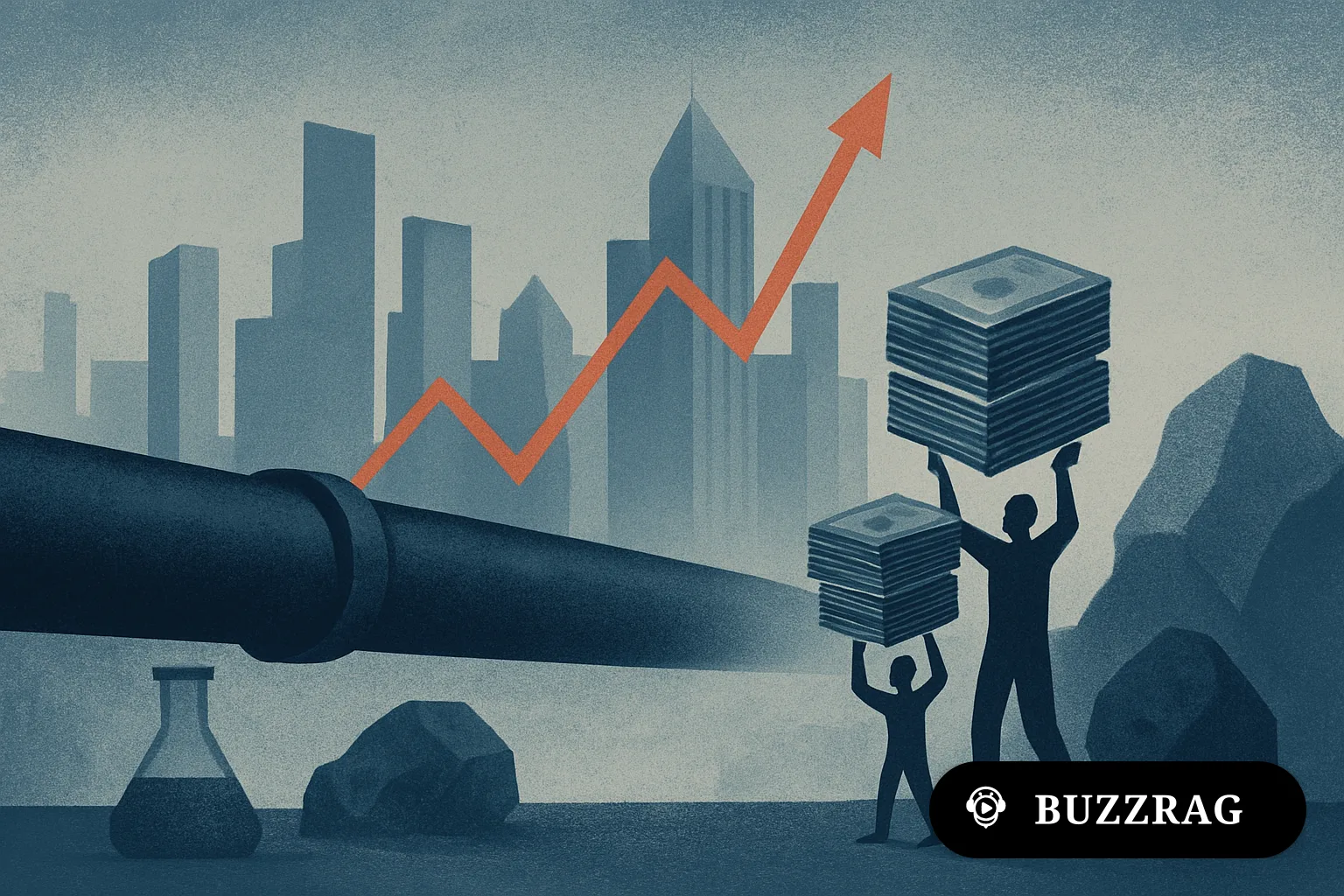
AI tools are pushing law firms to reconsider a basic measure of legal work: the billable hour. The trend is not simply about automating document review. As more tasks can be completed with software assistance, clients and firms face a harder question about how to price work when time spent is no longer a straightforward proxy for effort or value.
The shift also reaches into training and professional judgment. Junior lawyers traditionally build expertise by doing research, reviewing documents and drafting; if tools take on more of those tasks, firms will need to decide how new practitioners gain experience and how senior lawyers supervise AI-assisted work. The available report does not specify which tools or practices are changing fastest, but it highlights a broader pressure on legal business models. Watch whether firms move toward fixed fees, outcome-based pricing or new ways to account for human review.
A provocative question about AI consciousness and moral status
An essay titled “If AI is conscient, then we are making slaves” frames a stark ethical question: if an artificial intelligence were conscious, would using it as a tool amount to exploitation? The headline’s conditional is crucial. It raises the consequences of machine consciousness without, by itself, establishing that today’s AI systems have subjective experience.
The debate touches on how society might distinguish fluent responses from evidence of inner awareness, and what duties would follow if credible evidence emerged. Those questions are difficult because consciousness has no simple, universally accepted test, while AI systems can produce language that sounds self-aware. For now, the practical challenge is to keep speculation separate from evidence: neither dismissing future moral questions nor treating conversational behavior alone as proof. The essay’s framing invites readers to consider how safeguards and public discussion might evolve if scientific understanding changes.
A daily portrait of the lunar farside
NASA’s Astronomy Picture of the Day turns its focus to the lunar farside on October 10, offering a daily reminder that the Moon has a hemisphere many people never see from Earth. The listing identifies the subject but provides no further visual details in the supplied description, so the image itself is the place to look for its particular features and composition.
The farside is not permanently dark; it receives sunlight just as the near side does. Because the Moon rotates once in roughly the same time it takes to orbit Earth, the same hemisphere generally faces us, a relationship known as tidal locking. Spacecraft have mapped the hidden-from-Earth side, revealing terrain that differs in important ways from the familiar near side. APOD’s concise format pairs imagery with astronomer-written explanation, making this daily feature a way to connect a striking view with the science behind it.
FBI arrests founder of a ransomware negotiation firm
The FBI has arrested the founder of a firm that negotiates with ransomware groups, according to a report by Krebs on Security. The headline puts a little-known but sensitive corner of the cybersecurity industry in the spotlight: negotiators may communicate with attackers on behalf of victims, helping organizations navigate extortion demands and recovery decisions.
The supplied report details do not identify the founder, specify the allegations or describe the evidence, so the arrest should not be treated as proof of wrongdoing. The case nevertheless raises questions about oversight and conflicts of interest in an industry that operates under pressure and often with limited transparency. Organizations facing an attack may depend on intermediaries while trying to restore systems and protect data. The legal process and any forthcoming filings will be important in clarifying what conduct investigators allege and whether the case changes how companies assess outside ransomware-response advisers.
Report warns of a Telegram Desktop file-theft vulnerability
A security researcher reports that a vulnerability in Telegram Desktop could allow a user’s file to be stolen. The headline describes a potentially serious privacy risk, but the supplied material does not include technical details such as affected versions, the precise attack path, whether exploitation requires a victim’s interaction, or whether a fix is available.
Those missing details matter when judging exposure. Users should consult the researcher’s report and the application’s official security guidance for information on patches and mitigations, rather than assuming every installation is vulnerable or that an update has already resolved the issue. More broadly, desktop applications can handle sensitive local files as well as online conversations, making secure handling of links, attachments and permissions essential. The next questions are the vulnerability’s scope, how it was disclosed, and what actions users need to take.
Surveillance company plans hundreds of job cuts amid backlash
AI surveillance company Flock plans to cut about 18% of its workforce—roughly 270 of its approximately 1,500 employees—as it faces growing opposition to its products, Reuters reports. The company makes camera systems and license-plate readers, technologies that have drawn scrutiny from communities and lawmakers concerned about how surveillance data is collected and used.
The reported reductions connect two pressures facing the business: public resistance to its tools and a significant restructuring of its workforce. The available account does not establish that the backlash caused the planned cuts, and the company’s broader financial or operational rationale is not provided. For residents and policymakers, the central questions remain how these systems are deployed, who can access the data and what safeguards limit its retention or sharing. The job cuts may also shape how the company handles product development and public engagement as scrutiny continues.
An essay asks how to value scientific breakthroughs
“Put a price on breakthroughs” is the title of a new essay examining how society might assign value to major advances. The supplied listing offers no summary of its argument, so it is not possible to say what pricing method or policy the author endorses. Still, the question points to a persistent challenge in research: breakthroughs can create benefits that are difficult to measure, spread across many people and emerge long after the original investment.
How research is rewarded can influence which problems attract money and talent, and whether discoveries are shared widely or captured by a narrow set of institutions. Any attempt to put a price on progress must contend with uncertainty: a project may fail, while a small advance can later enable something transformative. The essay’s central proposal and examples will determine how it handles those tensions. The broader discussion is worth following as governments, companies and research organizations weigh incentives against public benefit.
Next.js 16.4 arrives, with release details to assess
The Next.js project has published version 16.4, according to its release announcement. The supplied listing gives the version number but no changelog, so it does not establish which capabilities, fixes or breaking changes the update contains. Developers should consult the project’s announcement and migration guidance before deciding whether or how to upgrade.
For teams maintaining web applications, even a point release can matter if it changes build behavior, performance, compatibility or security. The right upgrade path depends on the project’s current version, dependencies and testing setup; a careful review in a staging environment can reveal issues before changes reach users. The practical details to check are the release notes, any required configuration adjustments and the support status of existing versions. Without that information, the announcement marks a new release, not a basis for claims about specific improvements.
Wildlife photography offers a comic change of pace
A roundup of the Comedy Wildlife Awards is drawing attention to the lighter side of nature photography. The award name signals a focus on amusing animal images, where an unexpected pose or moment can make wildlife seem uncannily expressive. The supplied excerpt does not identify particular photographs or species, leaving the gallery to deliver the visual punchlines.
Humor can be an inviting way into wildlife coverage, encouraging audiences to spend time looking closely at animals and their behavior. The images are still records of real creatures in their environments, rather than staged comedy; the appeal comes from timing and the human tendency to read familiar expressions into a fleeting moment. That levity sits alongside a wider conversation about the value of attention to nature. A photograph that first prompts a laugh may also lead viewers to learn more about the animal behind the frame.
Across the day’s stories, new tools are changing work and raising fresh questions about privacy, accountability and value. The next signals to watch are concrete: what legal and security guidance emerges, how surveillance policies respond to public scrutiny, and what evidence—not speculation—can tell us about AI’s limits.