BuzzRAG Science Desk — 2026-10-10

Curated by AI. Anika Bose, Science Desk Editor
Today’s science mix spans the Moon’s far side, gravitational-wave technology and competing ideas about what black holes might reveal. Closer to home, two contamination stories underline a recurring challenge: public confidence depends on clear evidence, not assurances alone.
A gravitational lens makes a cosmic mirror
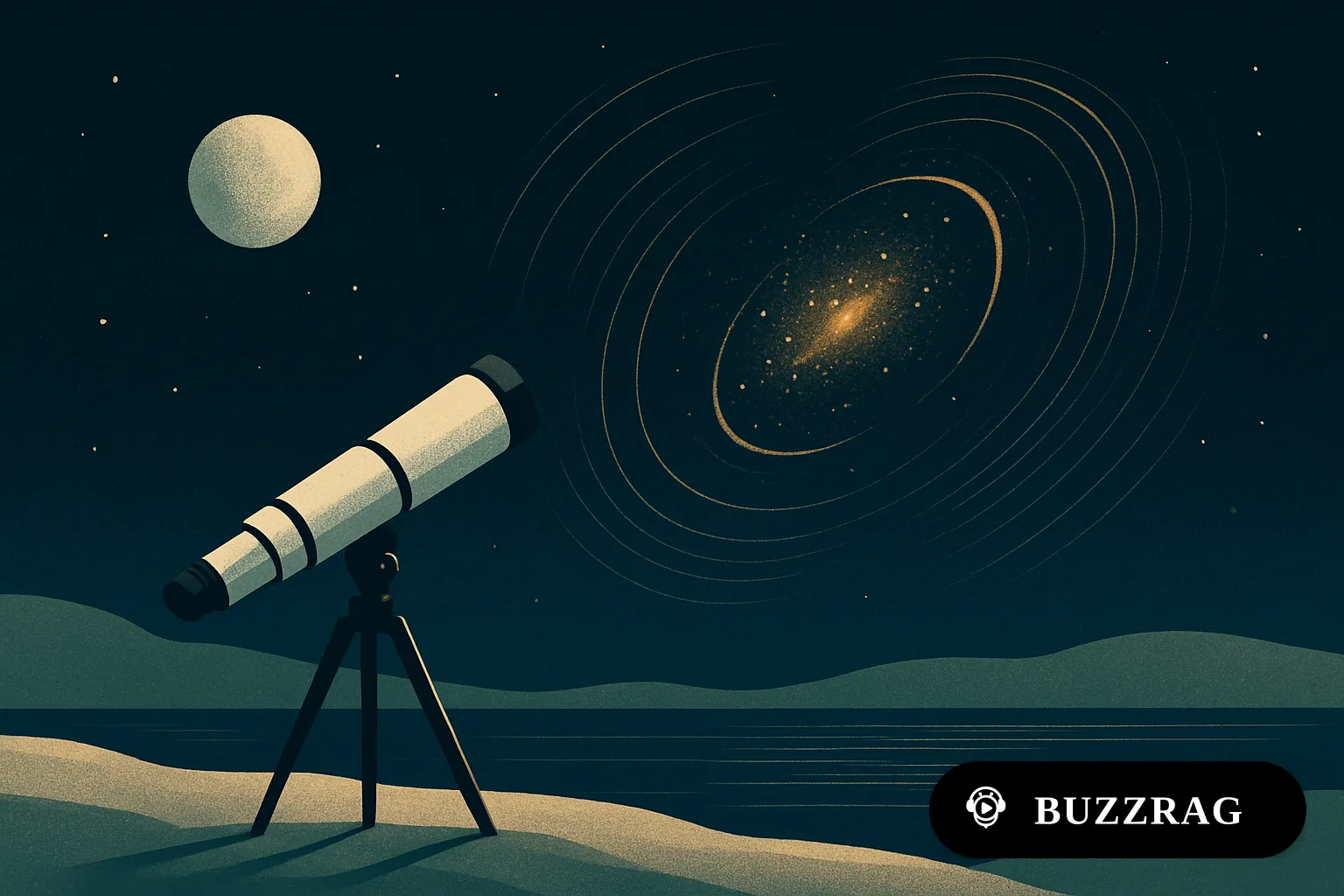
A new space-telescope picture presents galaxies whose light appears warped and multiplied, producing the effect of a cosmic hall of mirrors. The explanation is gravitational lensing: a foreground concentration of mass bends light from more distant objects, sometimes stretching or splitting their images. The snippet describes a detailed picture, but provides no object name, measured lens mass or new analysis, so it is best read as a visual showcase of a well-established phenomenon rather than a reported discovery.
Lensing is more than an optical curiosity. By comparing the distorted images with models of the intervening mass, astronomers can investigate the distribution of matter—including matter that does not shine—and study background galaxies that might otherwise be too faint to examine. Those inferences depend on careful modelling and can carry uncertainties; a dramatic image alone does not settle them. The next scientific step is the quantitative work behind the photograph: identifying the system and explaining what its lensing geometry allows researchers to measure.
Beach closure leaves questions over asbestos risk
Mount Batten Beach has reportedly remained fenced off since July while residents and campaigners seek answers about an asbestos concern. The available account does not identify the source of the material, the test results behind the closure or the specific risk assessment, so it cannot establish how much contamination is present or whether visitors were exposed. Keeping a site closed while a potential hazard is investigated can be prudent, but prolonged uncertainty makes transparent updates especially important.
Asbestos risk depends on factors such as whether fibres are present, whether material is damaged or disturbed, and how people might come into contact with it. Clear communication should distinguish confirmed findings from precautionary action and explain what sampling has been done, by whom, and what conditions would allow reopening. The immediate public-health priority is a credible account of the evidence and the controls in place, rather than speculation about an unresolved “mystery.” Residents will need accessible results and a timetable for the next assessment to judge what happens next.
A test telescope moves a gravitational-wave mission forward
NASA has taken a development step on an all-glass test telescope intended to support its contributions to the Laser Interferometer Space Antenna, or LISA. The planned space observatory is designed to detect gravitational waves—minute ripples in spacetime—at frequencies that complement those accessible to ground-based detectors. The announcement concerns a test telescope, not a completed flight instrument or a confirmation of the mission’s eventual performance.
Space-based detection requires extraordinarily precise measurements between separated spacecraft, so optical components and their stability are central engineering challenges. Testing a telescope design can help establish whether it meets the demanding requirements before systems are built and integrated for flight. The supplied information does not specify test results, milestones or a launch schedule; those details will be essential for judging how much this step reduces technical risk. If the mission succeeds, it could open a new observational window on massive black-hole systems and other long-timescale events, but that science depends first on rigorous validation of the hardware.
Developer says chemicals removed from former fuel site
A developer says barrels of persistent “forever chemicals” left at a former fuel depot development site have been removed. That is a meaningful change in the site’s immediate condition, but the report as supplied does not name the substances, say how many barrels were involved, or provide independent confirmation of their removal. Nor does it establish whether soil or groundwater was affected.
Removing stored chemicals addresses one potential source of ongoing exposure, but it is not the same as demonstrating that a site is clean. A full account would describe how the materials were identified, handled and transported, what sampling has been carried out around the depot, and where the waste went. Persistent chemicals can remain in the environment, making verification and long-term monitoring relevant even after containers are cleared. The next useful update should come with documented checks from the appropriate environmental authorities, alongside a clear explanation of any remaining contamination or remediation work.
Workplace recycling depends on clear systems
A report on recycling at work highlights a practical barrier: people may not see waste sorting as part of their job, particularly where labels are unclear or suitable bins are missing. The account points to facilities and communication as problems in workplaces and businesses serving the public. It offers no survey size or measured recycling rates in the supplied summary, so it should be taken as a reported challenge rather than a quantified assessment of how widespread it is.
The observation fits a broader lesson from behaviour research: individual intentions have limited effect when the easiest available option is to discard everything together. Consistent labels, conveniently placed bins and clear responsibility for collection can make correct sorting more routine. But infrastructure alone does not guarantee that materials are actually recycled; collection and processing systems also matter. Employers and local authorities can evaluate progress by tracking contamination and collection outcomes, not just the number of bins installed. That evidence can show whether clearer systems are changing what happens to waste after it leaves the workplace.
The most consequential next steps are likely to be less photogenic than today’s headlines: published risk assessments, verified cleanup records and evidence that proposed black-hole signals can be distinguished from real data. In space science, watch for engineering results and the analysis behind striking images to turn promise into measurable progress.