BuzzRAG Daily Digest — 2026-10-08

Curated by AI. Callum Pierce
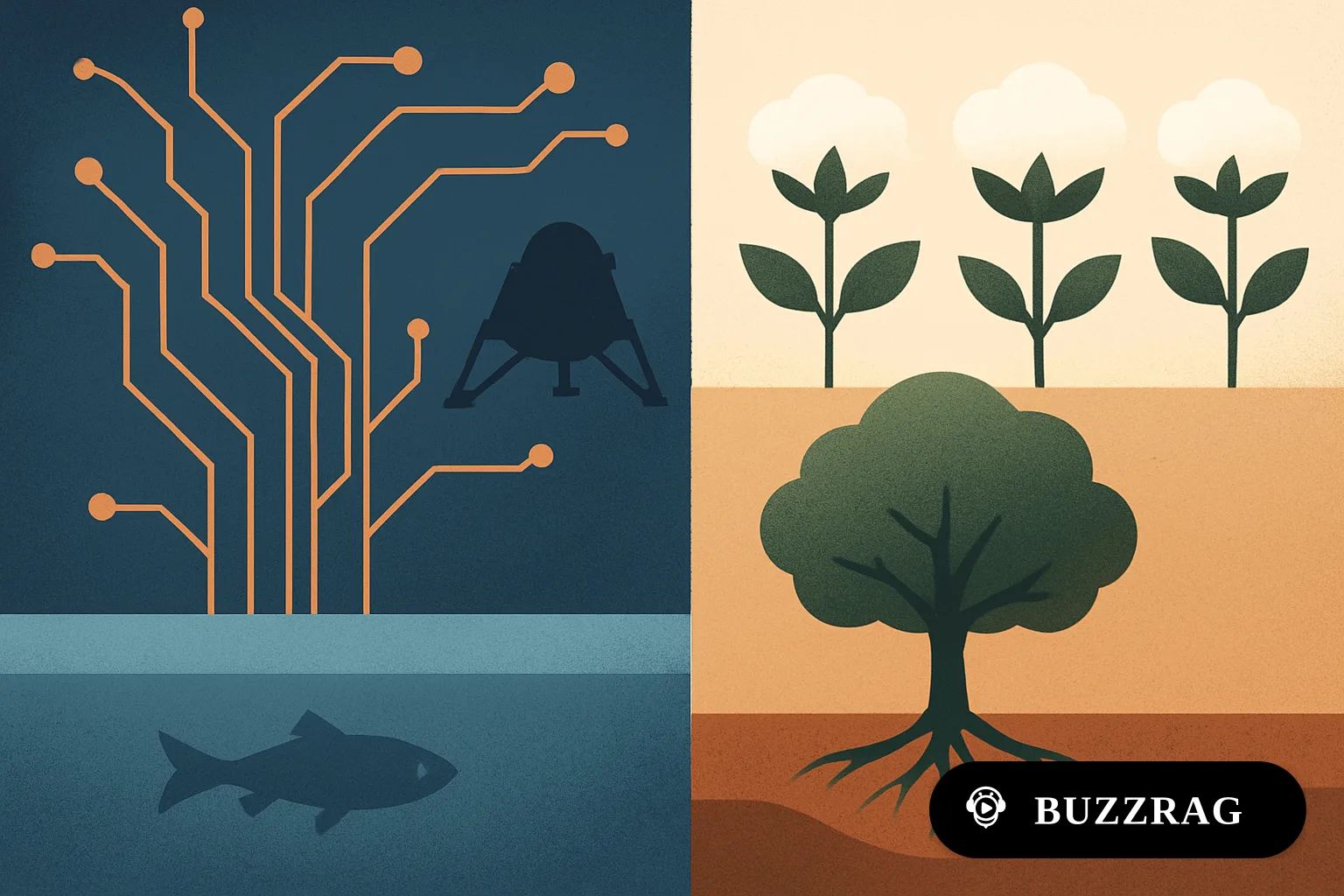
Today’s trends connect technological ambition with the practical limits of resources, markets and ecosystems. A pioneering software engineer’s legacy shares the agenda with AI financing, chip demand, drought in Texas and signs of wildlife recovery.
Margaret Hamilton, Apollo software pioneer, dies at 90
Margaret Hamilton, whose work helped make the Apollo 11 Moon landing possible, has died at 90, according to the report. Her career put software engineering at the center of a mission often remembered for its rockets, astronauts and hardware. The code had to function in a high-stakes environment where failures could have immediate consequences.
During Apollo 11’s descent, onboard computer alarms signaled that the system was overloaded. The software’s priority handling helped the crew continue toward landing rather than abandon the attempt. Hamilton and her colleagues’ work became an important example of how carefully designed software can help people manage unexpected events in complex systems. Her legacy extends beyond spaceflight: the discipline she helped establish is now fundamental to everything from aircraft to medical devices. The achievement also underscores how much of a historic mission’s success depended on people whose contributions were less visible than the launch itself.
Texas cotton growers confront drought and a strained aquifer
Drought and pressure on groundwater were central concerns when NASA scientists met farmers in the Texas High Plains, a major cotton-growing region. The discussion brings together two forms of expertise: growers’ experience with changing field conditions and satellite-based observation of land and water. The supplied report does not detail specific findings from the visit, but it points to a pressing challenge for agriculture in an already dry landscape.
Much of the region relies on the Ogallala Aquifer, a vast underground water source that has been drawn down by decades of irrigation. When rainfall is scarce and groundwater becomes harder to depend on, farmers face difficult choices about crops, yields and how much water to use. NASA’s Earth-observation tools can help track conditions across wide areas, while local knowledge gives those measurements practical context. The stakes extend beyond a single growing season: decisions made now affect farm viability and the long-term supply of water for communities and agriculture.
Manus secures $500 million after acquisition breakup
AI startup Manus has raised $500 million in its first funding round since Beijing forced Meta to unwind an acquisition valued at roughly $2 billion, according to the report. The new financing gives the company fresh capital after a high-profile deal was stopped, though the available information does not identify the investors, valuation or terms of the round.
Manus develops AI agents—systems designed to carry out tasks rather than only respond to prompts—and its fundraising arrives as businesses and investors weigh the commercial promise of that approach. The collapsed acquisition also places the company in the middle of broader scrutiny over cross-border technology deals and China’s influence on transactions involving strategic firms. Fresh funding may support continued development and expansion, but it does not resolve questions about the company’s ownership, market access or ability to compete. The next signals will be how Manus deploys the capital and whether it can convert interest in AI agents into durable demand.
TSMC September revenue climbs as AI chip demand grows
Taiwan Semiconductor Manufacturing Company reported September net revenue of NT$511.86 billion, with sales rising year over year as demand tied to artificial intelligence supports chip orders. The monthly figure offers a snapshot of activity at a company that manufactures processors for customers across the global technology industry.
The result reinforces how strongly the AI buildout is shaping the semiconductor market, from advanced processors to the manufacturing capacity needed to produce them. But one month’s revenue cannot show how much of the increase came specifically from AI, nor does sales growth alone reveal margins, production costs or future orders. Chipmakers and their customers are making large bets on demand continuing, while capacity and supply-chain constraints can take time to address. Investors will be watching upcoming results and company guidance for evidence that the current appetite for computing power is translating into sustained growth rather than a short-lived surge.
Report puts Digger’s potential losses at $250 million
A report says the Tom Cruise project Digger is positioned to lose as much as $250 million. The headline signals a potentially substantial financial risk, but the available item provides no breakdown of the estimate, its assumptions or the project’s current release status. It should therefore be read as a reported projection, not a confirmed final loss.
Film economics can be difficult to assess from a headline figure: production spending is only part of the picture, while marketing, distribution arrangements and receipts across different markets affect the eventual result. A forecast this large draws attention to the pressure on expensive productions to find an audience, but it does not by itself explain how the estimate was calculated or who would bear any shortfall. More detail about the budget, distribution plan and reporting behind the number would help clarify the project’s exposure. For now, the story is a reminder that star power does not eliminate uncertainty in an industry where costs and returns can vary widely.
County Down wych elm wins Tree of the Year
A wych elm in County Down has been named Tree of the Year, marking the first time a tree in Northern Ireland has won the national title since the award began in 2014. Its recognition puts a local landmark into a wider public conversation about the value of trees and the places people associate with them.
The award offers a simple way to draw attention to trees as living parts of community history, local landscapes and wildlife habitat. The description “wonky” suggests an individual tree with a distinctive shape, but the supplied report does not give further details about its age, condition or setting. A public accolade can bring visitors and interest, while also raising practical questions about protecting the tree and its surroundings. The result is a reminder that conservation is not only about remote wilderness: familiar features in towns and rural communities can become focal points for care and local pride.
A music spotlight on Ako Akas by 10LEC6
The Quietus has published a music feature titled “Move Any Mountain: Ako Akas by 10LEC6.” The listing identifies the work and its creator but offers little detail about the piece’s format or the music itself, so its specific argument and sound cannot be established from the available information. It nevertheless brings a less widely circulated release into view for readers following independent music coverage.
That kind of attention matters in a crowded listening landscape, where editorial features can help audiences encounter artists and recordings beyond the most heavily promoted releases. The title’s language suggests a focus on movement or overcoming obstacles, but without the full article it would be premature to treat that as a description of the work’s themes. Readers will need the feature itself for a fuller account of the music and the perspective it takes. For now, the listing serves as a pointer to a new cultural conversation rather than a complete picture of the release.
UK bluefin tuna recovery offers a conservation signal
A new report from WWF highlights the return of bluefin tuna to UK waters as one example of wildlife recovery. The organization says the fish is among several species whose fortunes have improved, placing the development within a broader account of how conservation can help nature rebound. The supplied summary does not specify population figures or the report’s assessment period.
A recovery is encouraging, but it is not the same as a guarantee of long-term security. Marine species remain exposed to pressures including fishing, changing ocean conditions and the health of the wider food web. The report’s wider examples may help show where protections and management have made a difference, while also drawing attention to the work needed to sustain progress. For bluefin tuna, the important questions are how the population is measured, what safeguards remain in place and whether gains can persist as conditions change. The story presents a hopeful sign alongside a reminder that conservation requires continued monitoring and care.
The next test for many of these stories is whether promising signals hold up: funding must become useful technology, chip demand must endure, and wildlife gains need protection. The coming weeks may offer clearer evidence on which rebounds are durable—and which challenges still demand urgent attention.