BuzzRAG Daily Digest — 2026-10-03

Curated by AI. Callum Pierce
Today’s headlines put the costs and consequences of technology in focus: a softer U.S. jobs report, growing resistance to data-center expansion and a major privacy penalty request. Alongside those debates, readers are tracking software updates, AI’s role in game development, health concerns and a striking image from Mars.
A softer jobs report complicates the rate outlook
The U.S. economy added fewer jobs than expected, according to the day’s report, a surprise that has quickly sharpened attention on the Federal Reserve’s next move. The available figures in this item do not specify the size of the shortfall, but the immediate market interpretation is clear: slower hiring may reduce pressure for another interest-rate increase and strengthen the argument for holding rates steady.
One report rarely settles the outlook. Policymakers weigh employment alongside inflation, wages, participation and revisions to previous months’ estimates, while a slowdown can mean different things depending on whether it reflects cooling demand or a more serious loss of momentum. For households and businesses, interest rates influence borrowing costs from mortgages to investment plans. The next signals to watch are whether hiring weakness persists and whether price pressures continue to ease; those will help show whether the report marks a turn or a temporary wobble.
Data-center backlash moves beyond the U.S.
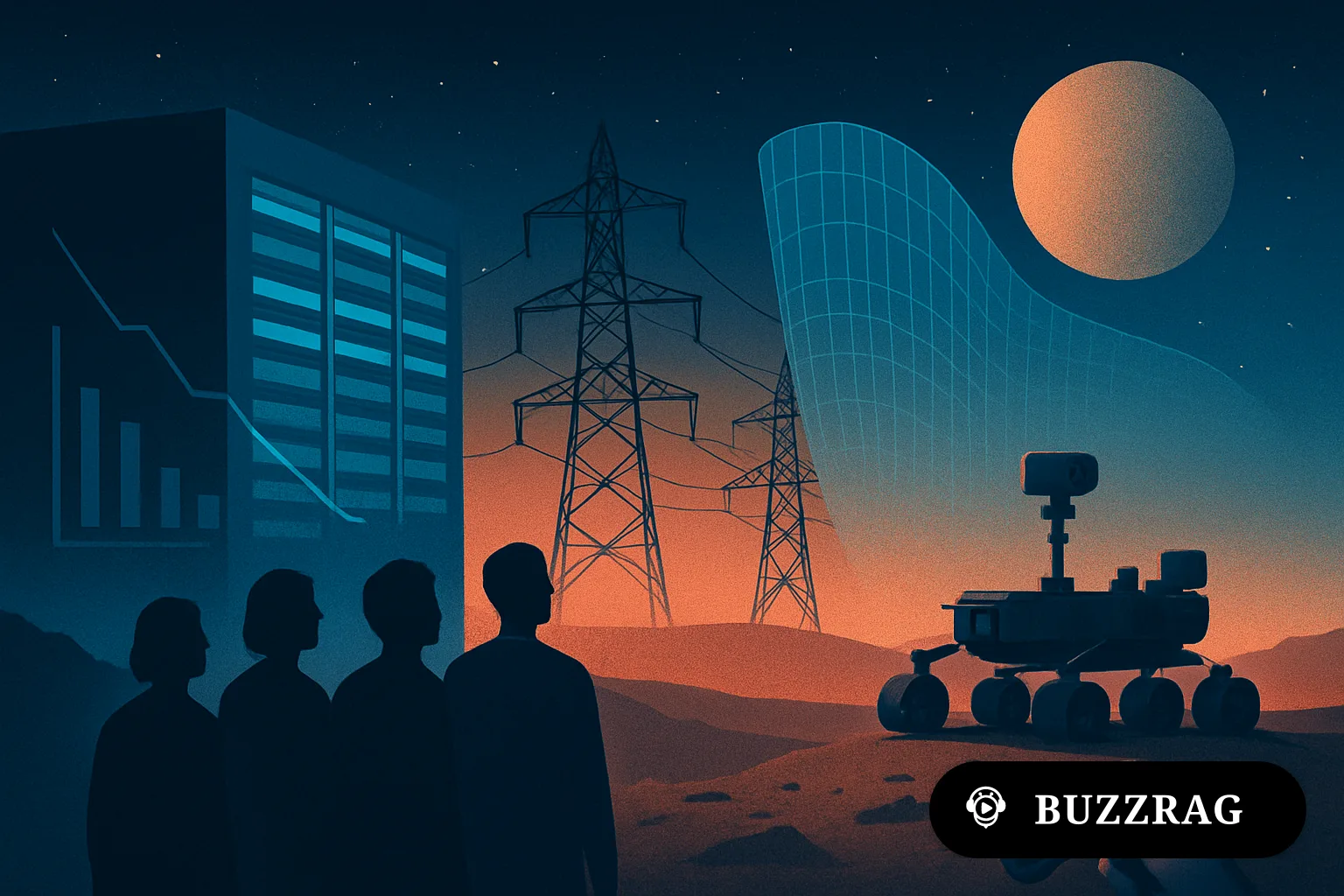
Communities in the United States have been contesting the rapid build-out of data centers, and the debate is increasingly appearing in Europe and Asia. The central tension is local as well as global: facilities built to support the AI boom promise computing capacity and investment, but residents are questioning who bears the costs as demand for land, electricity and other infrastructure rises.
The disputes point to a practical limit on the speed of digital expansion. A project may serve distant users and companies while its effects—such as pressure on local power systems and development decisions—are felt where it is built. That can put residents, utilities, developers and governments in conflict over planning and resource priorities. As more communities scrutinize proposals, companies may face longer approval processes and greater demands to show how projects fit local needs. The question is no longer simply how quickly AI infrastructure can be built, but on what terms communities will accept it.
Orion update puts Linux and Windows users in view
A new update from the team behind the Orion browser focuses on Linux and Windows. The item’s listing identifies the platforms but provides no release notes or detail about which changes are included, so the scope of the update—and whether it concerns availability, fixes or new features—cannot be established from the information supplied here.
The development is still worth watching as browser makers compete to serve users across operating systems, not just on a single device ecosystem. Linux users in particular often look closely at compatibility and the quality of platform-specific support, while Windows remains a large and varied desktop audience. What matters next is the substance of the announcement: supported versions, feature parity, installation options and any limitations. Until those details are clear, the headline signals attention to broader platform support rather than confirming a specific capability or launch schedule.
A rover’s self-portrait from Mars
The October 3 Astronomy Picture of the Day features a rover selfie at Vera Rubin Ridge, bringing a scene from Mars into the day’s news cycle. The daily astronomy feature pairs an image with an explanation by a professional astronomer; the supplied listing identifies the location and subject but does not include the full image caption or technical details about how the photograph was assembled.
Rover self-portraits are carefully composed records of both a machine and its surroundings. They can show the terrain around a mission vehicle while documenting its condition over time, helping scientists and the public connect a remote exploration effort with a tangible landscape. Vera Rubin Ridge is a named feature on Mars, but the item does not specify the rover’s observations or the image’s date of capture. The broader appeal is in that dual perspective: a robotic explorer becomes part of the landscape it is studying, while the image offers a rare sense of presence on another world.
New Mexico seeks up to $40 billion in Meta penalties
New Mexico has asked a judge to impose between $35 billion and $40 billion in penalties on Meta Platforms, according to the report summarized in the item. The request follows a jury finding that the company misled consumers about the privacy of their data on Facebook. The state’s case traces back to the Cambridge Analytica scandal, which brought renewed scrutiny to how personal information was collected and used.
The requested figure is not a final award: the judge must decide what penalties, if any, are appropriate. The size of the demand makes the next ruling consequential for the state’s enforcement effort and for the wider debate over the costs of privacy violations. The case also illustrates the distinction between a jury’s finding and the remedy that follows it. Attention will now turn to the court’s assessment of the state’s arguments, the legal basis for the requested amount and how the decision may shape future challenges to platform data practices.
Cloudflare introduces an Oblivious HTTP gateway
Cloudflare has announced an Oblivious HTTP (OHTTP) gateway, a service built around a privacy-oriented internet protocol. In broad terms, OHTTP is designed to separate knowledge of a user’s network identity from knowledge of the content of a request: one intermediary can see where a request came from without seeing its contents, while another handles the request without receiving the same identifying information. The announcement’s listing does not provide further implementation details.
That separation can reduce how much any single service learns about a user, though it is not a blanket guarantee of anonymity and depends on how the system is deployed. A gateway also raises practical questions about compatibility, performance and which applications will adopt the approach. The news matters because privacy protections often rely not only on protocol design but on available infrastructure and real-world uptake. Developers and users will be watching for details about access, supported use cases and how the service handles the trust relationships that OHTTP is intended to limit.
Capcom plans to reshape its game engine around AI
Capcom says it plans to gradually develop its RE Engine into what it describes as an AI-generation game engine, with a stated goal of creating games together with AI. The announcement signals an ambition to build generative tools into the technology used for game development, rather than treating AI only as a separate add-on. The available summary does not specify which parts of production would use the tools or when they might be introduced.
The phrase “together with AI” leaves important questions open: how the tools would affect artists’ and developers’ work, what kinds of material they might generate, and how the company would assess quality and control. Engine-level changes can influence many stages of production, but turning an ambition into a practical workflow requires decisions about rights, reliability and human oversight. For players, the announcement offers no immediate detail about particular games or features. The next meaningful evidence will be concrete examples of how the technology is used and what role creative teams retain.
Reports add nail concerns to GLP-1 side-effect discussion
Some people taking Ozempic are reporting nail problems, according to a report highlighted in today’s technology and science feeds. The headline places those reports alongside earlier discussion of hair loss, but the information provided here does not establish how common nail changes are or whether the medication directly causes them. Individual accounts can raise useful questions without, by themselves, demonstrating a medical link.
For patients, changes to hair or nails can have multiple possible explanations, including factors associated with illness, weight change or nutrition, so the reports should not be treated as a diagnosis or a reason to alter treatment without medical advice. The distinction between an observed complaint and a confirmed adverse effect is especially important for widely used medicines. More clarity would require reliable clinical evidence and careful assessment of possible causes. Anyone noticing a concerning change should discuss it with a qualified healthcare professional, who can consider the person’s health and treatment rather than relying on viral accounts.
A new Hollywood-set sequel is due next month
A sequel connected to the 2019 Hollywood-set film Once Upon a Time in Hollywood is reported to arrive next month, with the project described as a story following stuntman Cliff Booth. The item says Quentin Tarantino and David Fincher are delivering the film, and gives its title as The Further Misadventures of Cliff Booth. It offers little detail beyond the creative connection and timing, leaving the precise release plan and distribution information unstated.
The project pairs a continuation of a familiar character’s story with a new collaboration between two prominent filmmakers, making the announcement notable beyond the prospect of another period crime drama. A sequel also invites questions about how closely it will connect to the earlier film and how much of its tone or world it will carry forward. With an arrival indicated for November, the details to watch are the confirmed release date, cast information and any fuller account of the story. For now, the headline establishes the broad premise and a near-term window rather than a complete picture of the production.
The next round of employment figures and local decisions on data-center projects will show whether today’s concerns are isolated headlines or part of a wider shift. Meanwhile, court rulings, clearer AI-development plans and better evidence on reported health effects could turn several of these debates from claims into concrete consequences.