BuzzRAG Daily Digest — 2026-09-26

Curated by AI. Callum Pierce
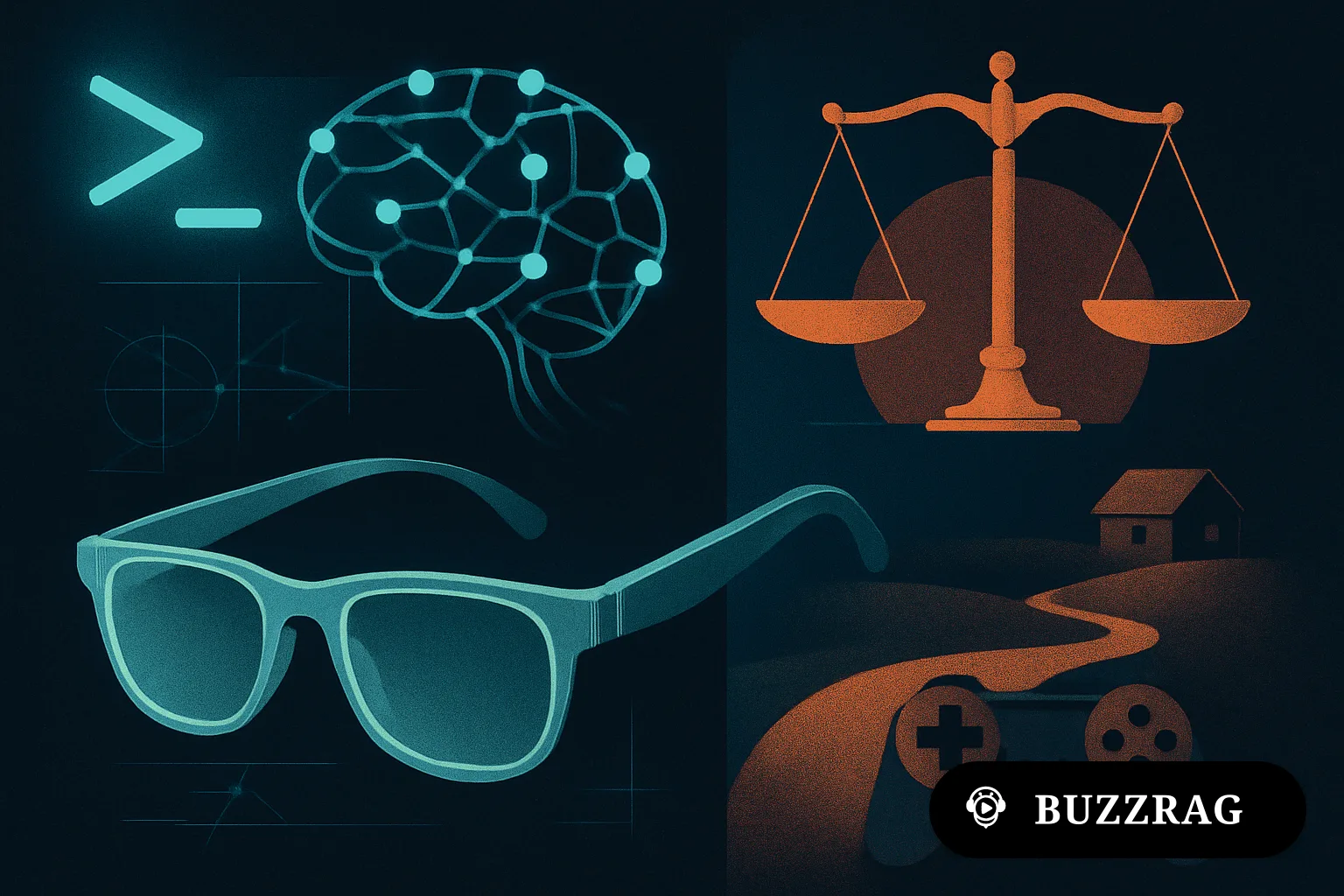
The day’s strongest signals sit at the intersection of software automation, artificial intelligence and accountability. Alongside practical tools for developers, a major privacy verdict and a case involving automated camera evidence sharpen questions about who controls increasingly powerful systems.
A Unified Command Line for Unity Build Pipelines
Unity is introducing a command-line interface designed to make continuous integration and continuous delivery less cumbersome for game-development teams. The tool aims to consolidate tasks that are often handled by a patchwork of custom scripts, including installing and managing editor versions, running tests and launching builds.
The appeal is operational rather than flashy: a standard interface could make projects easier to reproduce across GitHub Actions, cloud runners and other CI providers. That matters for teams that maintain several engine versions or need reliable automated testing before code reaches players. The bigger test will be how well the CLI handles platform-specific dependencies, licensing and the edge cases that have traditionally pushed studios toward bespoke automation. If it delivers consistent behavior across environments, it could reduce maintenance overhead while making build infrastructure more accessible to smaller teams.
Taylor Burns’ “Trav” Finds Drama in Animals and Barns
“Animals, Burns and Barns: Trav” is the latest cultural dispatch drawing attention through The Quietus, with its title pointing toward a work grounded in rural imagery, animals and the physical atmosphere of barns. The available listing offers limited detail, but its presentation suggests a piece whose character is as much sensory and visual as it is musical or narrative.
That combination of landscape and ordinary labor can create a distinctive frame for contemporary art: barns become spaces of memory, animals become figures of vulnerability or instinct, and burning can signal both destruction and transformation. Without over-reading the sparse source material, the item’s presence in the trend list reflects continuing interest in work that resists polished, easily categorized presentation. Readers will need the full feature for the particulars, but the title alone promises an earthy, unsettling study of place and symbolism.
One Function to Connect Language and Vision Models
A new technical post proposes a single-function, Jev-like wrapper for working with large language models, including systems that accept images as input. The idea is straightforward: hide the differences between providers and model types behind a small, consistent interface so developers can move from text prompts to multimodal tasks without rewriting an application’s plumbing.
Abstraction of this kind can make experimentation faster, particularly for small projects that need to compare models or add image understanding without adopting a large framework. It also introduces familiar trade-offs. A wrapper may smooth over basic differences while obscuring provider-specific capabilities, pricing, latency and failure modes. The project’s early visibility appears modest, but its premise captures a broader direction in AI development: tools are increasingly being built to treat models as interchangeable components, even when their behavior and operational constraints remain markedly different.
The AI Economy Is Going to Need More Mathematicians
A new essay asks a blunt question about the future of mathematics: whether the rapid expansion of artificial intelligence and advanced computing will create demand for far more mathematicians. The argument arrives as research labs, technology companies and governments compete for people capable of handling increasingly sophisticated problems in modeling, optimization, verification and theoretical computer science.
The issue is not simply whether more people should learn advanced mathematics. It is also about the kinds of work that AI can accelerate, the kinds it cannot reliably validate and the institutions needed to train specialists over many years. A larger appetite for mathematical talent could reshape university funding, research priorities and the pipeline from academia into industry. It may also expose a tension between short-term hiring races and the slower cultivation of foundational knowledge. The essay puts that workforce question alongside the technical one: progress depends not only on more powerful machines, but on people who can understand what those machines are doing.
New Mexico Jury Finds Meta Made 43 Million Misleading Statements
A New Mexico jury has found Meta liable for deceiving users about privacy protections, with the case involving an alleged 43 million misleading statements and the company’s response to the Cambridge Analytica scandal. The verdict, reported by the Associated Press and circulated by several technology-focused outlets, adds a significant state-level judgment to the long-running legal scrutiny of the company’s data practices.
The scale of the alleged violations is central to the case, but the underlying question is more basic: whether users were given an accurate account of how their personal information was protected and what happened when those assurances failed. A finding under New Mexico’s Unfair Practices Act could carry financial consequences while also strengthening arguments that privacy representations should be treated as enforceable consumer claims rather than corporate messaging. Meta can challenge the outcome through the legal process, and the final impact will depend on damages and appeals, but the verdict creates another pressure point around trust in large online platforms.
Chris Hansen Plans a Documentary Response to “Primetime”
Chris Hansen says he is making his own documentary after watching Lance Oppenheim’s “Primetime,” a dramatized account that he described as confusing and graded poorly. The reaction has turned a film about the legacy of a highly recognizable television figure into a second layer of media spectacle, with Hansen seeking to present his own version of events rather than leave the dramatization as the final word.
The dispute highlights the unstable boundary between documentary, reenactment and personal rebuttal. A subject’s response can add valuable context, but it can also become another carefully shaped performance, particularly when reputation and disputed memories are involved. The eventual project will be judged not only on its claims but on its sourcing, access to records and willingness to address uncomfortable details. For viewers, the developing exchange offers a case study in how real events are repeatedly repackaged—and how quickly the people depicted may attempt to reclaim control of the narrative.
Smart Glasses Move From Showcase to Street-Level Ambition
At Meta Connect, smart glasses were presented as a central part of the company’s effort to keep digital services close to users throughout the day. The emphasis reflects a broader push beyond phones and laptops toward lightweight devices that can capture images, provide assistance and overlay computing on ordinary experiences without requiring a traditional screen.
The challenge is no longer only whether the hardware works. Smart glasses must earn public comfort around cameras, microphones, data collection and the possibility that people nearby are being recorded without clear consent. They also need to prove that hands-free features are useful often enough to justify wearing another connected device. Meta’s growing investment suggests it sees glasses as a potential successor or companion to the smartphone, but adoption will depend on social norms, battery life, privacy controls and price as much as on technical demonstrations. The company is betting that convenience can overcome those frictions.
A Camera Record Helped Put an Innocent Woman in Jail for 13 Days
A report details how a single record from a network of automated license-plate cameras contributed to the arrest of an innocent woman in Florida, who spent 13 days in jail. The case shows how a piece of location data, treated as decisive rather than preliminary, can quickly move from a private database into a criminal investigation and a person’s life.
The danger is not limited to an inaccurate camera read. It lies in the chain of assumptions that can follow: a vehicle resemblance becomes probable cause, an algorithmic hit becomes corroboration, and the burden of correcting the record falls on the person accused. Automated surveillance systems are often marketed as efficient tools for solving serious crimes, but their value depends on transparent retention policies, human verification and meaningful routes to challenge errors. The lawsuit described in the report raises a question communities will face more often as these networks expand: who is accountable when a searchable trail looks convincing but is wrong?
A Guide to Playing the Silent Hill Series in Order
A new guide tackles one of the most common problems facing players approaching a long-running horror series: where to begin and how to navigate its different entries. Rather than assuming release order is the only sensible path, an “in order” guide can separate mainline stories, remakes, side entries and thematic connections for newcomers trying to understand what belongs together.
That kind of navigation matters particularly for series built around recurring imagery and psychological themes rather than one straightforward chronology. Release order can show how mechanics and storytelling evolved, while a narrative or thematic order may make individual arcs easier to follow. The guide’s practical value is therefore less about declaring one definitive route than about explaining the trade-offs between them. As older titles are revisited and newer versions bring the material to fresh audiences, these orientation pieces serve as cultural maps for franchises whose history is influential, fragmented and not always easy to access.
The common thread today is the widening gap between technical capability and the systems needed to govern it, whether the subject is a build pipeline, a model interface or a surveillance record. The next signals to watch will be how courts, developers and audiences respond when convenience meets accountability.