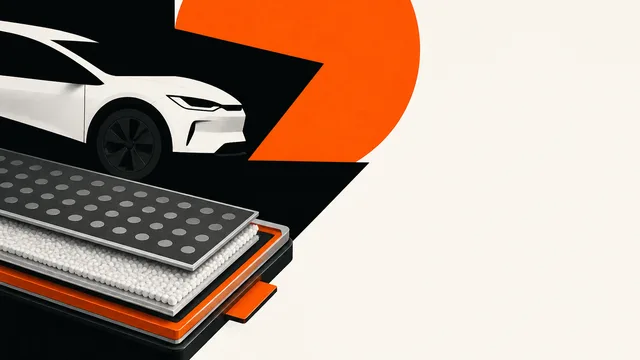
Solid-state batteries are being developed as a potential successor to the lithium-ion cells used in most electric vehicles today. Instead of relying on a liquid or gel electrolyte, they use a solid material to move lithium ions between the anode and cathode. This design could improve energy density, reduce fire risk, and enable longer driving range or smaller battery packs. Those benefits have attracted billions of dollars in investment from automakers, battery companies, startups, and governments.
The technology remains difficult to commercialize because laboratory performance does not automatically translate into reliable mass production. Manufacturers must create thin, defect-free solid electrolyte layers, maintain stable contact between battery materials, manage expansion and contraction during charging, and produce cells quickly and affordably. Lithium chemistry, raw-material availability, manufacturing yield, durability, and charging performance all remain important constraints. These challenges help explain why major investments have not yet produced a clear industry winner.
Automakers are nevertheless moving from research toward road testing and pilot-scale production. BYD has said its solid-state battery work is approaching practical vehicle use, while other companies are pursuing different electrolyte materials and cell architectures. The field includes incremental approaches that combine solid and liquid components as well as fully solid designs intended for later deployment. Progress will be measured not just by energy density, but by safety, cycle life, cost, supply-chain readiness, and the ability to manufacture millions of consistent cells. For EV buyers, the technology could eventually bring longer range and faster charging, but widespread adoption is likely to depend on years of validation and factory scale-up.