AI. Tyler Nakamura2 months ago
ChatGPT Blocks Author Style Cloning Requests
ChatGPT now refuses to clone famous authors' writing styles. OpenAI says it's a principled move — but the timing and the loopholes tell a more complicated story.
What's Breaking Through
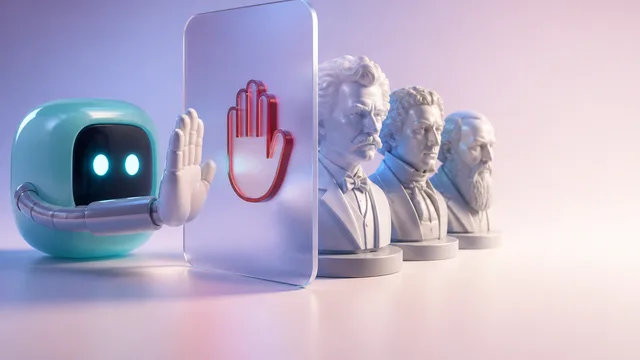
ChatGPT implements safeguards to prevent users from generating content that mimics specific authors' writing styles.
1 article in this topic · tracking 11 signals across 11 source feeds
About this topic
OpenAI has introduced new restrictions within ChatGPT designed to block direct requests asking the AI to replicate the distinctive writing style of particular authors. This development reflects growing tensions between AI developers and the creative community over intellectual property rights and fair use. The move appears to be a proactive measure to address concerns from authors who worry that large language models trained on vast amounts of published text could be used to generate unauthorized derivative content that closely mimics their unique voice and stylistic characteristics.
The restriction targets explicit requests where users ask ChatGPT to write in the manner of a specific author, effectively preventing the tool from producing content that could closely resemble an author's distinctive prose patterns, vocabulary choices, or narrative techniques. This is part of a broader pattern of AI companies attempting to balance innovation with artistic and intellectual property protections. Authors and literary organizations have increasingly raised alarm about generative AI systems potentially cannibalizing their work or enabling mass production of author-like content without compensation or attribution.
While this blocking mechanism represents a step toward responsible AI development, it also highlights the ongoing challenges in defining the boundaries of acceptable AI usage. The restriction may help mitigate some concerns about unauthorized style replication, though questions remain about how comprehensively such protections can be enforced and whether they address the underlying issues around AI training data sourcing and author consent. This development signals that AI companies recognize the need to implement guardrails around copyright-adjacent concerns, even as the broader legal and ethical frameworks around generative AI continue to evolve.
BuzzRAG Coverage
11 signals from source feeds

Hacker News Front Page
Hacker News Newest

MakeUseOf
MakeUseOf

Fast Company Tech

Android Authority

Engadget

Slashdot
Slashdot
Ars Technica
These are external articles in the Tech desk that match this topic. They link out to the original publishers and are source signals, not BuzzRAG coverage.