BuzzRAG Tech Desk — 2026-10-31

Curated by AI. Vincent Ko, Technology Desk Editor
Today’s technology story is less about AI novelty than about where its costs and consequences land: in public systems, old software, online platforms and even ambitious infrastructure projects. Meanwhile, the claims of a new battery era and a faster future for air travel invite a familiar editorial question: what is actually ready to work at scale?
Apple’s quality-control question
The provocation in “Apple Is Entering Its Slop Era” is a familiar one with a sharper edge: can a company built on careful curation keep that reputation as its products and services expand? The linked item offers no article excerpt, so the specific examples behind the argument are not available here. What can be said is that “slop” has become a shorthand for work that feels rushed, generic or insufficiently reviewed—an accusation that needs evidence, not just a catchy label.
That distinction matters in technology, where a rough interface or unreliable feature can be dismissed as a minor blemish until it becomes part of everyday life. Apple’s history of tightly integrated hardware and software sets a high bar, but its past polish is not proof that every new release meets it. The useful test is concrete: which experiences have changed, how often do they fail, and what does the company do when users report problems? Without those particulars, this is best read as a challenge to the brand’s quality promise, not a verdict.
AI-assisted fraud targets student aid
The Justice Department says it has charged five people in an alleged scheme that used stolen identities and AI to create “ghost students,” enroll them in colleges and obtain federal student-loan funds. The reported operation appears to have treated enrollment and coursework as steps in a fraud pipeline, rather than relying on a single forged application. The charges are allegations, and the government’s case will have to establish who did what and how much money was involved.
The episode illustrates how automation can make identity fraud more scalable while exploiting systems built to handle large volumes of legitimate applications. Colleges and aid agencies already face the challenge of verifying applicants without turning access to education into an obstacle course for real students. AI does not eliminate that older problem; it can make convincing, repeated submissions cheaper to produce. The next questions are how the alleged scheme evaded existing checks, what safeguards can catch coordinated activity, and whether stronger verification can be introduced without unfairly delaying aid.
A satellite puts a small AI workload in orbit
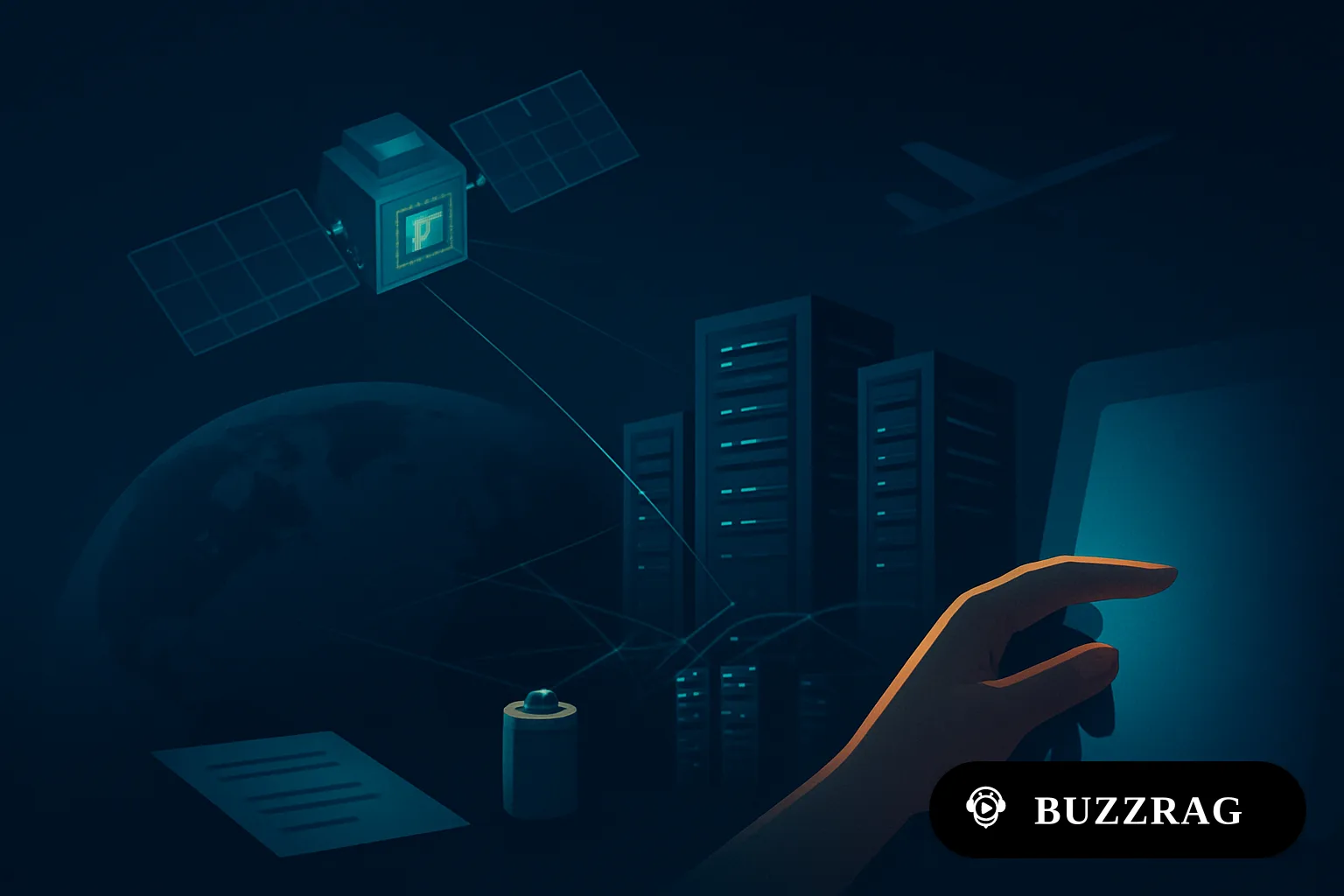
A Google experimental satellite is reportedly online, running the Gemma 4 AI model on four Tensor Processing Units and producing a haiku about orbit. The spacecraft is said to generate up to one kilowatt of electricity. That is a notable demonstration of computing beyond terrestrial data centers, but a successful model run is a proof of operation—not proof that a space-based cloud is ready to compete with ground infrastructure.
The ambition is understandable: satellites could eventually process some data close to where it is collected, reducing the need to send every raw observation back to Earth. Yet orbital computing must contend with radiation, limited power, heat removal, maintenance and the cost and reliability of communications. Those are substantial engineering constraints, not details that a poetic output resolves. The important measure will be whether later systems can sustain useful workloads and show a clear advantage over processing data on Earth. For now, the satellite is a credible experiment in a long-standing idea, with scale and economics still unproven.
The case against alkaline batteries needs specifics
A video argues that alkaline batteries are obsolete, while suggesting the reason may not be the one viewers expect. The supplied listing does not explain the video’s evidence or identify the alternative it favors, so its central claim cannot be assessed from the available information alone. That matters because “obsolete” is a stronger claim than “not the best choice for every device.” Alkaline cells remain a familiar disposable power source, and their usefulness depends on cost, storage, device demands and how often a battery is replaced.
Rechargeable batteries have long challenged disposables, especially for devices used often enough to justify recharging. But the comparison is not simply a contest over chemistry: purchase price, charging convenience, shelf life and waste all shape the practical choice. A compelling argument about batteries should state which use cases it covers and account for the full lifecycle, rather than treating one product category as universally finished. The title is an invitation to revisit everyday power habits; the actual case turns on details not included in the trend summary.
AI infrastructure may take priority over supersonic flight
The timeline for a proposed supersonic airliner is in doubt after United Airlines’ chief executive questioned whether it will be ready by 2029. The linked report also points to the aircraft company’s shift toward supplying power for AI data centers—a striking change of emphasis between two capital-intensive ambitions. A skeptical airline executive is not, by itself, proof that the aircraft cannot be delivered, but it does underline how much confidence depends on certification, production and a working business case.
Commercial supersonic travel has a long history of big promises running into difficult economics, engineering and operating constraints. The latest plan now shares the spotlight with demand for data-center electricity, a market whose growth is putting energy infrastructure at the center of technology strategy. That shift may offer the company a nearer-term opportunity, but it also raises questions about resources and focus: can it pursue both goals, or is one becoming the practical priority? Watch for concrete milestones on aircraft development and evidence that the power business can deliver at scale.
An engineer gets an AI budget for legacy-code work
Cisco’s president and chief product officer has reportedly given an engineer unlimited AI tokens to help rewrite legacy code. The assignment offers a concrete counterpoint to broad claims that AI is already replacing entry-level technical work: here, the tool is being paired with an engineer tackling software that may be difficult to modernize through conventional methods. The available report excerpt does not describe the codebase, the project’s goals or its results, so the scale of the experiment remains unclear.
Legacy systems are a persistent burden across technology, often carrying years of dependencies and undocumented decisions. AI coding tools may speed up navigation and rewriting, but generated changes still need review, tests and people who understand what the software is supposed to do. A large token allowance is an input, not proof of productivity. The more consequential question is how the work changes the team: does it help engineers deliver safer upgrades, or does it shift the bottleneck to verification? The project’s value will depend on measurable results and whether its lessons can be applied beyond a single engineer.
The next useful signals will be evidence, not spectacle: whether satellite computing can sustain real workloads, whether the alleged fraud exposes gaps in aid verification, and whether AI-assisted coding produces maintainable software. In parallel, courtroom tests and infrastructure choices will show how much the technology sector’s promises are reshaping everyday institutions and long-range engineering bets.