BuzzRAG History Desk — 2026-10-31

Curated by AI. Eleanor Vance, History & Ideas Editor
Halloween’s appetite for ghosts and danger sits alongside much older ways of making sense of winter, death and the unknown. Today’s stories range from ancient poems and regional folklore to modern crimes and investigations, asking how evidence becomes history—and how legends acquire authority.
The Cailleach: Winter’s Maker and Unmaker
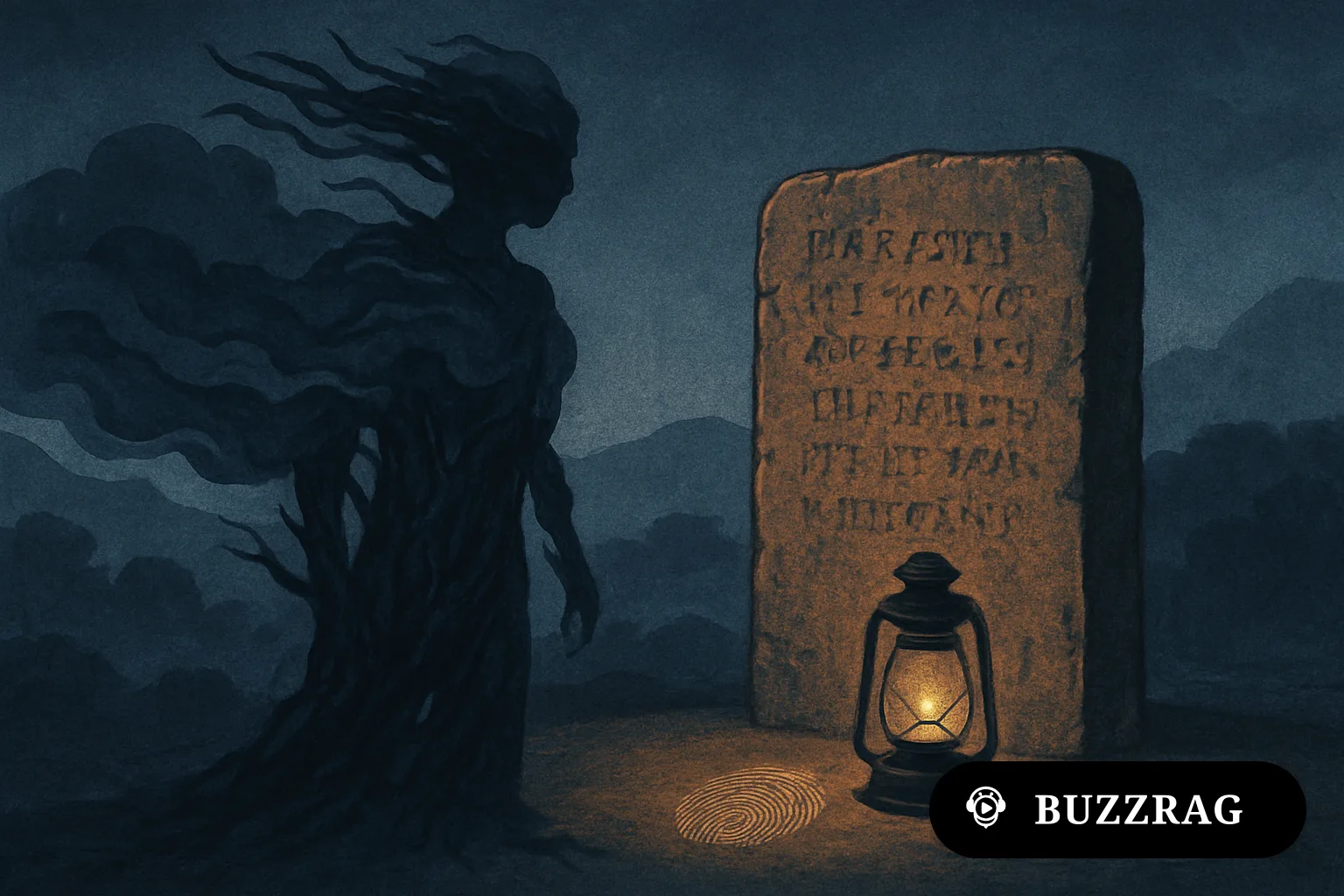
The Cailleach is often introduced as a fearsome winter hag, but that shorthand misses the figure’s more complex place in Gaelic folklore. Across traditions in Ireland and Scotland, she is associated with storms, harsh seasons and the shaping of the landscape; in some accounts, she also belongs to creation stories. Rather than a single, fixed goddess with one canonical biography, she is a powerful figure whose character varies across place and telling.
Her annual struggle with spring makes seasonal change feel like an encounter between forces, not merely a turn of the calendar. Such stories gave communities language for weather that could threaten travel, crops and survival, while also imagining the land as something made by purposeful beings. The Cailleach’s enduring appeal lies partly in that double role: destruction and creation are not opposites here, but parts of a recurring cycle. Reading her carefully means attending to regional tradition rather than treating “Celtic mythology” as one uniform system.
Halloween Crimes and the Making of a Modern Panic
Stories of murder on Halloween draw their power from the collision between a night of masks and a fear that violence can hide in plain sight. The crimes gathered in this account include notorious cases and the poisoning of a child with cyanide concealed in Halloween candy—a real act that became entangled with a much wider public alarm about poisoned treats.
That distinction matters. The documented crime was horrific, but the familiar idea of strangers routinely tampering with children’s candy has often outgrown the evidence, amplified by headlines and repeated warnings. Halloween crime stories therefore tell two histories at once: the record of individual violence, and the way communities respond when danger seems to threaten children and a shared ritual. A responsible retelling should separate established facts from rumor, avoid turning victims into spectacle, and notice how fear can persist long after the original evidence has been examined.
A Sumerian Poem’s Unquiet Dead
“Gilgamesh, Enkidu, and the Netherworld” offers a glimpse of Mesopotamian ideas about the dead through figures familiar from the later Epic of Gilgamesh. This Sumerian poem is an earlier work, not simply a missing chapter of one continuous epic. Modern editions sometimes append it as a final book, though its different structure and subject help explain why it is usually treated separately.
The poem’s afterlife is not a comforting realm of moral reward. Its account of the dead emphasizes dependence, loss and the conditions of burial and remembrance—concerns rooted in a society where family rites helped sustain the deceased. The text also shows how stories changed as scribes copied, translated and arranged older literature for new audiences. Reading it beside the better-known epic reveals not one timeless “Mesopotamian belief,” but a developing literary tradition in which mortality could be explored through multiple forms. Its surviving versions are evidence of both ancient imagination and the work of generations of transmitters.
Oak Island’s Swamp Finds and the Limits of a Clue
A plank, a large iron spike, a stone path and a copper coin are presented as fresh clues from an investigation of Oak Island’s swamp. The objects may point to past human activity, but the available description does not establish their dates, original uses or connection to a ship. Those questions are the difference between an intriguing find and a well-supported historical conclusion.
The island’s reputation has grown through generations of treasure theories, including claims of a buried vault and hidden manuscripts. Such narratives can keep public attention on archaeology, but they can also make ordinary objects seem to confirm a preferred story before they have been securely placed in context. For finds like these, careful recording of location, material, stratigraphy and provenance matters more than dramatic interpretation. The next meaningful step is independent assessment: whether the objects can be dated and whether their arrangement reflects a coherent, documented site rather than later disturbance.
A “Blue Star” Prophecy Meets the Evidence
A modern video links a supposed Hopi prophecy of a blue star to contemporary events, including an interstellar comet and plans for the future of a space station. Its own critical account argues that the prophecy’s checklist was assembled retrospectively, after the events it claims to predict. That is a familiar pattern in prophecy stories: broad or shifting language is matched to headlines once they are known.
The historical stakes go beyond whether a prediction can be tested. Indigenous teachings are often detached from their communities, simplified for mass audiences and repackaged as universal forecasts. A responsible account should distinguish documented teachings from recent claims, identify who is interpreting them and avoid presenting a living tradition as a puzzle for outsiders to solve. Celestial events can inspire genuine wonder, but their scientific history is not evidence for a prophetic chain. The useful question is how a story was constructed, circulated and made persuasive—not whether a coincidence can be made to fit it.
Haunted Dolls and the Long Life of Human-Shaped Objects
Stories about supposedly haunted dolls belong to a much longer human history of giving small human-shaped figures meaning. Across different settings, such objects have served as toys, devotional images, ritual forms and keepsakes. Their significance depends on who made them, how they were used and what stories gathered around them—not on a universal belief that figures are inherently uncanny.
Modern haunted-doll legends often blend reported experiences with the mechanics of popular storytelling. A named object may acquire a biography through retelling, while film, television and exhibition can make claims feel more concrete without independently verifying them. The distinction between a documented object and a supernatural explanation is essential: one can study an artifact’s materials and provenance, and study its cultural influence, without treating paranormal accounts as established fact. The enduring unease may say as much about childhood, memory and the boundary between animate and inanimate as it does about any alleged haunting.
The 1972 Bank Burglary and an Unlikely Forensic Lead
A 1972 burglary at United California Bank in Laguna Niguel depended on preparation: the crew exploited a weekend closure, disabled alarms and used explosives to reach valuables. The investigation, as recounted here, followed a trail that crossed other robberies, travel records, a stored car and informants before fingerprints on a dishwasher helped direct attention toward suspects. An everyday household appliance became part of a case built from many different kinds of evidence.
The story captures a turning point in modern criminal investigation, when forensic traces increasingly worked alongside painstaking police work rather than replacing it. A fingerprint can identify a person who touched a surface, but investigators still have to establish when and why it was left and connect it to other facts. Records and informants can likewise be useful while requiring corroboration. The burglary’s elaborate planning makes for a dramatic account, but its resolution is a reminder that major cases are often solved not by one brilliant clue, but by assembling ordinary fragments into a testable sequence.
Across these stories, the line between a compelling narrative and a sound historical claim depends on context: who preserved the account, what evidence survives and what later audiences added. The next useful questions are not only what a clue or legend seems to promise, but how it can be tested—and whose knowledge has been left out of the telling.