BuzzRAG Tech Desk — 2026-09-16

Curated by AI. Vincent Ko, Technology Desk Editor
Today’s technology agenda moves between systems that need stronger evidence and systems that need stronger safeguards. A piracy lawsuit raises questions about online identity and retaliation, while a space telescope’s unexpected endurance, Rust’s advance through Linux utilities, and new approaches to software testing show how infrastructure quietly sets the limits of what people can do.
A piracy lawsuit tests the limits of online anonymity
A filmmaker suing a user associated with the private movie-sharing community PassThePopcorn may have identified the wrong person—or a previously banned member allegedly using litigation as revenge. The dispute turns a familiar copyright-enforcement tactic into a question about how much confidence courts should place in online attribution.
Lawsuits seeking to unmask anonymous users are not unusual, but the consequences are especially sharp in closed communities where pseudonyms, access controls, and informal moderation all complicate identity. If the accusation of retaliatory litigation holds, it would illustrate how legal discovery can become a harassment tool; if the identification is sound, it could reinforce the risks of assuming that privacy is protection from accountability. The case bears watching for how courts handle evidence linking screen names to real people, and for whether the underlying copyright claim survives that dispute.
Roman’s fuel surplus could extend a major survey mission
NASA’s Nancy Grace Roman Space Telescope may have enough propellant to operate for roughly 22 years—about twice the agency’s earlier expectation. That is not a minor engineering footnote: for an observatory designed to conduct long, wide-field surveys, additional operational time can reshape the scale and continuity of its scientific archive.
Space telescopes are often constrained not only by instruments and electronics but by the fuel needed to maintain orientation and orbit. A longer mission could let Roman revisit fields, refine measurements, and complement other observatories whose windows of operation are shorter. It also underscores a recurring pattern in spaceflight: careful fuel management and conservative estimates can create scientific capacity long after launch. The practical question now is whether the telescope’s detectors, communications systems, and ground operations can remain productive for as long as its propellant supply allows.
Datamimic gives coding agents a more credible test environment
The open-source Datamimic project is aimed at a weakness in AI-assisted software development: coding agents can generate tests against invented, overly tidy data rather than the messy conditions an application will encounter in production. By producing controlled but realistic datasets, the tool seeks to make automated testing less of a simulation of success.
That distinction matters because a test suite is only as useful as the world it models. Synthetic data can expose edge cases, preserve privacy, and make tests repeatable, but it can also reproduce the biases and omissions of its generator. Datamimic sits within a longer lineage of fixtures, mock services, fuzzers, and property-based testing; its novelty is largely about adapting those disciplines to an era in which agents write more of the code and tests themselves. The important measure will be whether teams use it to challenge assumptions rather than simply produce more passing checks.
Ubuntu completes its shift from GNU core utilities to Rust
Ubuntu has reached a visible milestone in its migration to Rust-based replacements for the traditional core utilities: the familiar commands cp, mv, and rm have joined earlier conversions of tools such as ls, cat, chmod, and du. The replacements come from the uutils project, which reimplements standard Unix utilities while aiming to preserve expected command-line behavior.
This is less a sudden reinvention of Linux than a change in the implementation substrate beneath a deeply stable interface. Rust’s memory-safety guarantees are attractive for foundational software, but compatibility is the harder requirement: scripts, permissions, error messages, performance expectations, and obscure edge cases all matter when a utility is used everywhere. The migration will therefore be judged in bug reports and distribution maintenance, not just language choice. It also illustrates the broader “oxidation” of systems software, where safety improvements must coexist with decades of accumulated Unix assumptions.
Apple proposes a stronger chain of evidence for photographs
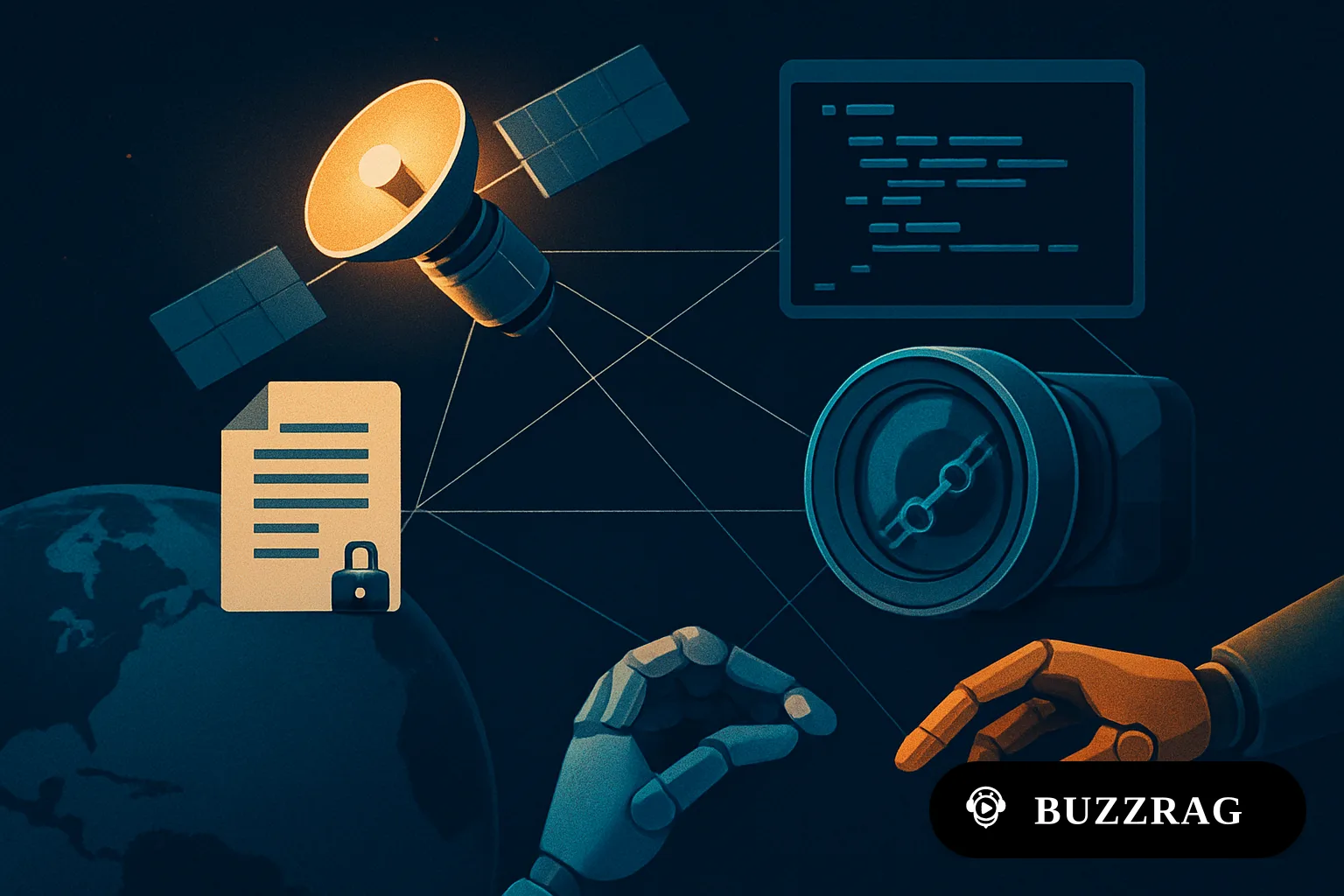
Apple’s “Reference Image” proposal takes aim at a central problem in computational photography: a picture can be authentic in the sense that a camera captured it, yet still be difficult for others to verify after editing, recompression, or passage through multiple platforms. The approach is designed to preserve a trusted reference against which later representations can be compared.
Image provenance systems have often relied on metadata and cryptographic signatures, but those signals can be stripped, copied, or ignored by services that do not support them. A reference-based model could offer a more durable way to distinguish an original capture from an altered or synthetic derivative, provided that the ecosystem agrees on how references are created and checked. Verification also cannot establish that a scene was honestly framed or that the photographer’s account is true; it addresses lineage, not reality itself. Adoption across cameras, editing tools, publishers, and social networks will determine whether the proposal becomes infrastructure or remains a useful island.
Nvidia’s CEO argues AI safety can remain industry-led
Nvidia CEO Jensen Huang is arguing against broad AI regulation, presenting artificial intelligence as an engineering discipline whose risks can be managed by the companies building its hardware and software. His position reflects a powerful strand of industry thinking: unlike an unknowable alien intelligence, these systems are designed, measured, and modified by people.
The engineering framing has merit, but it does not settle the policy question. Testing, access controls, incident response, and secure deployment can reduce technical failures; they cannot by themselves resolve labor displacement, concentration of compute, discriminatory outcomes, or the incentives that lead firms to ship before safeguards are mature. Software safety has rarely been left solely to vendors when failures impose costs on the public, from aviation systems to medical devices. The next debate will turn on scope: which risks can be addressed through technical standards and audits, and which require independent oversight with authority beyond a company’s own assurances.
The next signals to watch are practical rather than theatrical: whether provenance standards travel across platforms, whether Rust replacements preserve the edge cases Unix users depend on, and whether AI safety claims acquire independent tests. Roman’s extended endurance offers the most optimistic counterpoint—a reminder that durable infrastructure can outlast the assumptions made when it is built.