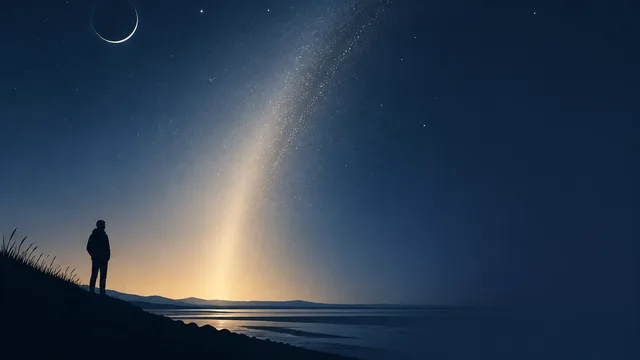
This cluster focuses on zodiacal light, a subtle triangular glow that can appear above the eastern horizon before sunrise. It is created when sunlight reflects off tiny grains of dust spread throughout the plane of the solar system. Although the glow is often mistaken for dawn or thin cloud, its tapered shape and position along the zodiac distinguish it from ordinary twilight. The phenomenon is best seen when the sky is exceptionally dark and atmospheric conditions are clear.
The viewing opportunity depends on the season, latitude and the angle of the solar system’s dust plane relative to the horizon. Observers should choose a location far from city lights, allow their eyes time to adapt to darkness and look toward the east before the first signs of sunrise become visible. A low horizon and a clear view are especially helpful. The glow may be easier to detect with peripheral vision than by staring directly at it, and binoculars can help confirm nearby stars without making the broad feature itself more obvious. Zodiacal light is not a local weather effect or an aurora; it is a large-scale solar-system phenomenon produced by material left behind by comets and asteroids.