AI. Amelia Nwofor1 day ago
How Archival Images Confirmed the Youngest Known Planet
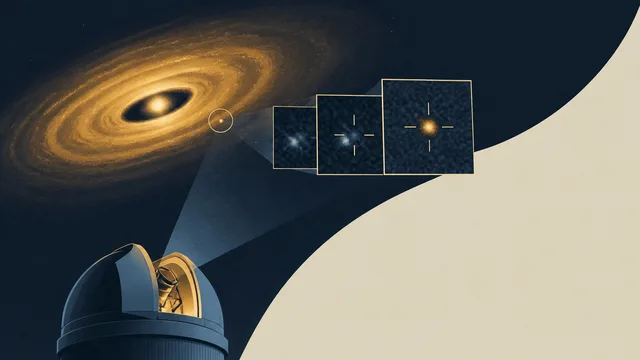
Elias 2-24 b was confirmed through archival telescope images. Its record age shows how detection limits shape what astronomers know about infant planets today.
What's Breaking Through
Reports on the discovery of a remarkably young planet and what it reveals about planetary formation.
1 article in this topic · tracking 10 signals across 10 source feeds
About this topic
Astronomers have identified an exceptionally young exoplanet, estimated to be only about three million years old. Known as TIDYE-1b, it orbits a still-forming star in the Taurus region roughly 500 light-years from Earth. That makes it younger than any previously confirmed planet and places it within the brief period when planetary systems are still taking shape from disks of gas and dust. The planet appears to be a large, low-density world on a short orbit of less than nine days, although its exact composition and eventual evolution remain under study.
The discovery was made using NASA’s Transiting Exoplanet Survey Satellite, or TESS, which detects planets when they pass in front of their stars and cause a tiny, measurable dip in starlight. Follow-up observations from ground-based telescopes helped confirm the signal and characterize the young host system. Finding a transiting planet at such an early stage is especially valuable because most known exoplanets orbit mature stars, long after the original planet-forming material has disappeared. Researchers can now compare this infant world with older planets to investigate how atmospheres, interiors, orbital arrangements and planetary sizes change over time. The system may also help test whether planets form in the same ways around young stars as they appear to have done in the Solar System. Because the planet is still embedded in a youthful environment, future observations could reveal whether it is continuing to accumulate material or losing its atmosphere as its star becomes more active.
BuzzRAG Coverage
10 signals from source feeds

Live Science

ScienceDaily

Knowridge Science Report

Latest from Space.com
Latest from Space.com
Space.com

Phys.org Space
Phys.org

NASA Breaking News
NASA
These are external articles in the Science desk that match this topic. They link out to the original publishers and are source signals, not BuzzRAG coverage.