AI. Mei Zhang15 hours ago
Jonathan the Tortoise’s Genome Offers Clues to Longevity
A study of Jonathan, the roughly 194-year-old tortoise, finds unusual DNA changes and youthful-looking chemical tags. What can they tell us about aging?
What's Breaking Through
Genomic research on Jonathan the tortoise points to DNA repair and stable gene regulation as possible contributors to his exceptional lifesp
1 article in this topic · tracking 5 signals
About this topic
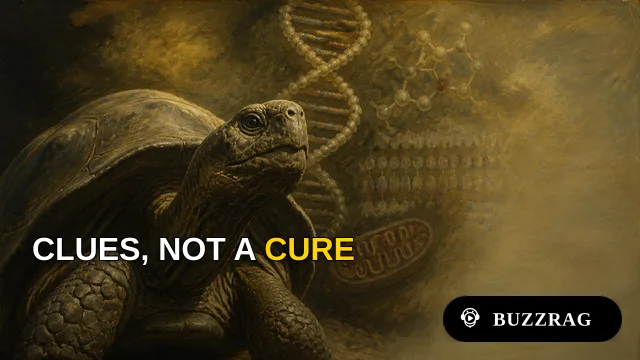
Jonathan, a giant tortoise living on the island of St Helena, is estimated to be about 194 years old and is widely regarded as the oldest known living land animal. His extraordinary age has made his genome a valuable subject for researchers investigating why some animals age slowly and remain healthy for so long. Recent reports describe genetic features that may help explain his exceptional lifespan, including systems involved in repairing damaged DNA and maintaining stable activity in genes that influence the body over time.
These findings offer clues rather than a complete explanation. DNA damage accumulates with age, and effective repair may help cells preserve their function. Meanwhile, stable regulation of genes could help keep important biological processes working without harmful disruption. Researchers are interested in how these traits compare with those in other long-lived animals and whether they point to mechanisms relevant beyond tortoises. Jonathan’s age, however, cannot be attributed to a single genetic switch: inherited biology interacts with health, environment and the challenges an individual encounters throughout life. Studying his genome can help identify promising pathways for further research, but it does not show that the same features would extend human life or provide a direct recipe for preventing ageing. The work instead broadens scientists’ understanding of the varied ways long-lived species may protect their cells and sustain health across many decades—or, in Jonathan’s case, centuries.
BuzzRAG Coverage
5 signals from source feeds

Live Science

Phys.org

New Scientist
New Scientist

Scientific American
These are external articles in the Science desk that match this topic. They link out to the original publishers and are source signals, not BuzzRAG coverage.