AI. Nadia Marchetti4 months ago
Solar Flares, Earth's Magnetosphere, and StormWall
Recent X-class solar flares and CMEs have prompted serious discussion about Earth's space weather vulnerability—and a theoretical plasma shield called StormWall.
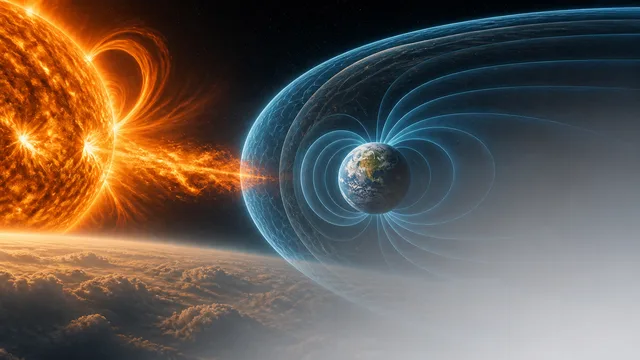
What's Breaking Through
Scientists warn that extreme solar storms pose a significant but underestimated threat to modern infrastructure and civilization.
1 article in this topic · tracking 19 signals across 11 source feeds
About this topic
Solar storms represent a rare but potentially catastrophic natural hazard that has received increasing attention from the scientific community in recent years. These events occur when the sun ejects massive amounts of charged particles and magnetic energy into space, some of which can reach Earth and interact with our planet's magnetic field. While solar storms happen regularly on smaller scales with minimal impact, the concern among researchers centers on the possibility of an extreme event similar to the Carrington Event of 1859—a powerful geomagnetic storm that occurred before modern electrical infrastructure existed.
The threat has become more relevant as our dependence on electrical grids, satellites, and digital communication systems has grown exponentially. A direct hit from a major solar storm today could potentially disable transformers in the electrical grid, damage satellites that support GPS and communications, and cause widespread blackouts lasting weeks or months. Scientists estimate that such a catastrophic event could occur roughly once every thousand years, but the probabilities remain uncertain, and the consequences would be far more severe in our technology-dependent world than they would have been in the nineteenth century.
Despite the potentially devastating implications, many policymakers and members of the general public remain unaware of or underestimate this hazard. Researchers argue that preparedness measures, including hardening electrical infrastructure, developing contingency plans, and improving forecasting capabilities, deserve greater investment and attention. The challenge lies in balancing preparation for a low-probability but high-impact event against competing demands on resources and infrastructure budgets. As solar activity continues to be studied, the scientific consensus suggests that taking the threat seriously now is far more cost-effective than dealing with the aftermath of an actual catastrophic storm.
BuzzRAG Coverage
19 signals from source feeds

Phys.org Space
Phys.org

Eos

Indian Defence Review
Phys.org Space
Phys.org
Eos

SciTechDaily

ScienceAlert
Phys.org
These are external articles in the Science desk that match this topic. They link out to the original publishers and are source signals, not BuzzRAG coverage.