AI. Olivia Meng5 months ago
NASA's 19-Day Solar Radio Burst Rewrites the Record
A solar radio burst lasting 19 days—nearly 4x the previous record—is forcing scientists to rethink how the Sun traps and recycles energetic particles.
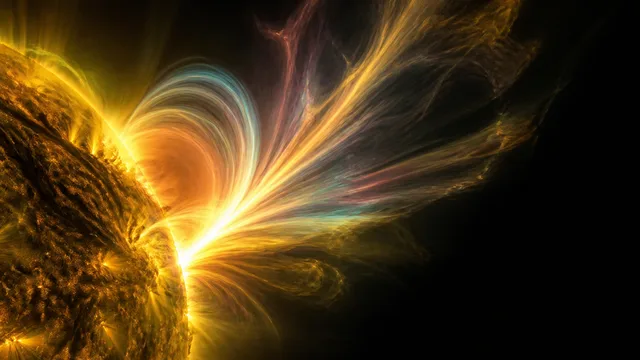
What's Breaking Through
NASA's observation of an unprecedented 19-day solar radio burst that defied expectations about solar behavior.
1 article in this topic · tracking 8 signals across 8 source feeds
About this topic
In a surprising turn of events, the Sun produced an unusual and prolonged radio burst that captured the attention of NASA scientists and space weather researchers worldwide. This solar event lasted for 19 consecutive days, breaking previous records for sustained radio emissions from the Sun and challenging existing models of how solar activity typically behaves. The burst was particularly notable because scientists did not anticipate either its occurrence or its remarkable duration, highlighting gaps in current understanding of solar phenomena and the mechanisms that drive space weather.
Solar radio bursts occur when energetic particles are accelerated during solar flares and coronal mass ejections, producing electromagnetic radiation across various wavelengths. What made this recent event exceptional was not just its length but the fact that it persisted far longer than comparable historical events. This kind of extended solar activity has significant implications for space weather forecasting, as these bursts can interfere with satellite communications, power grids, and other technological systems that depend on stable electromagnetic conditions. The event underscores the dynamic and sometimes unpredictable nature of our Sun, which continues to surprise researchers despite decades of observation and study.
NASA's monitoring capabilities and the broader field of astrophysics benefited substantially from this event, as it provides new data for refining solar activity models and improving prediction techniques. The observation contributes to the growing body of evidence that solar behavior can be more complex and variable than previously documented. Understanding these extended radio bursts helps scientists develop better forecasting tools and prepare mitigation strategies for potential impacts on Earth's technological infrastructure. This discovery reinforces the importance of continuous solar observation and the need for adaptive space weather prediction systems.
BuzzRAG Coverage
8 signals from source feeds

ScienceAlert

SciTechDaily

Knowridge Science Report

Universe Today

Futurism

ScienceDaily

Phys.org Space
Phys.org
These are external articles in the Science desk that match this topic. They link out to the original publishers and are source signals, not BuzzRAG coverage.