AI. Nadia Marchetti2 months ago
AstroRad Vest Passes Artemis I Radiation Test
A radiation-shielding vest tested on Artemis I shows real promise for lunar and Mars missions. Here's what the data actually tells us—and what it doesn't.
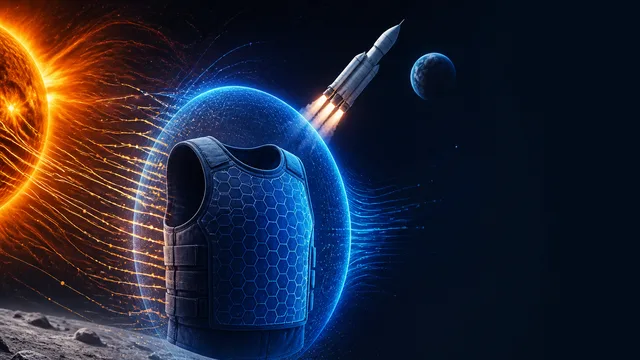
What's Breaking Through
New shielding vests tested during NASA's Artemis I mission show promise for protecting astronauts from solar radiation on lunar and Mars mis
1 article in this topic · tracking 7 signals across 7 source feeds
About this topic
NASA and space researchers have made significant progress in developing practical radiation protection for deep space exploration. A specialized radiation-shielding vest was tested aboard the uncrewed Artemis I mission to the Moon, marking an important validation of the technology in actual space conditions. The vest performed well during its test, demonstrating that it can effectively reduce astronauts' radiation exposure during solar storms and other high-radiation events encountered in space.
Radiation exposure is one of the most significant health challenges for long-duration spaceflight, particularly for missions beyond Earth's protective magnetic field. Astronauts traveling to the Moon, Mars, and other deep space destinations face increased risks from solar particle events and cosmic rays that can cause acute radiation sickness and increase long-term cancer risk. Traditional spacecraft shielding has limitations, and developing wearable protection solutions could provide critical additional safeguards for crew members during critical phases of missions, such as spacewalks or periods when solar activity is high.
The Artemis I test results suggest that this radiation-shielding vest technology is ready to move toward operational use on crewed missions. As NASA prepares for the Artemis II and subsequent lunar missions, along with eventual human exploration of Mars, protective equipment like this vest represents a practical approach to mitigating one of the major hazards of deep space exploration. The successful demonstration on Artemis I provides confidence that the technology can be integrated into astronaut gear for upcoming missions, potentially reducing radiation risks for crews conducting extended operations on the lunar surface and during long interplanetary journeys.
BuzzRAG Coverage
7 signals from source feeds

Physics World

Phys.org
Phys.org Space

Latest from Space.com
Latest from Space.com
Space.com

Science News
These are external articles in the Science desk that match this topic. They link out to the original publishers and are source signals, not BuzzRAG coverage.