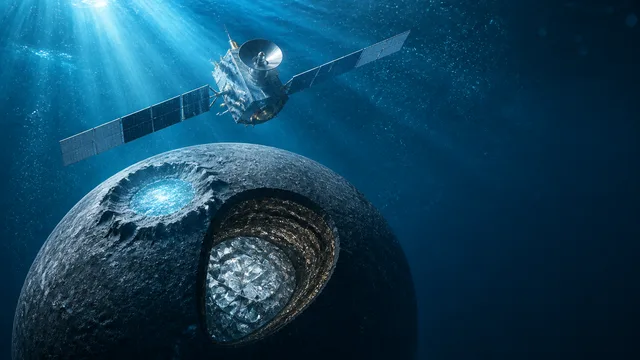
New research into Mercury's geological composition is reshaping our understanding of the planet's volcanic history and interior structure. Scientists analyzing data from Mercury's crust have discovered that the planet experienced more extensive and hotter volcanic activity than earlier models suggested, pointing to magma sources that originated from greater depths within the planet. This finding challenges previous assumptions about Mercury's thermal evolution and interior dynamics.
The research builds on data collected by orbital missions and involves detailed examination of Mercury's surface composition and crustal characteristics. By studying the mineralogy and structure of the crust, scientists can infer conditions deep within the planet during periods of volcanic activity. The evidence suggests that Mercury's volcanism was not only more vigorous than thought but also that the heat source driving this activity extended deeper into the planet's interior. Additionally, some findings hint at the presence of metallic materials beneath Mercury's surface, potentially related to these deep volcanic processes.
These discoveries have broader implications for understanding planetary formation and evolution. Mercury, as the smallest terrestrial planet and closest to the Sun, provides unique insights into how planets with reduced internal cooling rates behave geologically. The revised understanding of Mercury's volcanic past contributes to a more complete picture of how terrestrial planets evolve, how long they remain geologically active, and what role internal heat sources play in shaping planetary surfaces. As instruments on Mercury-orbiting spacecraft continue to gather data, researchers expect further refinements to models of planetary volcanism and the factors that drive long-term geological processes.