AI. Mei Zhang3 months ago
A 1.27-Billion-Year-Old Mars Meteorite Changes Everything
A dark green Martian rock found in Algeria in 2019 just filled a 1.8-billion-year blank in Mars's geological record — and it came from a region no one knew existed.
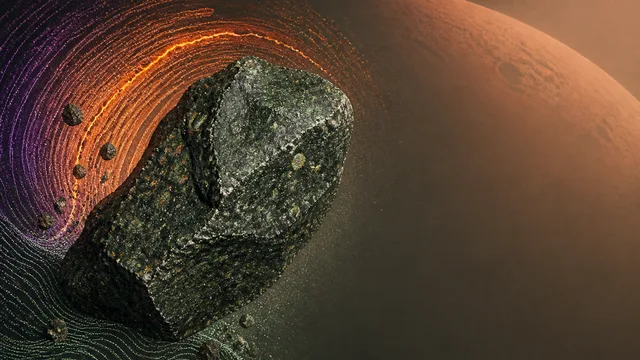
What's Breaking Through
Scientists have discovered rare Martian meteorites in Algeria that reveal new insights into the Red Planet's geological history.
1 article in this topic · tracking 12 signals across 9 source feeds
About this topic
A significant meteorite discovery in the Sahara Desert is reshaping our understanding of Mars' ancient past. Researchers have recovered Martian meteorites that fill critical gaps in the planetary record, particularly around a 2-billion-year period that has remained largely mysterious to scientists. The meteorites are notable for their composition and characteristics, which differ markedly from previously collected Martian samples, suggesting that Mars experienced diverse geological processes across different regions and time periods.
These findings are particularly valuable because meteorites represent the only tangible samples of Mars available to scientists on Earth. When asteroids impact Mars, debris is sometimes ejected into space with enough velocity to escape the planet's gravity and eventually reach Earth. The Sahara Desert has proven to be an ideal location for meteorite hunting due to its vast, uncluttered terrain and dark-colored rocks that stand out against the light sand. Each new Martian meteorite recovered provides a window into specific moments in the planet's evolution.
The composition and age of these newly discovered specimens suggest they originated from regions of Mars not previously represented in our meteorite collection. By analyzing their mineralogy, isotopic signatures, and crystalline structure, researchers can infer conditions on early Mars—whether the planet was warmer and wetter, how its magnetic field evolved, and what processes shaped its surface. These meteorites contribute to broader scientific efforts to understand planetary habitability and evolution. The discoveries underline why continued exploration of Mars through rovers and orbiters, combined with careful study of meteoritic samples, remains crucial for unraveling the planet's complex geological history and its potential as a location where life may have once existed.
BuzzRAG Coverage
12 signals from source feeds

Sci.News: Breaking Science News

Universe Today

Knowridge Science Report

Phys.org
Phys.org Space

NASA Breaking News
NASA

SciTechDaily

Latest from Space.com
Space.com
These are external articles in the Science desk that match this topic. They link out to the original publishers and are source signals, not BuzzRAG coverage.