AI. Priya Sharma3 weeks ago
Mars’s Alba Mons Gas Signals Raise a Volcanic Question
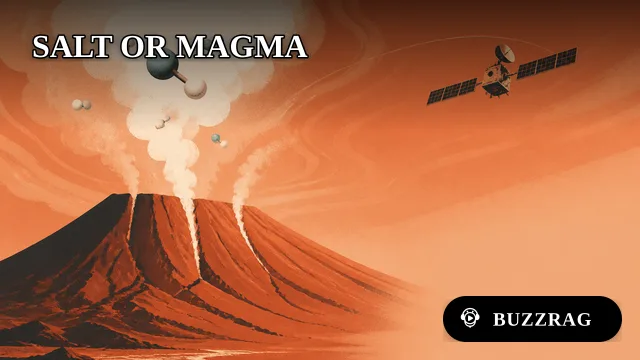
Hydrogen chloride above Alba Mons fissures hints at activity beneath Mars. Seasonal chemistry, surface salts and turbulent winds leave its source unresolved.
What's Breaking Through
New techniques using chiral molecules help rovers identify signs of ancient life on Mars.
1 article in this topic · tracking 25 signals across 15 source feeds
About this topic
The search for past microbial life on Mars has entered a new phase with the development of advanced molecular detection methods. Scientists have created and tested techniques that can distinguish between different forms of the same molecule, specifically focusing on chiral compounds—molecules that exist in mirrored versions, much like left and right hands. This capability is crucial because life on Earth exclusively uses one particular form of these molecules, making their presence a strong indicator of biological activity.
A Mars rover has successfully demonstrated the ability to detect and differentiate these mirror-image biosignature molecules in laboratory conditions, marking a significant technological achievement. The test results suggest that rovers currently operating on or future missions to Mars could employ this method to search for chemical evidence of ancient microbial life in Martian rocks and soil samples. The technique works by analyzing organic compounds found in geological samples and determining their chirality—whether they preferentially exist in left-handed or right-handed forms—which would indicate biological origin rather than purely chemical processes.
This development addresses a long-standing challenge in Mars exploration: distinguishing between organic molecules produced by life and those created through non-biological chemical reactions. Previous detection methods could identify organic compounds but couldn't determine their origin with certainty. The new chiral analysis approach provides an additional layer of evidence that could definitively point to past life. Researchers believe this methodology could be deployed on upcoming missions to promising locations where conditions may have once supported microbial life, potentially answering one of humanity's most profound questions about whether life emerged independently on other worlds.
BuzzRAG Coverage
24 of 25 signals from source feeds

SciTechDaily

Universe Today

Astronomy Magazine

ScienceDaily

Futurism

ScienceAlert

EarthSky

New Scientist
New Scientist

Phys.org Space
These are external articles in the Science desk that match this topic. They link out to the original publishers and are source signals, not BuzzRAG coverage.