AI. Nadia Marchetti2 months ago
Earth Microbes May Survive on the Moon's South Pole
NASA research finds common Earth microbes could survive in shadowed lunar south pole regions—raising urgent questions about contamination and planetary protection.
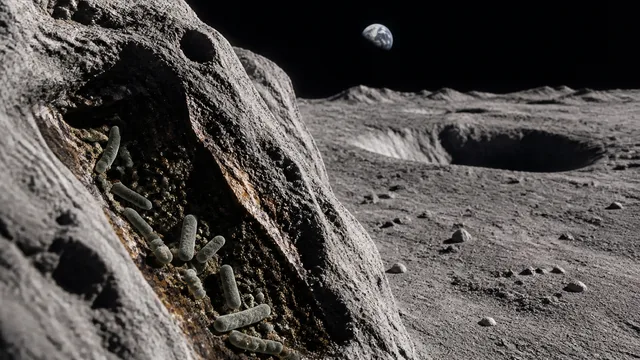
What's Breaking Through
Research on whether Earth microbes can survive in the Moon's harsh South Pole environment.
1 article in this topic · tracking 17 signals across 17 source feeds
About this topic
NASA scientists have been investigating a critical question for future lunar exploration: can microorganisms from Earth survive on the Moon's South Pole? This research has significant implications for planetary protection protocols and understanding the potential for microbial contamination during human missions to the lunar surface. The South Pole region, with its extreme temperatures, vacuum conditions, and intense radiation exposure, represents one of the most inhospitable environments imaginable, making it an ideal test case for studying microbial resilience.
The findings suggest that certain human-related microbes—microorganisms that travel with astronauts and equipment—may indeed be capable of surviving the Moon's South Pole conditions. This discovery raises important questions about contamination risks and the need for rigorous sterilization protocols for equipment and habitats. Understanding which microbes can persist in these conditions helps scientists develop better strategies for preventing Earth life from establishing itself on the Moon, which could compromise scientific investigations or alter the pristine lunar environment. These considerations have become increasingly relevant as multiple space agencies and private companies plan more frequent lunar missions in the coming years.
The research underscores the dual nature of planetary protection: while scientists want to prevent contamination of other worlds, they also need to understand survival mechanisms that could apply to life support systems and long-term human habitation on the Moon. By studying microbial survival at the lunar South Pole—where permanently shadowed craters and icy deposits create unique conditions—researchers gain insights into both the challenges of maintaining sterile environments during spaceflight and the potential adaptability of life in extreme extraterrestrial settings. This knowledge will inform mission planning and safety protocols as humanity prepares for sustained exploration and eventual settlement of the Moon.
BuzzRAG Coverage
17 signals from source feeds

Physics World

Astronomy Magazine

ZME Science

SciTechDaily

Indian Defence Review

Universe Today

Science News

EarthSky

ScienceDaily

Latest from Space.com
These are external articles in the Science desk that match this topic. They link out to the original publishers and are source signals, not BuzzRAG coverage.