AI. Olivia Meng2 months ago
Chang'e 7 Targets the Moon's South Pole for Water Ice
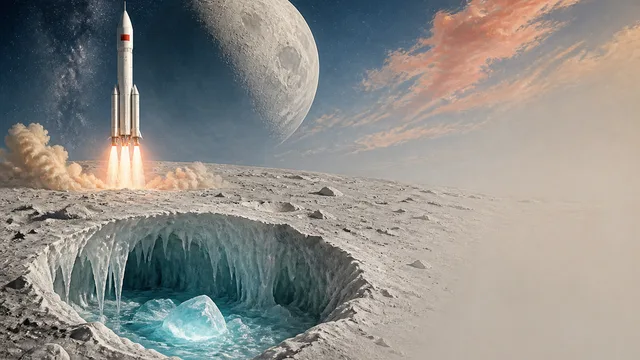
China's Chang'e 7 launches August 24 to hunt for water ice at the lunar south pole — a mission that could reshape the future of human spaceflight.
What's Breaking Through
Scientists are using moonquakes to locate and study ice deposits hidden beneath the Moon's south polar craters.
1 article in this topic · tracking 10 signals across 6 source feeds
About this topic
The Moon's south polar region harbors significant water ice deposits in permanently shadowed craters, a resource of critical importance for future lunar exploration and potential human settlements. However, these ice reserves are difficult to detect and study directly due to their location in inaccessible terrain. Researchers have developed a novel approach to address this challenge by analyzing seismic activity on the Moon—moonquakes that occur naturally or are generated by impacts. These seismic waves can penetrate subsurface layers and interact with ice deposits in distinct ways, providing scientists with acoustic signatures that reveal the presence and distribution of frozen water.
This innovative detection method leverages data from existing lunar seismometers, particularly instruments left behind during the Apollo missions, as well as more recent monitoring capabilities. By studying how moonquakes propagate through different geological materials and how they interact with ice-rich zones, researchers can create subsurface maps without requiring drilling or direct physical exploration. The approach is analogous to how seismic waves from earthquakes help geologists understand Earth's interior structure, but adapted for the unique lunar environment. As space agencies and private companies plan increased lunar activity, the ability to quickly and accurately locate accessible ice becomes increasingly valuable for mission planning and resource utilization.
The work represents a convergence of planetary science, seismology, and lunar exploration strategy. Multiple research teams are developing this capability as part of broader efforts to understand the Moon's geology and prepare for sustained human presence. Success in this area could accelerate the identification of optimal sites for future lunar bases and mining operations, while also advancing our understanding of how water ice has been preserved on the Moon over billions of years despite harsh surface conditions.
BuzzRAG Coverage
10 signals from source feeds

Phys.org
Phys.org Space
Phys.org Space
Phys.org

Universe Today

SciTechDaily

ScienceDaily

Knowridge Science Report
Phys.org Space
Phys.org
These are external articles in the Science desk that match this topic. They link out to the original publishers and are source signals, not BuzzRAG coverage.