AI. Amelia Nwofor8 hours ago
Moon’s Far Side Reopens the Ancient Lunar Dynamo Debate
Orbital gravity and magnetic data point to a lunar field 4.2 billion years ago, while Apollo conflicts and the Moon’s small core keep the case open.
What's Breaking Through
Studies of far-side lunar rocks are reshaping the debate over when the Moon generated and lost its ancient magnetic field.
1 article in this topic · tracking 3 signals
About this topic
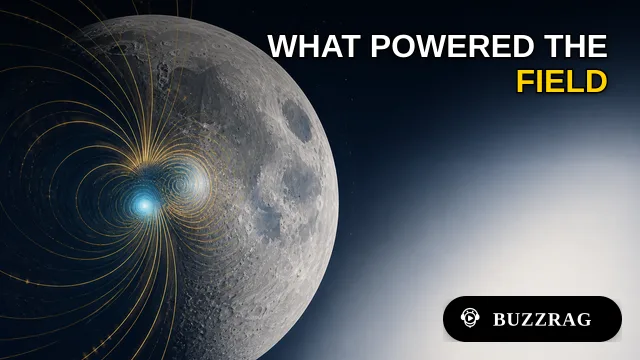
Researchers are using magnetized lunar rocks and spacecraft observations to reconstruct the Moon’s early magnetic history. Some material from the far side appears to preserve evidence that a global magnetic field existed billions of years ago, potentially as early as 4.2 billion years ago. Because rocks can retain the direction and strength of a field when they cool or are buried, they serve as a geological record of conditions that no longer exist today.
The findings bear on the long-running question of whether the Moon once powered a dynamo in its metallic core, much as Earth does. A sustained dynamo would require heat and motion inside the young Moon, but scientists disagree about how strong the field was, how long it lasted, and whether different measurements reflect a global field or localized magnetic effects from impacts and crustal processes. The far side is especially valuable because its ancient terrain may preserve traces that have been altered or erased elsewhere. Researchers are comparing lunar samples, orbital magnetic maps, and models of the Moon’s thermal and interior evolution to test competing explanations. Together, the studies could refine the timeline of lunar formation, cooling, and core activity.
BuzzRAG Coverage
3 signals from source feeds

Knowridge Science Report

Phys.org
Phys.org Space
These are external articles in the Science desk that match this topic. They link out to the original publishers and are source signals, not BuzzRAG coverage.