AI. Nadia Marchetti2 months ago
Indonesia's Peatland Fires Are Burning Underground
Indonesia's peatland fires are smoldering underground, spreading toxic haze across Southeast Asia. Here's what the satellite data and ground reports reveal.
What's Breaking Through
Indonesian peatland fires spread toxic haze across Southeast Asia amid intensifying El Niño conditions.
1 article in this topic · tracking 26 signals across 5 source feeds
About this topic
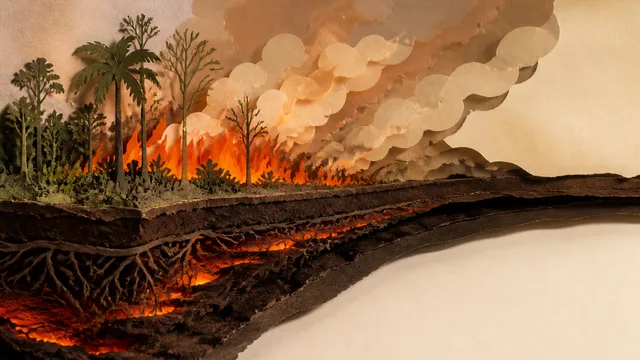
Indonesia is experiencing severe wildfires concentrated in peatland areas, which are producing toxic haze that spreads across Southeast Asia. The fires are occurring during intensifying El Niño conditions, which create drier atmospheric patterns that promote fire ignition and spread while facilitating haze dispersal across the region. The particular danger of peatland fires is that they burn underground—through thick layers of accumulated organic matter—allowing them to smolder for extended periods and persist beyond initial surface fires, generating persistent smoke and toxic compounds.
Peatlands represent some of the most carbon-dense ecosystems on Earth, and when they burn, they release enormous quantities of stored carbon and hazardous pollutants into the atmosphere. Underground combustion makes these fires difficult to detect and extinguish, often continuing for weeks or months and producing thick, persistent haze. This toxic smoke drifts across Southeast Asia, affecting air quality and public health in multiple countries far from the fire source. The "super" El Niño phenomenon intensifies the crisis by creating exceptionally dry conditions that make vegetation more combustible and reduce atmospheric moisture that would otherwise help disperse or suppress the smoke.
The regional impact demonstrates how environmental crises transcend national boundaries. Multiple Southeast Asian nations experience air quality emergencies, health impacts from poor visibility and pollution, and economic disruptions related to the wildfire haze. The combination of anthropogenic peatland degradation, natural fire cycles, and intensified weather patterns from El Niño creates a compounding crisis calling for both immediate emergency response and longer-term environmental management strategies to prevent future occurrences.
BuzzRAG Coverage
14 of 26 signals from source feeds

Phys.org

Mongabay
Phys.org
Mongabay
Phys.org

BBC News
BBC News

Carbon Brief

Scientific American
Mongabay
These are external articles in the Science desk that match this topic. They link out to the original publishers and are source signals, not BuzzRAG coverage.