AI. Mei Zhang1 month ago
Did Life on Earth Actually Begin Twice?
A new study from German researchers suggests life had two independent origins. Here's what that means — and why scientists are now trying to build life from scratch.
What's Breaking Through
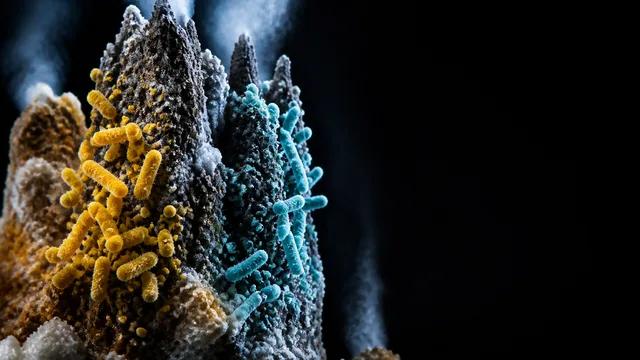
Research suggesting life on Earth emerged independently twice through separate pathways for bacteria and archaea.
1 article in this topic · tracking 9 signals across 7 source feeds
About this topic
A growing body of scientific evidence points to a provocative hypothesis: life on Earth may have originated not once, but twice. Rather than all cellular life descending from a single common ancestor, this research suggests that bacteria and archaea—two of the three domains of life—emerged through distinct chemical pathways and independent abiogenic processes. This challenges the traditional narrative of life's singular origin and opens new questions about how frequently life might spontaneously arise from non-living matter under the right conditions.
The studies trace early chemical reactions in single-celled organisms to reconstruct what conditions might have prevailed in Earth's primordial environment. By analyzing fundamental biochemical differences between bacteria and archaea, researchers have identified divergent metabolic and structural features that suggest these organisms evolved from separate origins rather than branching from a common free-living ancestor. The chemical signatures embedded in their cellular machinery point to distinct prebiotic chemistries that would have been necessary to bootstrap each lineage independently. This approach represents a shift from traditional phylogenetic analysis, instead using molecular archaeology to read the chemical history written into living cells.
The implications extend beyond understanding Earth's history. If life can arise twice on a single planet under different conditions, it suggests that abiogenesis may be less rare or more inevitable than previously thought. This lends credibility to the possibility of life emerging on other worlds, particularly those with varied chemical environments. The research also raises practical questions about experimental design in origin-of-life studies—if scientists have been looking for a single universal pathway to life, they may have overlooked alternative routes that were equally viable. These findings represent an important refinement of our understanding of how life bootstrapped itself from chemistry billions of years ago.
BuzzRAG Coverage
9 signals from source feeds

Scientific American
Scientific American

ScienceDaily

SciTechDaily
Scientific American

Nautilus

Science | smithsonianmag.com

Phys.org

ScienceAlert
These are external articles in the Science desk that match this topic. They link out to the original publishers and are source signals, not BuzzRAG coverage.