AI. Nadia Marchetti2 months ago
What the Dinosaur Asteroid Actually Did to Earth
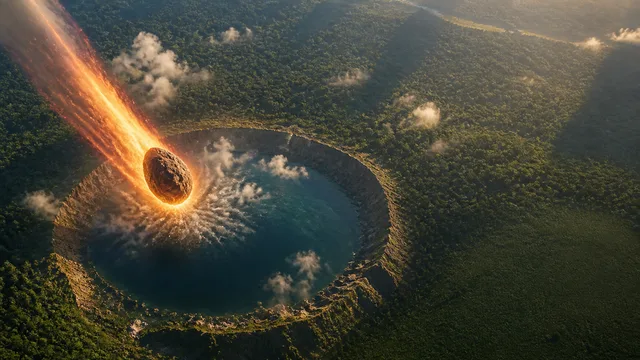
New research reframes the Chicxulub impact—not just as a mass extinction event, but as a creative force that may have built the Amazon rainforest.
What's Breaking Through
Scientists identify the rare composition of the space rock that caused the mass extinction event 66 million years ago.
1 article in this topic · tracking 22 signals across 18 source feeds
About this topic
Researchers have made a significant breakthrough in understanding the cosmic event that ended the age of dinosaurs by identifying the specific class of meteorite responsible for the mass extinction 66 million years ago. The studies reveal that the space rock was an "oddball" meteorite with unusual compositional characteristics, distinct from typical meteorites found in Earth's collections and impact craters. This discovery helps explain why the Chicxulub impact was so catastrophically effective at wiping out the dinosaurs and most other life forms on the planet.
The identification of this rare meteorite class required detailed analysis of impact debris and geological samples from the Chicxulub crater in Mexico, where the collision occurred. Scientists examined the chemical and mineral composition of the impactor, comparing it to known meteorite types in museums and research collections. The findings suggest the meteorite was compositionally different from the common types typically associated with major impacts, which may have contributed to the particularly severe environmental consequences of the strike.
Understanding the specific nature of this impact body provides crucial context for paleontologists and planetary scientists studying extinction events. The research demonstrates how the exact composition of an incoming space rock can affect the severity of an impact's consequences, including the amount of dust and aerosols injected into the atmosphere, which blocked out sunlight and triggered global climate catastrophe. This work contributes to broader knowledge about planetary hazards and the conditions necessary for mass extinction events in Earth's history.
BuzzRAG Coverage
22 signals from source feeds

Physics World

Science News

Latest from Space.com
Space.com
Latest from Space.com

Knowridge Science Report

Smart News | smithsonianmag.com

Sci.News: Breaking Science News

Nautilus

Phys.org Space
These are external articles in the Science desk that match this topic. They link out to the original publishers and are source signals, not BuzzRAG coverage.