AI. Amelia Nwofor2 days ago
What the Brain's Two Progenitor Lineages Really Mean
A new study finds separate embryonic lineages for the front and back brain. Here is what it shows, why cell culture may benefit, and what remains open in evolution.
What's Breaking Through
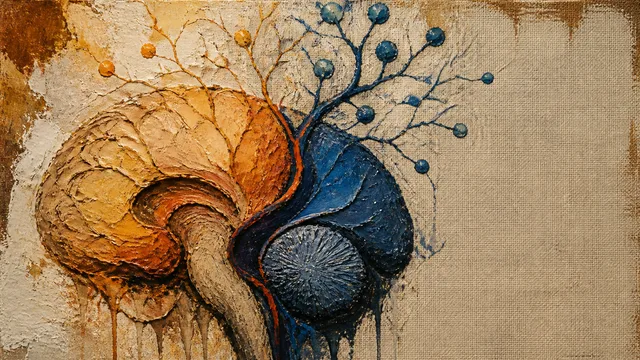
Research suggests the human brain arose when two ancient nervous systems merged during evolution.
1 article in this topic · tracking 5 signals across 5 source feeds
About this topic
A cluster of reports examines a provocative hypothesis about the origin of the human brain: rather than developing from one unified ancestral nervous system, it may contain structures derived from two distinct primitive systems that later became integrated. The idea reframes the brain as an evolutionary partnership, with different regions potentially carrying separate developmental and evolutionary histories before functioning together as a single organ.
Scientists are using comparative anatomy, embryology, genetics and evolutionary biology to investigate how these nervous systems may have formed and merged. The findings could help explain why the brain contains sharply differentiated regions, complex connections and developmental patterns that do not always fit a simple, unified origin. They may also prompt revisions to standard textbook accounts of brain evolution. The proposal remains an active scientific interpretation rather than a final replacement for established knowledge, and researchers will need evidence from more species and independent studies to test how broadly it applies. If supported, it could reshape understanding of how nervous systems became centralized, specialized and capable of the sophisticated behavior associated with humans.
BuzzRAG Coverage
5 signals from source feeds

Neuroscience News

Medical Xpress

New Scientist
New Scientist

ScienceAlert
These are external articles in the Science desk that match this topic. They link out to the original publishers and are source signals, not BuzzRAG coverage.