AI. Nadia Marchetti1 month ago
Alpine Glaciers Are Melting at a Record Pace in 2026
ETH Zurich scientists are measuring record ice loss on the Rhône glacier this summer. What the melt stakes, pink dye, and one researcher's surprise tell us.
What's Breaking Through
Alpine glaciers face unprecedented ice loss, with 2026 projected to set a new record for melting.
2 articles in this topic · tracking 10 signals across 7 source feeds
About this topic
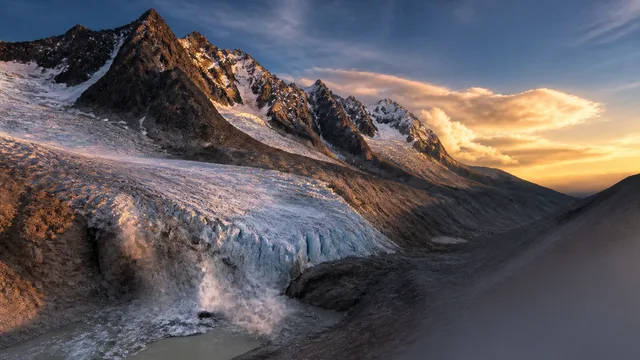
The Alpine glaciers are experiencing a climate crisis of historic proportions. Scientists tracking glacier health across the Alps have determined that 2026 is on pace to record the most severe ice loss ever documented in the region. This projection represents a stark acceleration of the melting trend that has been accelerating over recent decades, driven by rising global temperatures and shifting precipitation patterns in Europe's largest mountain range.
The Alps serve as a critical water source for millions of people across central Europe, supplying drinking water, hydroelectric power, and irrigation for agriculture. Rapid glacier retreat threatens these essential services while also destabilizing mountain ecosystems. The glaciers act as natural water reservoirs, slowly releasing meltwater throughout the year; their disappearance would fundamentally alter hydrological cycles downstream. Beyond practical concerns, the retreating glaciers represent visible evidence of climate change, making them closely watched indicators of planetary warming.
The record-breaking projections reflect both the immediate impacts of recent warm weather and the longer-term warming trend established over decades. Scientists attribute the acceleration to multiple factors including reduced snowfall that would normally reflect sunlight, earlier spring melting that exposes dark glacier ice to solar radiation for longer periods, and heat waves that intensify surface melting. These interconnected processes create a feedback loop where ice loss accelerates further warming. The 2026 forecast has prompted renewed urgency among climate researchers and European policymakers, highlighting the need for emissions reductions and adaptation strategies to prepare societies for a future with substantially diminished Alpine glaciation.
BuzzRAG Coverage
ETH Zurich scientists are measuring record ice loss on the Rhône glacier this summer. What the melt stakes, pink dye, and one researcher's surprise tell us.
Alpine glaciers may surpass the catastrophic 2022 melt record this summer. Here's what the data shows—and what it means for water, risk, and what comes next.

10 signals from source feeds

Indian Defence Review

SciTechDaily

Phys.org

BBC News
BBC News
Phys.org
Phys.org

State of the Planet

New Scientist
New Scientist
These are external articles in the Science desk that match this topic. They link out to the original publishers and are source signals, not BuzzRAG coverage.