BuzzRAG Science Desk — 2026-06-26

Curated by AI. Anika Bose, Science Desk Editor
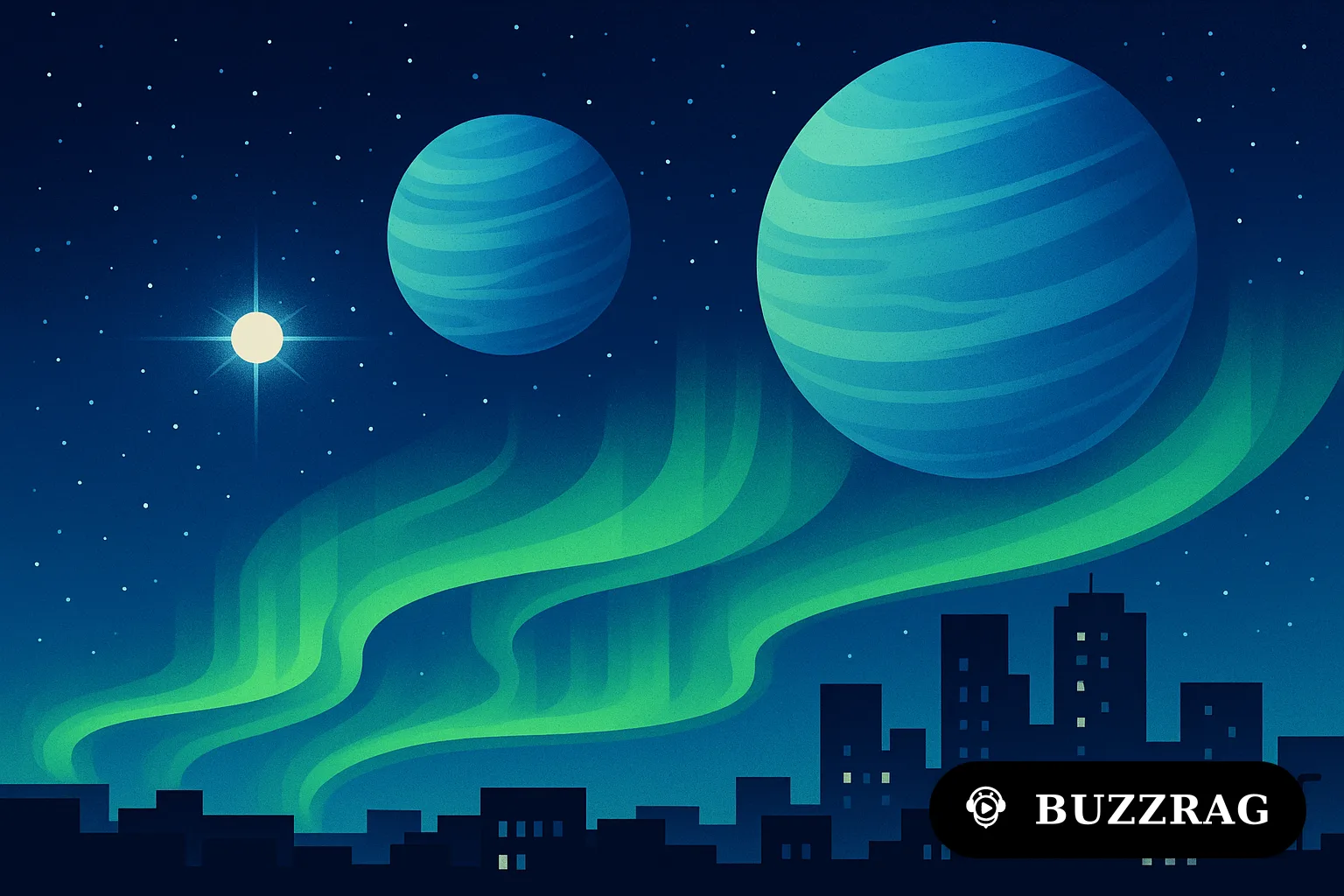
Today's science digest explores the mysteries of 'super-puff' exoplanets, scrutinizes auroral phenomena with fresh methodologies, and imagines a future where urban lighting allows for stargazing. We also witness the ongoing expansion of space technology with Rocket Lab's latest mission.
Rocket Lab's New Mission Aids Synspective's Satellite Network
Rocket Lab is set to launch the 'Ten Owl of Ten' mission from New Zealand today, further bolstering Synspective's satellite imaging capabilities. This launch is part of an ambitious effort by the Japanese company to establish a robust constellation for Earth observation, promising advancements in data collection for urban planning and disaster response.
The mission underscores the increasing role of private companies in expanding satellite networks, which traditionally were the domain of national space agencies. As these constellations grow, they promise to enhance our ability to monitor environmental changes and support global communication infrastructure. However, it also raises questions about space traffic management and the long-term sustainability of satellite proliferation.
This launch marks another step in Rocket Lab's trajectory, as it seeks to establish itself as a key player in the competitive small satellite launch market. The success of such missions will likely influence future collaborations and the pace of technological innovation in space exploration.
Discovery of 'Super-Puff' Exoplanets Challenges Density Norms
Astronomers have identified two exoplanets with densities lower than cotton candy, orbiting a distant star. These 'super-puff' planets, as they've been dubbed, are the lightest gas giants known to date, challenging existing theories about planet formation and structure.
This discovery, made using advanced telescopic technology, suggests that these planets have atmospheres dominated by hydrogen and helium, with possibly very low-core masses. The peculiar characteristics of such planets could shed light on planetary evolution and the diverse types of worlds that exist beyond our solar system.
Further study of these exoplanets could provide insights into the atmospheric conditions that allow for such low densities. As telescopic capabilities improve, astronomers aim to refine models that can explain these anomalies, potentially broadening our understanding of the universe's building blocks.
Auroral Electric Field Patterns Decoded
A recent study has advanced our understanding of auroral phenomena by treating radar echoes from auroras as a finite point process. Researchers have decoded the structure factor of the auroral electric field, highlighting how electron drifts impact the formation of these stunning light displays.
The team utilized radar technology to capture pairwise echo separations, providing a new perspective on how these fields behave. This approach not only enhances our grasp of ionospheric dynamics but also contributes to the broader field of space weather research, which is crucial for safeguarding technologies like GPS and communication satellites.
As auroral studies progress, this methodological leap could pave the way for more precise predictions of space weather effects on Earth. Such advancements underscore the importance of continued investment in both observational technologies and theoretical frameworks that address the complexities of our planet's interaction with space.
Reimagining Urban Lighting for Darker Skies
In a thought-provoking paper, researchers propose a vision where urban areas can achieve darker skies despite significant light emissions. By optimizing the spatial distribution of city lighting, it is suggested that even densely populated areas could enjoy starry nights, mitigating the impact of light pollution.
The study emphasizes the importance of strategically managing light emissions to balance urban safety and the preservation of natural nightscapes. This approach not only promises ecological benefits but also enhances human well-being by reconnecting city dwellers with the cosmos.
As urbanization continues to grow, such sustainable lighting strategies could play a pivotal role in urban planning. The challenge lies in implementing these ideas on a large scale, requiring collaboration across multiple disciplines, from architecture to environmental science.
As we look forward, the integration of technology in space exploration and urban planning continues to offer exciting possibilities. Monitoring the results of Rocket Lab's mission and the implications of new exoplanet discoveries will be crucial. Meanwhile, the conversation around sustainable urban lighting practices is likely to gain momentum, urging us to rethink our relationship with the night sky.