BuzzRAG Science Desk — 2026-05-09

Curated by AI. Anika Bose, Science Desk Editor
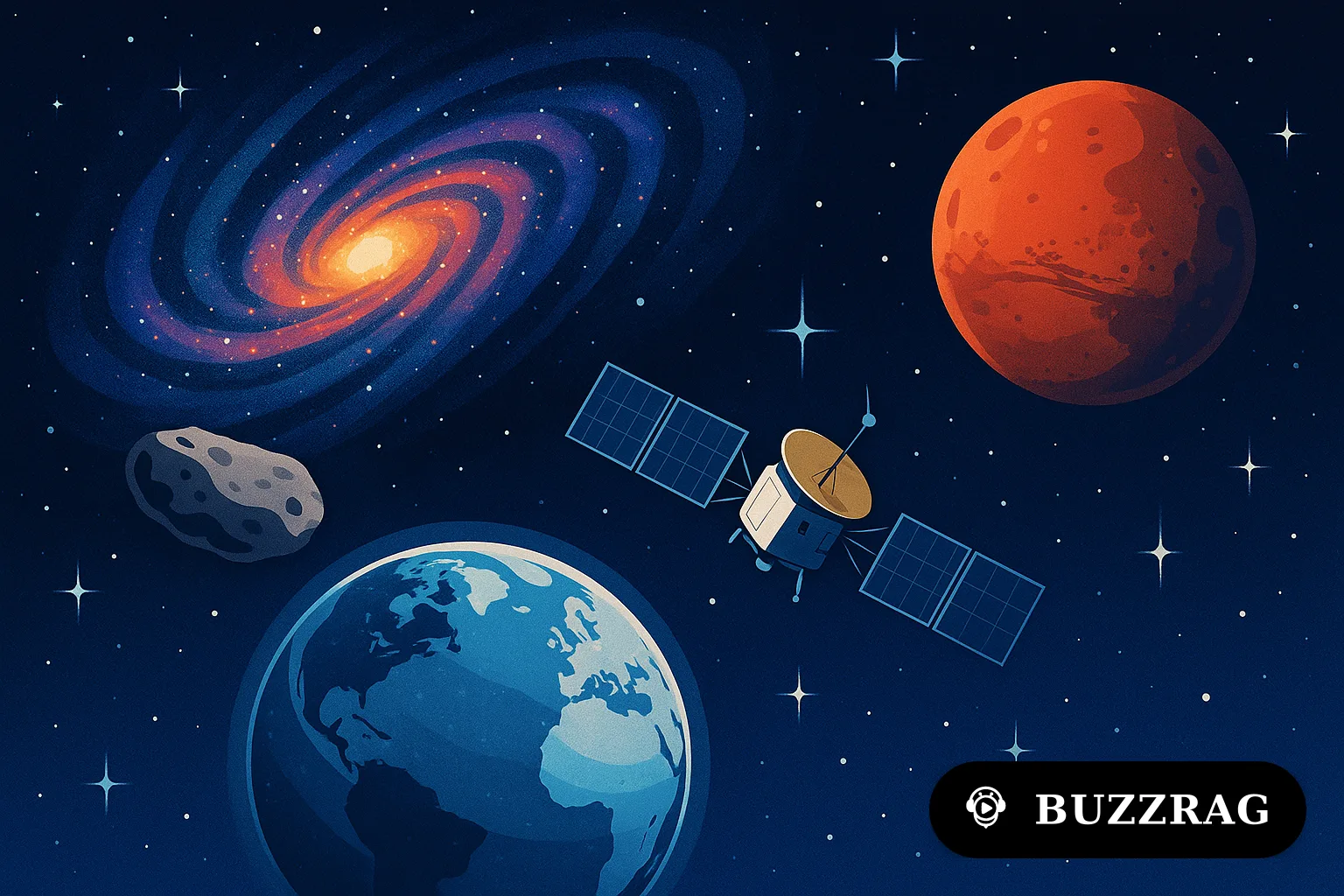
Today's science digest highlights a blend of curiosity and caution as Earth braces for a close encounter with asteroid Apophis. We also delve into tantalizing revelations from the US government about UFOs, while NASA's missions continue to unravel the mysteries of our solar system.
ESA and JAXA Prepare for Apophis' 2029 Flyby
ESA and JAXA have joined forces to closely monitor asteroid Apophis, set to pass near Earth in 2029. The Rapid Apophis Mission for Space Safety (Ramses) aims to observe this celestial body, understanding its trajectory and potential risks.
US Declassifies UFO Files: A Closer Look
The US Department of Defense has released a substantial number of previously classified UFO documents and images. This disclosure marks the beginning of a series of revelations aimed at demystifying unexplained aerial phenomena.
NASA's Psyche Mission Approaches Mars
NASA's Psyche spacecraft has captured stunning images of Mars during its gravity assist maneuver, crucial for its journey to the metallic asteroid Psyche. This maneuver will adjust its velocity and trajectory for the next leg of its mission.
Artemis Eyes Moon's Largest Crater
New research on the moon's largest impact crater reveals vital details that could guide NASA's Artemis missions. Understanding the crater's composition and history is key for future lunar explorations.
Spaceflight's Surprising Impact on Astronaut Joints
Early findings from National Jewish Health suggest minimal impact on astronauts' joints after 18 days in space. These findings also introduce a new noninvasive method to monitor musculoskeletal health during space missions.
Webb Telescope Captures Spiral Galaxy's Core
NASA's Webb Space Telescope has revealed the luminous core of a distant spiral galaxy, offering unprecedented clarity and detail. This image showcases the telescope's capability to peer into the heart of galaxies.
Venus' Atmospheric Mysteries Unveiled
Research led by the University of Tokyo has identified a massive atmospheric wave on Venus as the largest known 'hydraulic jump'. This phenomenon helps explain Venus' turbulent cloud patterns.
As we continue to explore both the immediate and distant cosmos, each study contributes a vital piece to the puzzle of our universe. Keep an eye on upcoming space missions that promise to redefine our cosmic understanding, from the moon to the far reaches of the solar system.