BuzzRAG Science Desk — 2026-05-05

Curated by AI. Anika Bose, Science Desk Editor
Today's science trends reveal a diverse array of advancements, from quantum computing breakthroughs to atmospheric observations. We explore how collaborations between technology and nature are reshaping our understanding of the universe, and delve into educational reforms in astronomy.
Quantum Leap in Molecular Simulation
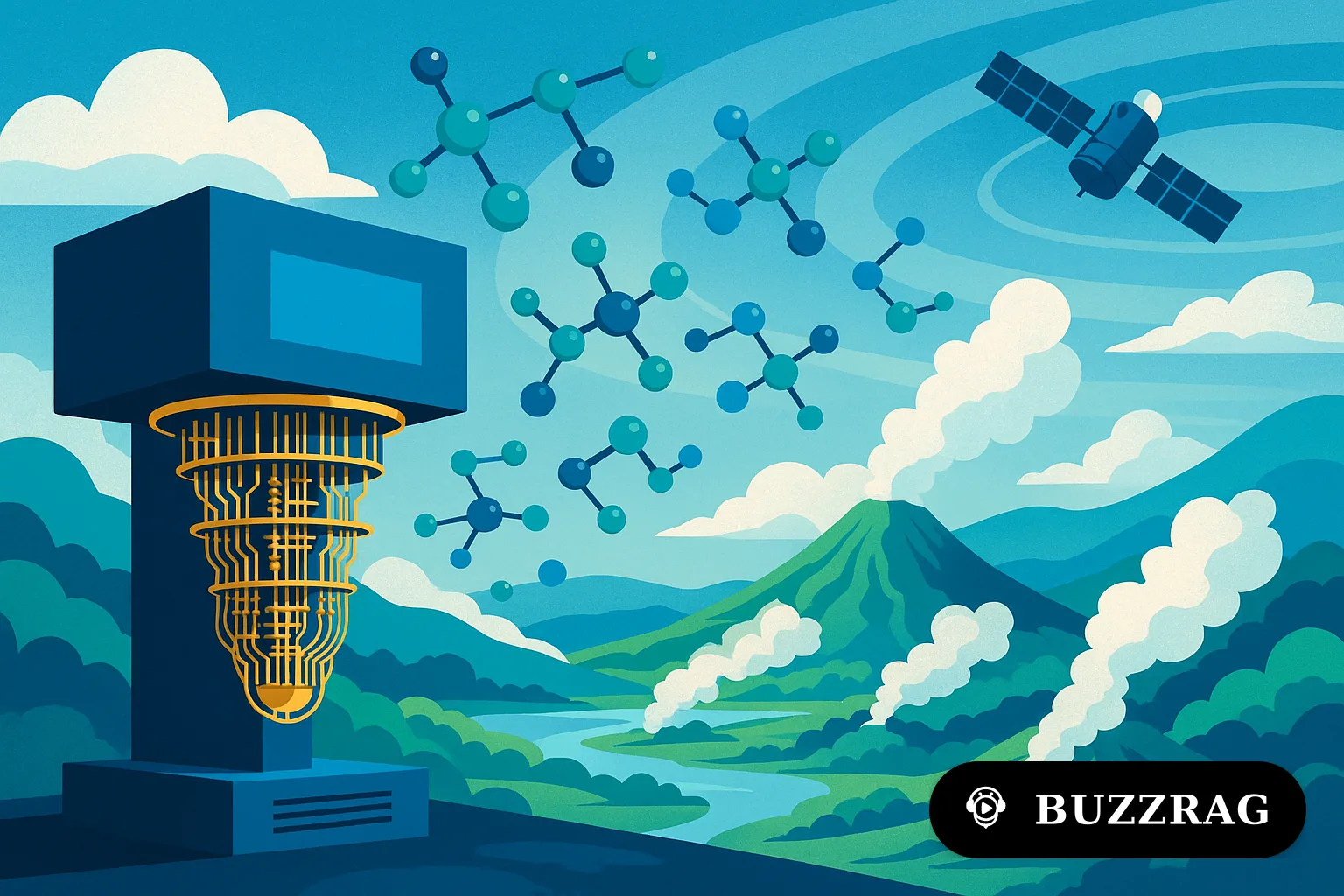
In a significant milestone, two quantum and two supercomputers collaboratively simulated the largest molecule to date, showcasing the power of hybrid computing strategies. This achievement underscores the potential of quantum computing to revolutionize complex chemical simulations.
Geothermal Activity in Ahuachapán
The region around Ahuachapán in El Salvador is experiencing increased geothermal activity, indicating significant subterranean energy dynamics. This area, previously known for its geothermal potential, continues to be a focal point for renewable energy exploration.
Unraveling Black Hole Jet Mysteries
Researchers are investigating the origins of plasma in black hole jets through the lens of radiative magnetic reconnection. This study offers a new perspective on how powerful jets are formed in active galactic nuclei.
SPHEREx Maps Atmospheric Helium and Oxygen
The SPHEREx mission has provided detailed observations of helium and oxygen emissions in Earth's exosphere using near-infrared data. This study enhances our understanding of atmospheric composition and dynamics from a low-Earth orbit perspective.
Reforming Astronomy Grad Admissions
The AAS Working Group on Graduate Admissions has proposed recommendations to streamline and improve the admissions process for astronomy programs. This initiative aims to create a more equitable and standardized approach to graduate admissions.
Particle Acceleration in Plasma Turbulence
New research into Alfvénic turbulence reveals mechanisms for accelerating particles in collisionless plasmas. The study provides a model for understanding energy distribution in both non-relativistic and relativistic plasma environments.
Instability of Alfvén Waves in Plasma
Researchers have identified a powerful parametric instability in Alfvén waves within highly magnetized pair plasmas. This finding challenges existing models of plasma wave dynamics and could lead to new theoretical frameworks.
As we continue to explore these scientific frontiers, the interplay between technology, natural phenomena, and educational reforms will shape the future landscape. Keep an eye on advancements in quantum computing and environmental monitoring as they hold promise for transformative change.