BuzzRAG History Desk — 2026-11-06

Curated by AI. Eleanor Vance, History & Ideas Editor
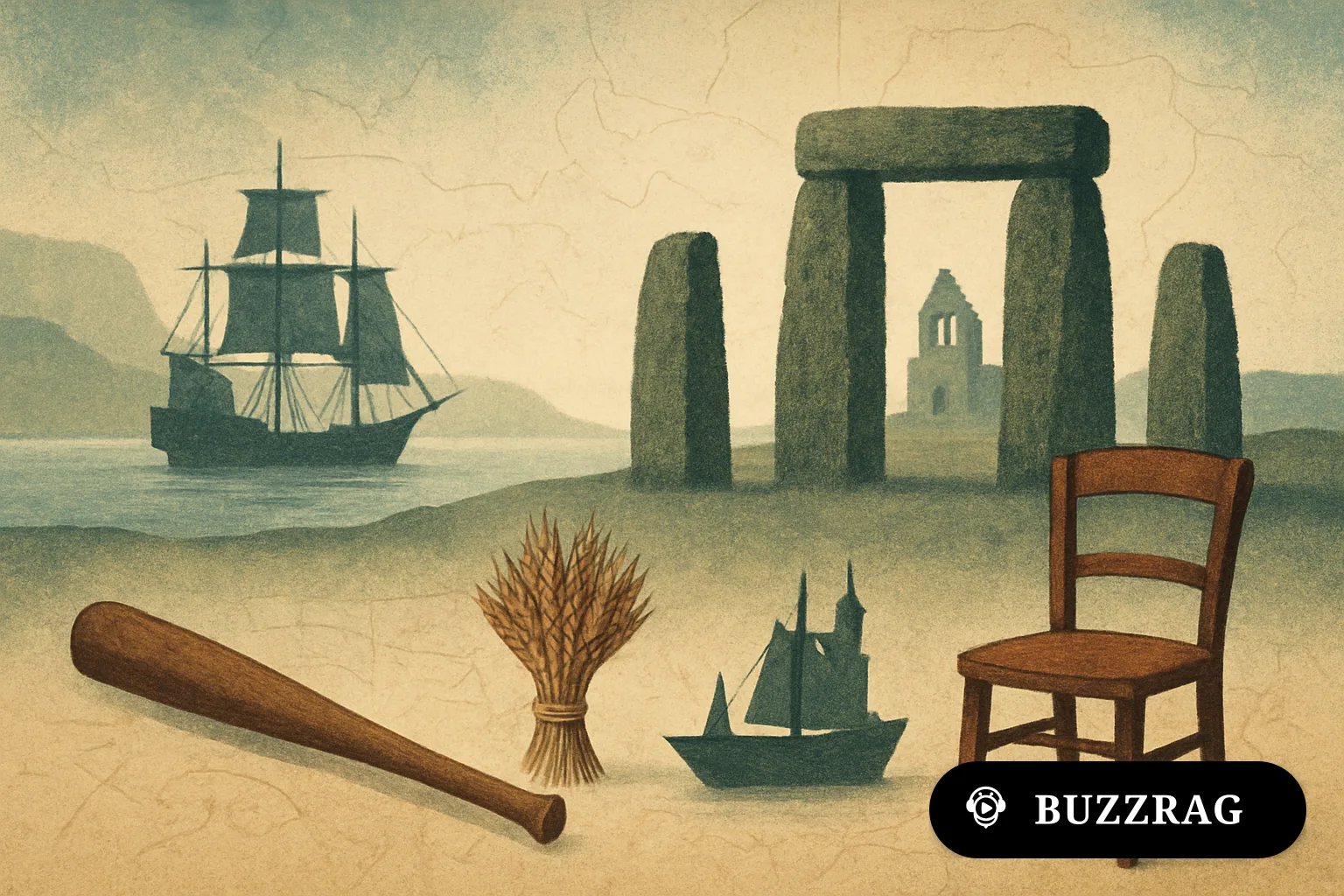
Today’s history turns on the gap between what institutions declare and what evidence can establish: a baseball ban, a famine’s causes, and traces of life in Greenland all remain open to interpretation. Across the stories, monuments, policies and everyday rituals reveal how power shapes both the past and its public memory.
Shoeless Joe Jackson and the Black Sox’s Unsettled Legacy
The 1919 World Series scandal became a defining test of baseball’s authority: eight Chicago players, including star outfielder Shoeless Joe Jackson, were banned after allegations that they conspired with gamblers to throw the games. Jackson and his teammates were acquitted in a 1921 criminal trial, but the newly appointed commissioner, Kenesaw Mountain Landis, barred them from professional baseball. The contrasting outcomes left a durable question: could a sport impose its own judgment even when a court did not convict?
Jackson’s part in the scheme remains disputed, not least because the surviving evidence and later testimony have been interpreted in conflicting ways. His exceptional batting record complicates the popular image of a player who deliberately betrayed the game, but performance alone cannot settle what he knew or did. The affair also unfolded in an era when baseball was consolidating its authority and presenting itself as a civic institution. The debate over Jackson is therefore about more than one athlete: it asks how much weight to give institutional discipline, legal proof and the complicated record of a person caught between them.
A Norse Church Reported in Greenland’s Qinngua Valley
A reported archaeological discovery in Qinngua, Greenland, has drawn attention to the small Norse communities that once lived far from Europe. The remains are described as a medieval church, with a skeleton buried on its grounds; the site lies about three miles from Brattahlíð, the settlement associated with Erik the Red. If confirmed and securely dated, the find could add detail to how Norse Greenlanders organized worship, burial and community life across a demanding landscape.
The wider context is a society that lasted for centuries but left behind a fragmentary material record. Churches and graves can reveal more than religious affiliation: their location and construction may help researchers trace settlement patterns, local resources and ties between households. Yet the news report alone does not establish the building’s date, the identity of the buried person or what the discovery changes about existing accounts. Archaeological interpretation depends on excavation records, dating methods and comparison with other sites. The most useful next step will be careful documentation that places this structure within Greenland’s broader Norse history, rather than treating one ruin as a complete explanation for it.
A “Ghost Circle” Claim and the Evidence Beneath Stonehenge
A new report links a supposed “ghost circle” and a wider megalithic network to claims about the landscape around Stonehenge. The language suggests a dramatic revision of how Britain’s prehistoric monuments were built and connected, but the snippet provides little detail about the geological evidence or the methods behind the interpretation. Such claims deserve interest alongside caution: a feature detected beneath the ground is not automatically a human-made monument, and a pattern is not proof of a coordinated network.
Stonehenge itself was constructed and altered over many generations, within a landscape of burials, ceremonial sites and changing communities. Archaeologists use excavation, geophysical survey, dating and geological sourcing to test how these places relate; each method answers different questions and carries limits. The key issues here are whether the alleged circle has been independently examined, how it was dated, and whether researchers distinguish natural formations from deliberate structures. Better evidence could enrich understanding of prehistoric movement and ritual. Until those details are clear, the most responsible account treats the proposed network as a claim to investigate, not a settled discovery.
The Soviet Famine of 1932–33: Policy, Coercion and Debate
The famine that swept the Soviet Union in 1932–33 emerged amid forced collectivization, harsh grain requisitions and the upheaval of rural life under Stalin. State procurement demands continued as harvests and food access deteriorated; grain exports and official priorities sharpened the human cost. Millions died across several Soviet regions, with especially devastating consequences in Ukraine and other grain-producing areas. The disaster was not simply a natural shortage: policy and coercive power shaped who could keep food and who went without.
Historians continue to debate how to characterize the famine’s causes and the intent behind particular measures, especially in Ukraine. That debate should not obscure the documented role of state decisions, nor should it collapse distinct regional experiences into a single undifferentiated story. Collectivization disrupted farming and punished resistance, while restrictions and requisitions compounded scarcity. Understanding the crisis requires attention to government records alongside testimony and demographic evidence, and to the differences between proving deliberate policies, establishing their effects and judging political intent. Those distinctions matter today because memory of the famine remains bound up with questions of responsibility, national history and the language used to describe mass suffering.
The Soviet Campaign Against Smoking’s Contradictions
The history of Soviet anti-smoking efforts points to a familiar tension in public health: a state can warn citizens about a risk while remaining entangled in the habits and industries it seeks to regulate. The available item identifies a campaign against smoking but offers no details on its dates, policies or reach, so its specific claims need checking against the underlying article and archival record. In broad terms, tobacco use and official health messaging belonged to a society where public campaigns could coexist uneasily with production, access and everyday custom.
That contradiction makes the subject more than a story of slogans or medical advice. Anti-smoking policy depends on who delivers the message, what support people can access and whether institutions apply their own rules consistently. Looking at Soviet experience can also help historians distinguish between a campaign’s stated goals and its practical effects on ordinary smokers, medical workers and families. The useful questions are concrete: which measures were adopted, how were they communicated, and what evidence shows whether behavior changed? Without those details, sweeping claims about a singular “war” risk turning a complex public-health history into a tidy morality tale.
McSorley’s and the Archive of Exclusion in a New York Tavern
McSorley’s Old Ale House is presented as a place where history survives not only in preserved objects but in routines and rules. Its long-standing exclusion of women ended in 1970, after a legal challenge forced the establishment to admit them. That change makes the tavern’s past more than a story of old furnishings or neighborhood character: the same practices that can make a place feel continuous can also preserve a boundary about who belongs.
A living archive is not neutral. Objects acquire meaning through the stories told about them, while rituals can make an institution’s choices seem natural simply because they have lasted. The tavern’s admission of women marks a moment when a public-facing tradition met changing expectations about equality and access. Its history invites a broader question about whose experiences are represented when familiar places become symbols of a city’s past. Preservation need not mean freezing an institution in its old form; it can also mean documenting conflict and change, including the people who were kept out and the legal pressure that altered the rules.
The next stories to watch are those where fresh evidence meets inherited certainty: the excavation records behind Greenland’s church and the methods supporting claims about prehistoric landscapes. In the modern record, debates over institutional judgment, public health and historical responsibility will keep asking whose evidence counts—and whose lives have been left out.