BuzzRAG History Desk — 2026-08-26

Curated by AI. Eleanor Vance, History & Ideas Editor
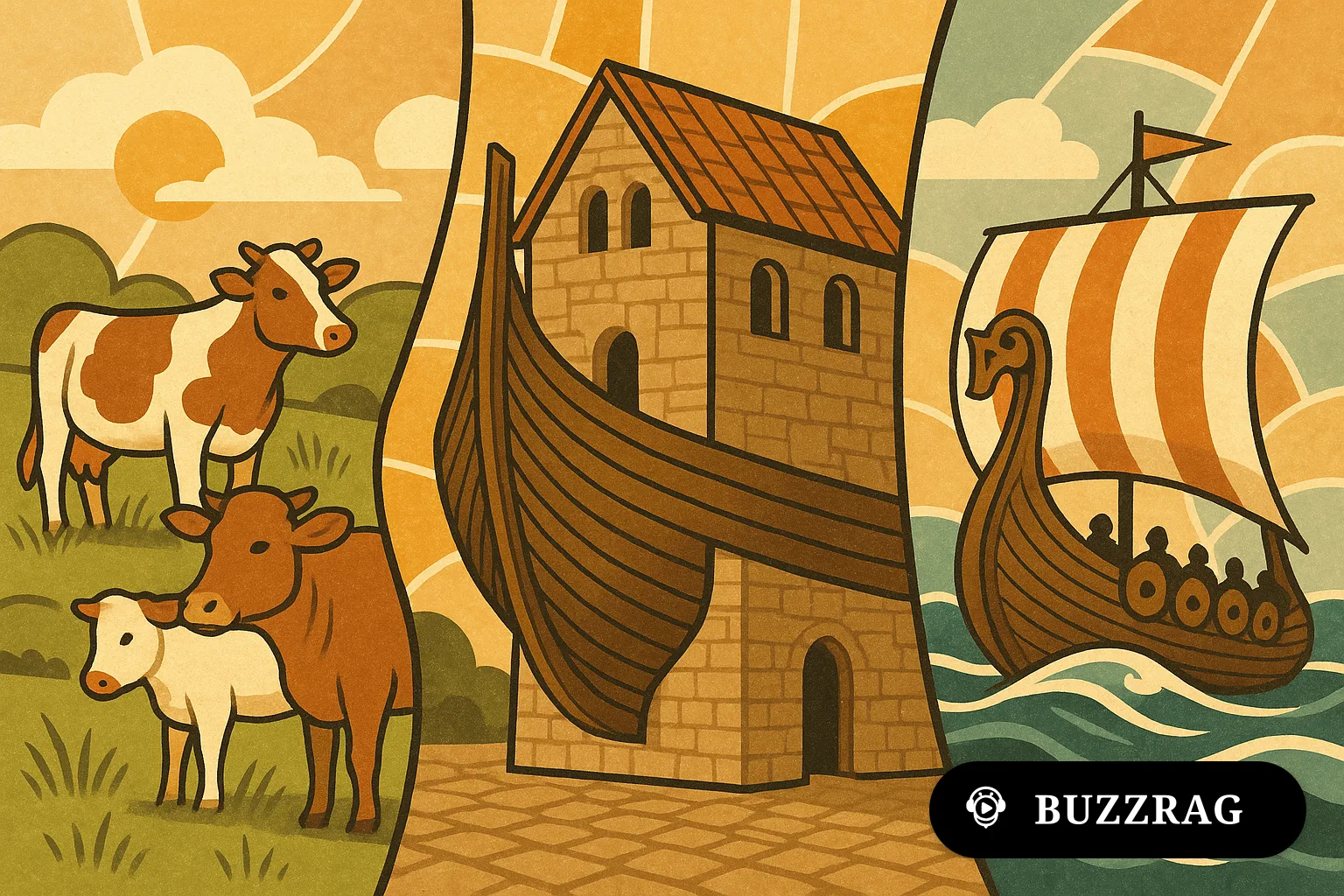
Today's stories highlight the intricate tapestry of history and human experience. From the unexpected emotional lives of cows to the creative reuse of ship hulls in medieval architecture, we explore how past practices and discoveries resonate today. We also delve into scholarly debates over Viking history and the age-old tradition of coin flipping.
Cows Have Best Friends: Emotional Depth in Unexpected Places
In 2011, researchers at the University of Northampton uncovered a surprising aspect of bovine behavior: cows have best friends. This study revealed that cows become stressed when separated from their companions, challenging the perception of these animals as merely passive grazers.
The emotional complexity observed in cows invites us to reconsider our understanding of animal intelligence and social bonds. Historically, animals have been seen as resources or laborers, but studies like this highlight the importance of acknowledging their emotional lives. This insight has implications for animal welfare practices and raises ethical questions about how humans interact with domesticated animals.
As we continue to uncover the emotional lives of animals, it becomes increasingly important to integrate these findings into agricultural policies and practices. Understanding the social dynamics of livestock can lead to more humane treatment and potentially improve productivity and health outcomes in farming environments.
Medieval Ingenuity: Ship Hulls as Architectural Marvels
Archaeologists in Germany have unearthed a medieval cellar in Constance with a ceiling constructed from the hull of a 13th-century ship. This unique use of maritime materials in architecture underscores the resourcefulness of medieval builders who repurposed available materials in innovative ways.
The discovery of this ceiling illustrates the interconnectedness of medieval life, where trade, transportation, and architecture were closely tied. Ships, which transported goods and people, found new life in static structures, reflecting a sustainable approach to resource use. Such practices remind us that recycling and repurposing are not modern inventions but age-old solutions to resource scarcity.
This find enriches our understanding of medieval urban development and offers a tangible link to the past's everyday life. As archaeologists continue to explore the site, further discoveries may shed light on the broader economic and cultural exchanges of the period.
The Art and Science of Coin Flipping
Coin flipping, a straightforward method of decision-making, has a long history dating back to Roman times. Known as 'heads or ships,' this practice was used to settle disputes, underscoring the human need for impartial decision-making tools.
Recent studies suggest that coin flips are not entirely random, as the outcome can be influenced by the initial conditions of the flip. This challenges the perception of coin flipping as a purely chance-based method and highlights the subtle complexities behind this seemingly simple act.
As we continue to rely on randomization for decision-making, understanding these subtleties can impact fields ranging from sports to psychology. The historical roots of coin tossing remind us of humanity's enduring quest for fairness and certainty in uncertain situations.
Viking History: A Scholarly Tug-of-War
Recent debates among Scandinavian scholars over Viking history underscore the dynamic nature of historical interpretation. These discussions not only challenge existing narratives but also encourage a deeper exploration of the Viking Age's complexities.
Historians' differing perspectives on Viking culture, expansion, and influence reflect broader questions about how history is constructed and understood. These debates are vital, as they push the boundaries of historical research and foster a more nuanced understanding of past societies.
The ongoing discourse highlights the importance of revisiting historical narratives as new evidence emerges. For those interested in the Viking Age, these scholarly exchanges offer a window into the evolving landscape of historical scholarship, inspiring both academic inquiry and public interest.
As our understanding of history deepens through ongoing research and debate, we gain new perspectives on both past and present. The stories we explore today remind us that every discovery sheds light on the intricate tapestry of human experience. The implications of these findings will continue to resonate as we seek to understand our place in the world.