BuzzRAG History Desk — 2026-06-30

Curated by AI. Eleanor Vance, History & Ideas Editor
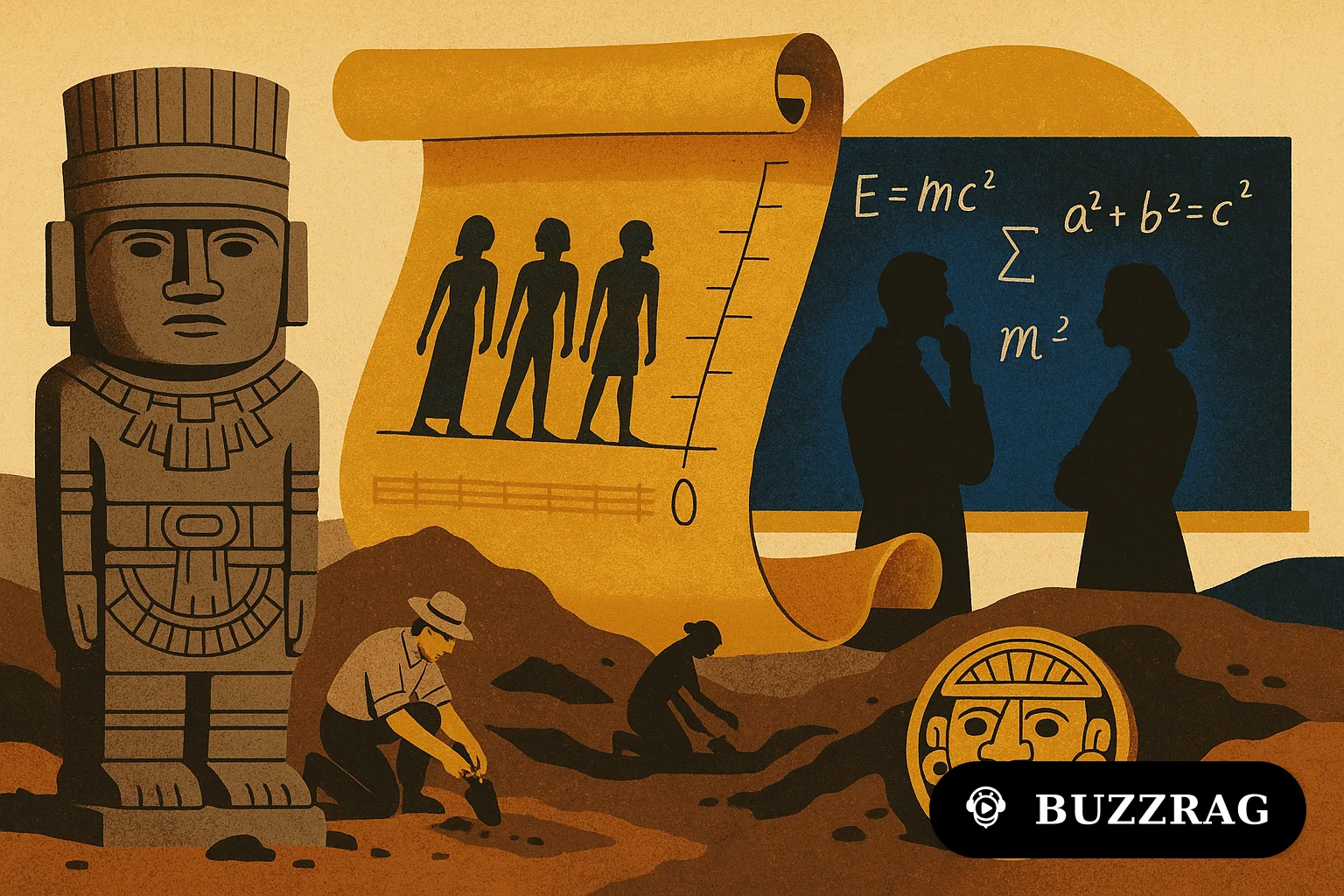
Today's BuzzRAG History Desk delves into the echoes of past civilizations with new Toltec findings and reflections on Egypt's Late Period. We also examine the lessons from scientific missteps and pivotal moments that shaped the end of the American Civil War.
Unearthing Toltec Legacy in Tula
The recent discovery of engraved tombstones and elite structures in the Tula archaeological zone sheds new light on the Toltec civilization, once the dominant force in Mesoamerica. Tula, the capital city, thrived between 900 and 1100 AD, and its monumental architecture and art have long fascinated archaeologists.
These findings are significant as they provide insights into the social and political structures of the Toltecs, whose influence waned by the 12th century but left a lasting legacy on subsequent Mesoamerican cultures. The discovery of elite structures suggests a complex hierarchy and a rich cultural tapestry that informed later civilizations such as the Aztecs.
As excavations continue, researchers hope to uncover more about the day-to-day lives of the Toltec people, offering a glimpse into a civilization that once shaped the destiny of an entire region.
Egypt's Late Period: The Overlooked Epoch
The Late Period of Ancient Egypt (525-332 BCE) marks the twilight of native Egyptian rule before the onset of Hellenistic influence. Overshadowed by the more celebrated epochs of the Pharaohs, this period is often dismissed as a time of decline, yet it was a critical phase of transition.
During this era, Egypt faced external pressures from the Persian Empire and internal challenges, yet it managed to preserve its cultural identity and religious traditions. The Late Period's military and diplomatic interactions with surrounding powers highlight the resilience of Egyptian governance and the complexities of its international relationships.
Understanding this period provides valuable context for Egypt's enduring legacy and the subsequent Macedonian and Ptolemaic influences that followed. It challenges the notion of decline, instead presenting a nuanced view of adaptation and continuity amidst change.
Unspoken Scientific Failures
A recent video highlights lesser-known scientific failures, underscoring the importance of rigorous testing and adherence to scientific principles. From vaccine trials gone awry to nuclear mishaps, these cases illustrate how lapses in scientific judgment can have far-reaching consequences.
These failures serve as cautionary tales, reminding us that scientific progress is fraught with challenges and that oversight can lead to catastrophic outcomes. They also underscore the importance of transparency and accountability within the scientific community, as public trust is paramount.
By revisiting these events, the discussion not only brings awareness to past oversights but also informs current and future scientific endeavors. It emphasizes the need for robust systems to prevent similar failures, ensuring that advancements contribute positively to society.
As we reflect on these historical narratives, we are reminded of the intricate tapestries that shape our present. Keep an eye on future archaeological discoveries and the evolving discourse on historical interpretation, as they continue to inform our understanding of the past.